Solar Panel Temperature Coefficient in Pakistan: Why Solar Output Drops in 45°C Heat
January 14, 2026
Is Your Factory Ready for an IPP License? A Guide to Private Power Sales in 2026
January 15, 2026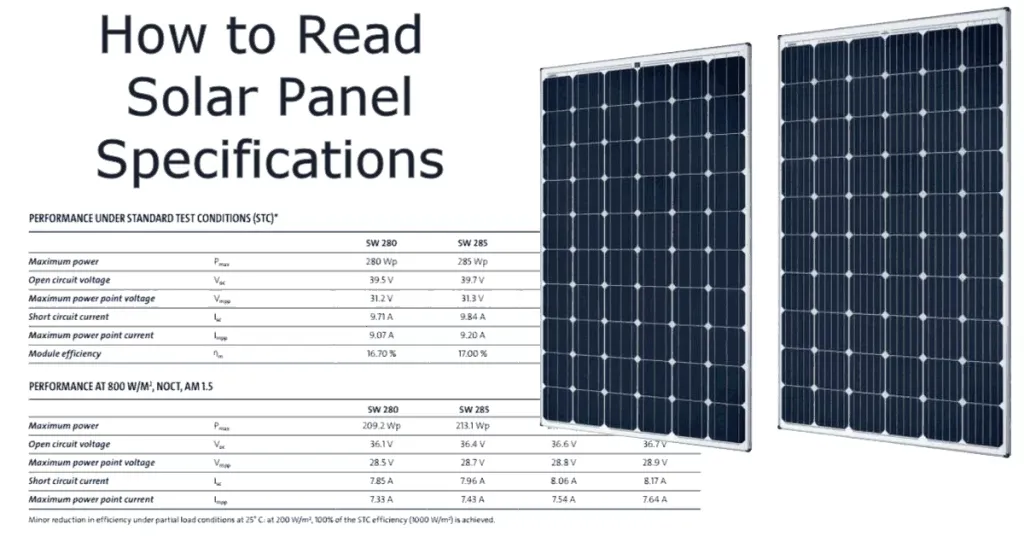
When people in Pakistan compare solar panels, most of the focus goes to wattage, brand name, or price per watt. The technical document that actually explains how a panel will behave after installation often gets ignored or misunderstood. That document is the solar datasheet, and it plays a far bigger role in real performance than most buyers realize.
PV module specification is not just technical jargon meant for engineers. These specifications explain how a panel reacts to heat, how it works with local inverters, and how it performs year after year on Pakistani rooftops. Once you understand how to read a solar datasheet properly, marketing claims become much easier to evaluate and question.
This guide explains PV module specification in Pakistan in clear, practical terms. You will learn what each key specification means, how it applies to local conditions, and how to use this information confidently when comparing solar panels.
Why PV Module Specifications Matter More Than Brand Names?
Brand reputation matters, but it does not override real-world conditions. Two panels from well-known manufacturers can perform very differently once installed in Pakistan’s climate.
High ambient temperatures, dust buildup, rooftop heat, and voltage fluctuations all affect how a solar module behaves. These realities are not reflected in glossy brochures. They are reflected, often quietly, in the datasheet.
Many system owners only discover this after installation, when output is lower than expected. In most cases, the issue is not the brand but the fact that key specifications were never properly understood before selection.
What a Solar Datasheet Actually Is and What It Is Not?
A solar datasheet is a technical document issued by the manufacturer that lists electrical, thermal, and mechanical characteristics measured under defined conditions.
What a datasheet is:
- A standardized performance reference
- A tool for comparing modules objectively
- A way to verify compatibility with inverters and mounting systems
What a datasheet is not:
- A guarantee of daily energy output
- A prediction of real-world performance
- A promise of how much electricity your system will produce
Understanding this difference removes a lot of confusion.
Standard Test Conditions vs Real Conditions
Most values on a solar datasheet are measured under Standard Test Conditions. This assumes a cell temperature of 25°C, ideal sunlight, and controlled laboratory settings.
In Pakistan, rooftop temperatures can exceed 60°C during summer afternoons. This gap between test conditions and real conditions is the reason why systems often perform differently than expected.
Core PV Module Specifications You Must Understand
Not every number on a datasheet carries the same weight. Some specifications have a much bigger impact on long-term performance than others.
Rated Power (Wp)
The maximum power in watts-peak as given in rating tests is the maximum output achievable by an optimized panel.
Panels having similar ratings in watts can still vary in the annual power generated. This is due to the difference in performance with respect to heat dissipation, voltage regulation, or product designs, among the parameters that are not necessarily correlated to the watts rating.
This is why understanding solar panel efficiency is helpful when comparing modules with similar ratings.
Module Efficiency
Efficiency is a measure of the panel’s ability to convert sunlight to electricity in relation to its surface area.
More efficiency is required in situations involving a smaller roof area. However, in a typical Pakistani dwelling, since area availability does not become an issue, efficiency becomes less significant than thermally efficient designs.
Voltage and Current Ratings
Key values such as Voc, Vmp, Isc, and Imp determine how a panel interacts with an inverter.
Incorrect voltage matching is a common cause of inverter shutdowns, summer tripping, and long-term equipment stress. This becomes especially important in larger systems or when designing arrays for ground-mounted solar panels, where string lengths may be longer.
Temperature-Related Specifications and Their Impact in Pakistan
Heat is one of the most underestimated factors in solar performance locally.
Temperature Coefficient of Power
The temperature coefficient shows how much the power output declines when the panel temperature increases above 25°C.
For instance, a coefficient of minus 0.40 percent per degree implies that if the cell temperature is 45°C, the output will decrease by as much as eight percent. Such a loss will occur normally on a rooftop.
Panels with better temperature coefficients maintain more stable output during peak summer months. Over time, this difference significantly affects total energy production. It also helps explain trends related to solar panel degradation rate in Pakistan, as repeated heat stress accelerates aging.
Nominal Operating Cell Temperature
NOCT is much closer to real-life working conditions than Standard Test Conditions.
Lower NOCT values imply improved heat dissipation and performance in a realistic environment, especially in a warm location.
Mechanical and Build Specifications That Affect Longevity
Electrical performance matters, but physical strength determines how long a panel survives.
Glass Thickness and Frame Design
Thicker tempered glass and well-designed aluminum frames help panels withstand:
- Strong winds
- Thermal expansion
- Handling stress during installation
In dusty environments, regular cleaning can cause micro-abrasions over time. Stronger glass tolerates this wear better.
Weight and Dimensions
Heavier panels often indicate stronger frames, but they also increase roof load. Installers must balance durability with structural safety.
This is one reason why installation quality and material choice matter just as much as the label, a distinction often missed when comparing A-Grade vs B-Grade Solar Panels.
Certification and Compliance Standards Used in Pakistan
Certifications are not marketing decorations. They confirm that a module meets international safety and durability standards.
IEC Standards Commonly Seen on Datasheets
The standards, like IEC 61215 and IEC 61730, test the panels for electrical safety, mechanical stress, and resistance to the environment.
Panels without proper certification may work initially, but often cause issues during inspections or approvals.
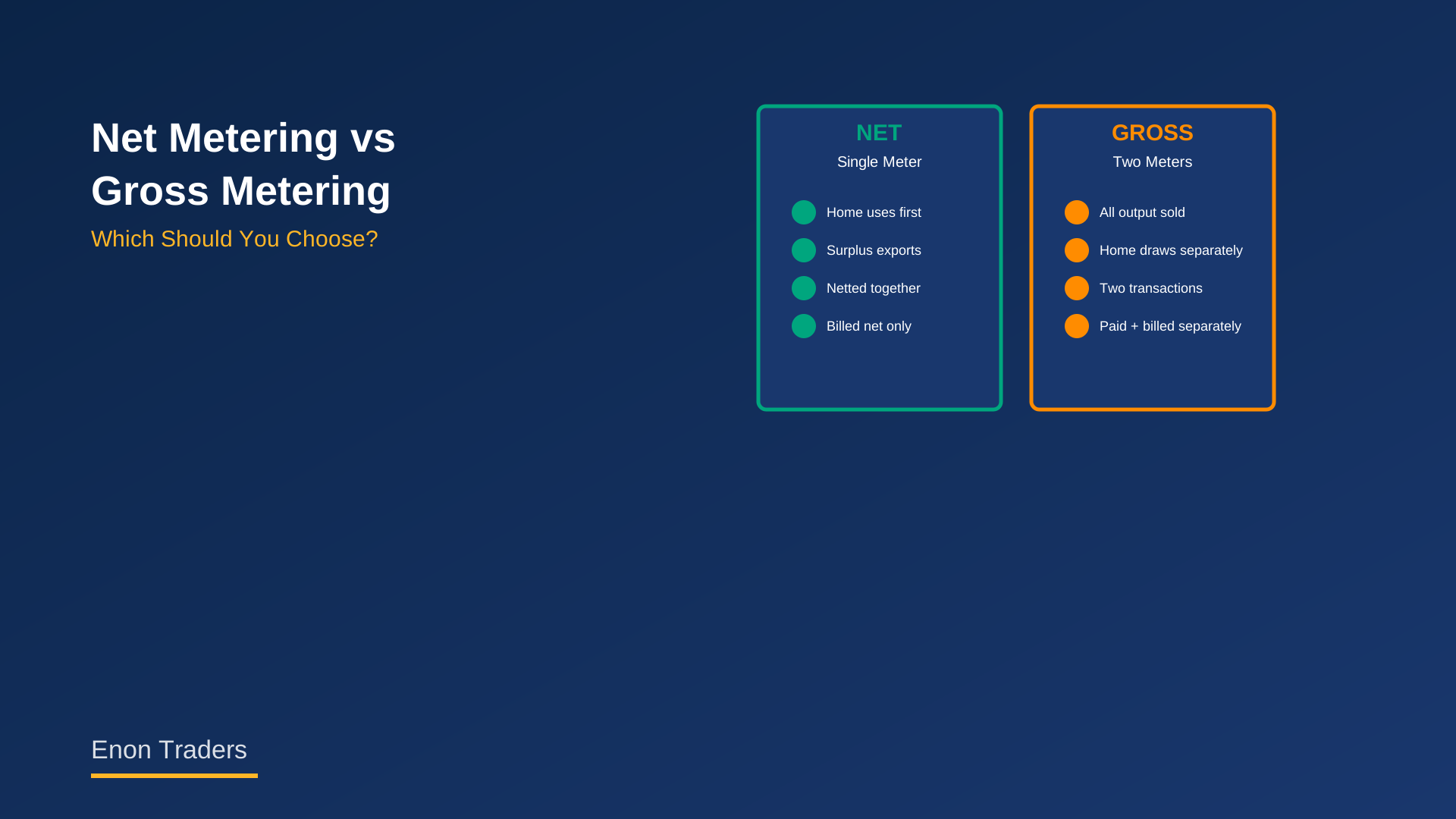
What Local Authorities and Net Metering Expect?
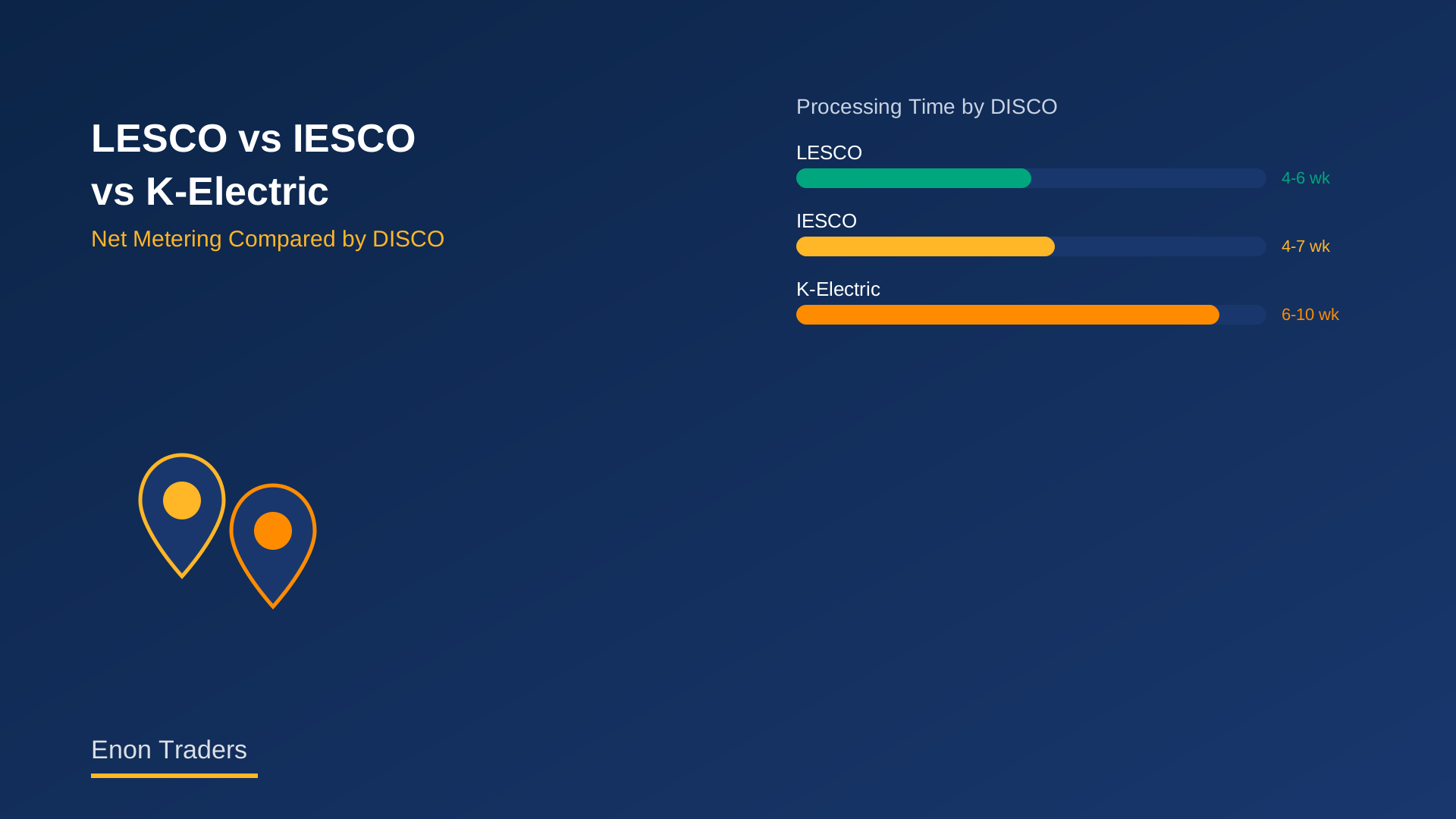
Distribution companies generally require certified modules for net metering approval. Missing documentation can delay or block the process entirely.
This requirement connects closely with net metering in Pakistan, and it often starts with proper module specifications.
Common PV Module Specification Mistakes Buyers Make
Certain mistakes appear repeatedly across installations.
These include:
- Choosing the highest wattage without checking the temperature behaviour
- Ignoring voltage compatibility with the inverter
- Trusting incomplete or altered datasheets
- Assuming Tier-1 status guarantees performance
- Overlooking NOCT values altogether
Most of these issues can be avoided with basic datasheet literacy.
How to Compare Two PV Modules Using Only Their Datasheets?
Firstly, the process will involve a comparison between the temperature coefficient and NOCT, given that the two influence performance in different ways.
Moreover, check for voltage compatibility for safe inverter operation.
Now, verify the efficiency and mechanical specs.
Watts have to be taken into consideration towards the end, but not from the start. This will help in eliminating the consideration of brand preference.
Which Specifications Matter Most for Different Use Cases in Pakistan?
Domestic rooftop power generation receives the most benefit from effective heat transfer and an optimal voltage level.
Commercial systems focus on voltage stability.
The ground units are focused on string design flexibility and high temperatures.
Circumstances matter much more than any parameter on the datasheet.
What PV Module Specifications Cannot Tell You?
Datasheets do not account for:
- Installation quality
- Cable and connection losses
- Inverter efficiency
- Maintenance practices
- Dust accumulation and shading
These factors explain why two identical systems can perform very differently in real life. Regular solar panel maintenance checks help identify wiring faults, dust buildup, and early performance losses before they affect system output.
How to Use PV Module Specifications Confidently?
Data sheets can be used to ask better questions instead of comparing numbers.
What role was played in the temperature losses? How are the voltage margins determined? What was the reason for selecting a given module other than reputation?
Knowing specifications will enable you to assess responses, rather than simply accepting them.
Final Thoughts: Reading PV Module Specifications With Confidence
Specifications of a PV module are not intended to confuse buyers. Specifications come into play to eliminate poor decisions and unrealistic expectations.
“Once you comprehend what numbers are important and how those numbers relate to the Pakistani climate, you will never again be dependent on sales jargon and pleasant assurances.” This means that, once one understands the numbers that carry weight and how they implicate Pakistan’s climatic conditions, there will be no further need to refer to sales terminology.
Independent Power: Connect with Enon Traders Today!
Start your off-grid journey with Pakistan’s most reliable solar partner.
| Connect With Us | Action Link |
| Chat Instantly on WhatsApp | Get an off-grid system quote: Click to Chat Now! |
| Visit Our Website | View our off-grid inverters: Official Website |
| Call Our Experts | Design your custom micro-grid: Contact Page |