Solar Price Trend in Pakistan: Understand Market Fluctuation
February 9, 2026
Net Metering Documents Required in Pakistan (2026 Complete Checklist)
February 11, 2026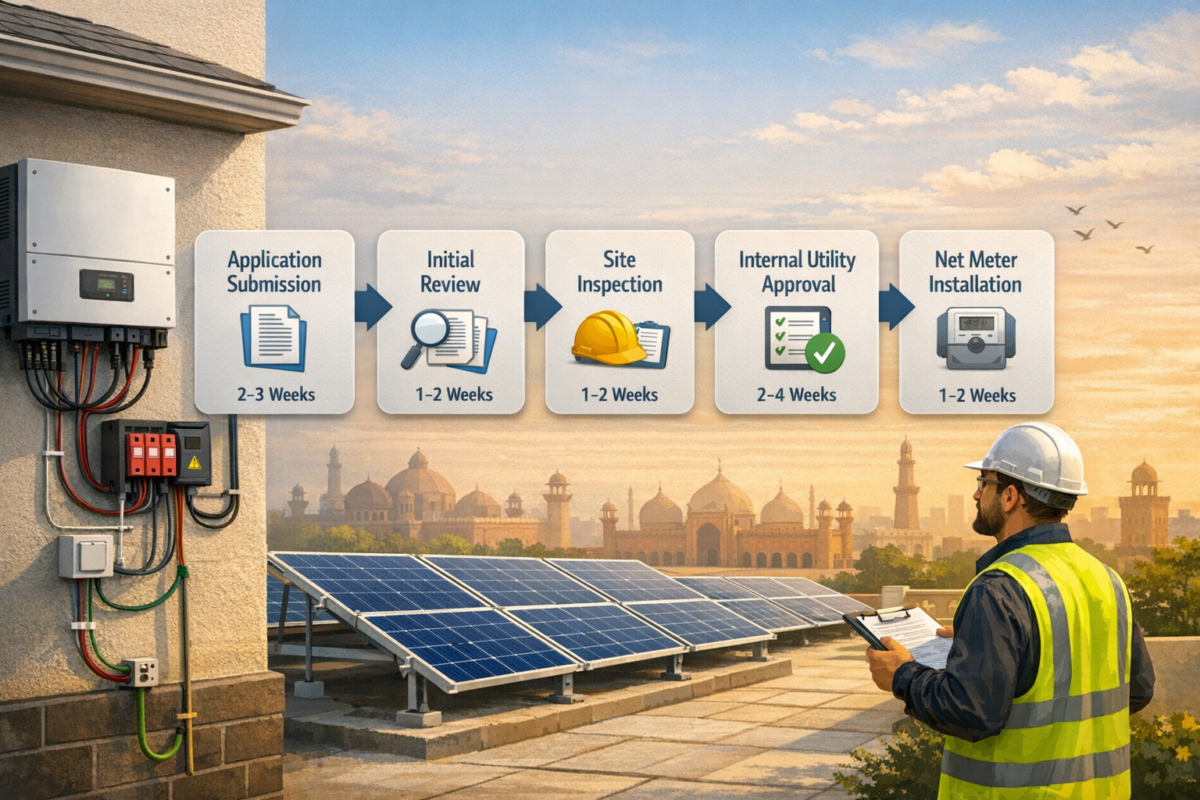
In Pakistan, thousands of solar systems are installed every month. Many of them look perfect on day one. Within a year, some start producing less than expected. Inverters trip during peak heat. Net metering gets delayed. Owners begin to wonder whether solar was a mistake.
In most cases, the panels are not the problem. The inverter is not faulty. The issue almost always traces back to how the system was installed.
A solar installation is not just about fixing panels on a roof. It determines how well the system handles heat, dust, voltage fluctuation, and long-term stress from Pakistan’s grid. A quality installation protects performance, safety, and reliability for decades. A poor one slowly erodes output, increases faults, and shortens equipment life.
This guide explains what solar installation best practices actually look like in Pakistan, based on real rooftop conditions and common mistakes homeowners face every day.
Why installation quality matters in Pakistan
Pakistan’s environment tests solar systems aggressively. High temperatures reduce output. Dust settles fast. Voltage fluctuation stresses inverters. A system that works fine on paper can underperform within months if installed poorly.
Many homeowners hear “everything is ok” during installation. Later, they see frequent inverter trips, low generation, or delayed net metering approval. These problems usually start on the roof, not inside the inverter.
A quality install controls heat, protects wiring, manages load correctly, and prepares the system for grid interaction.
What best practices really mean
Best practices do not mean expensive brands. They mean correct decisions at each stage.
A quality install follows standards for mounting, wiring, protection, ventilation, and testing. It also plans for Pakistan’s realities, not textbook conditions.
Shortcuts happen because they save time. They cost the owner later.
What a Proper Solar Installation Includes
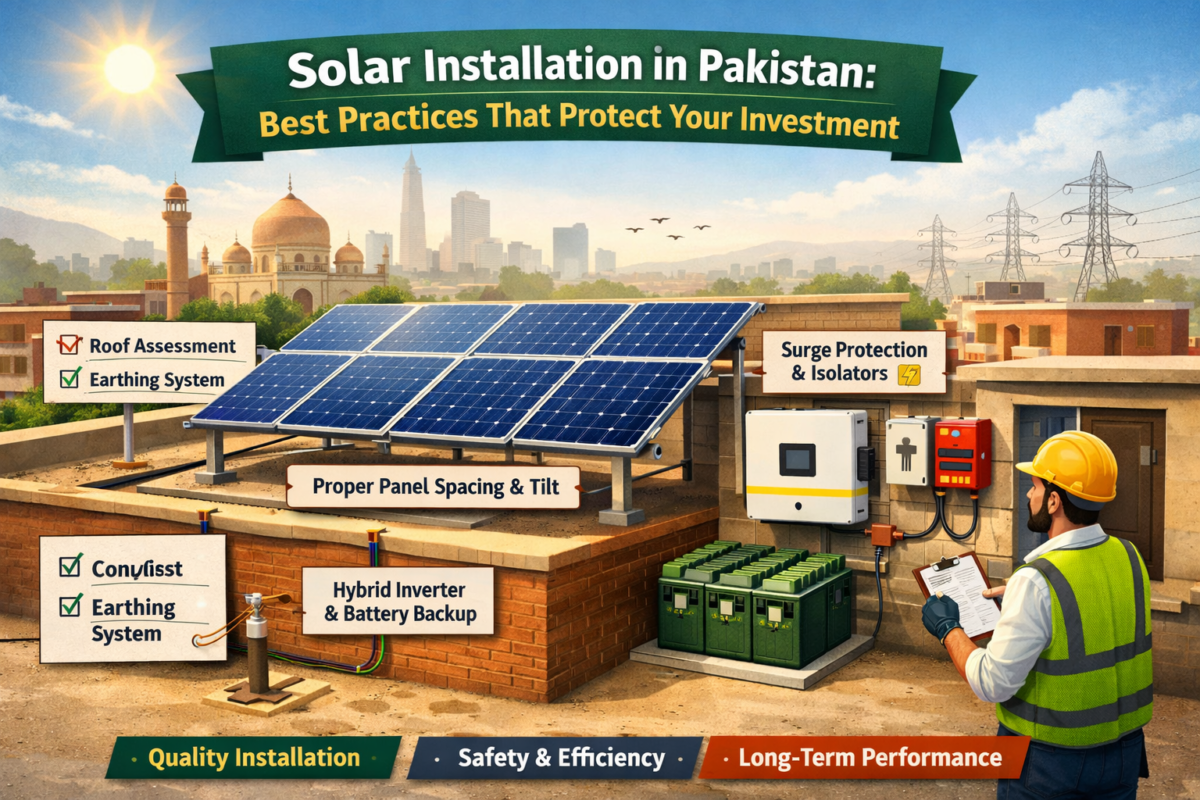
A properly installed solar system should meet the following basic checks before handover.
- Roof shadow analysis completed
- Panels spaced for airflow
- DC cables in UV-rated conduit
- Proper earthing pit installed
- Surge protection installed
- Inverter placed in ventilated shade
- Net metering compliance checked
Pre-installation checks, people often skip
Roof assessment and structure
Installers must inspect the roof slab, slope, and load capacity. Weak parapet walls, water tanks, and stair headrooms often create shadows. Ignoring these leads to uneven production.
Panels placed without spacing trap heat. That reduces output and shortens lifespan.
Orientation and tilt planning
South-facing orientation works best in most of Pakistan. Tilt must balance yearly production and cleaning ease. A flat tilt looks neat but collects dust faster. That reduces output.
System sizing and load review
Many homes have oversized systems without reviewing daytime usage. Others undersize systems due to fear of net metering rules. Correct sizing avoids stress on components.
For detailed sizing logic, readers often confuse installation with system planning. That topic is better covered separately under the solar system sizing guide.
Best practices during panel installation
Mounting structure quality
Use corrosion-resistant mounting. GI structures must handle wind loads and roof expansion. Loose bolts cause vibration. Over time, that cracks tiles and weakens slabs.
Panel spacing and airflow
Panels must allow airflow underneath. Touching the panels on the roof increases heat buildup. Heat reduces output and accelerates degradation.
Cable routing discipline
DC cables must run in proper conduit. Loose cables exposed to the sun become brittle. Sharp edges damage insulation.
Cable ties are not decoration. They prevent movement and friction. Poor routing leads to insulation failure and fire risk. Many real-world mistakes appear repeatedly and are documented under the solar installation mistakes in Pakistan.
Inverter and electrical installation best practices
Correct inverter placement
Inverters need shade and ventilation. Mounting them in closed staircases or metal cabinets traps heat. Heat causes derating and frequent shutdowns.
Isolation and protection
Every system needs proper DC and AC isolators. Surge protection devices protect against voltage spikes and lightning events. Skipping them saves cost but risks failure.
Earthing that actually works
Earthing is not symbolic. A thin wire loosely buried does nothing. Proper grounding protects equipment and people. Poor earthing increases inverter faults.
These details matter because Pakistan’s grid faces serious instability, especially with growing rooftop adoption. This challenge is explained clearly under the grid challenges from rooftop solar.
Net metering and compliance best practices
Net metering problems often start at installation. Incorrect inverter settings, missing protection, or poor documentation cause delays. Many approvals fail due to wiring inconsistencies and unclear diagrams.
Installers must design systems with compliance in mind from day one. Retro-fixing later creates delays and costs. A practical understanding of the approval process helps homeowners ask the right questions. That process is explained in detail under how to apply for net metering in Pakistan.
Post-installation checks that define a quality install
Commissioning tests
Before handover, installers should test insulation, voltage, grounding, and inverter startup. Skipping commissioning leads to silent faults.
Performance verification
Initial production should match expectations based on sunlight. Monitoring apps must be configured and explained. If output looks low, installers should investigate immediately. Delays normalize problems that could have been fixed early. Understanding expected output helps owners judge performance realistically. That concept is explained under solar panel performance ratio.
Maintenance-focused installation practices
Good install plan for maintenance. Panels should be reachable for cleaning. Cables should remain accessible. Connectors should not hide under panels where heat builds.
Dust is unavoidable in Pakistan. Designs that ignore cleaning access force owners to neglect maintenance. That reduces output. Routine care depends on how the system was installed. Practical advice is covered under solar maintenance tips.
How to identify a quality install without technical knowledge
Homeowners do not need engineering degrees. Ask simple questions. Where is the earthing pit? Where are isolators installed? Why is the inverter placed here? Can I see monitoring data?
Look for clean routing. Organized wiring. Proper labels. Clear explanations. Avoid installers who rush handover or avoid questions. Cheap installs hide costs that appear later. A quality install feels calm and transparent, not hurried.
Final thoughts
Solar installation best practices protect your investment. Panels generate power. Installation preserves it. In Pakistan’s environment, shortcuts surface quickly. Heat, dust, and grid behavior expose weak workmanship.
A quality install delivers stable output, safer operation, and fewer surprises. It gives peace of mind. That confidence matters more than any brand name.
Independent Power: Connect with Enon Traders Today!
Start your off-grid journey with Pakistan’s most reliable solar partner.
| Connect With Us | Action Link |
| Chat Instantly on WhatsApp | Get an off-grid system quote: Click to Chat Now! |
| Visit Our Website | View our off-grid inverters: Official Website |
| Call Our Experts | Design your custom micro-grid: Contact Page |