Three-Phase Solar Inverters in Pakistan
February 2, 2026
The Rise of “Solar Aggregators”: The New Middlemen in Pakistan’s Energy Market
February 4, 2026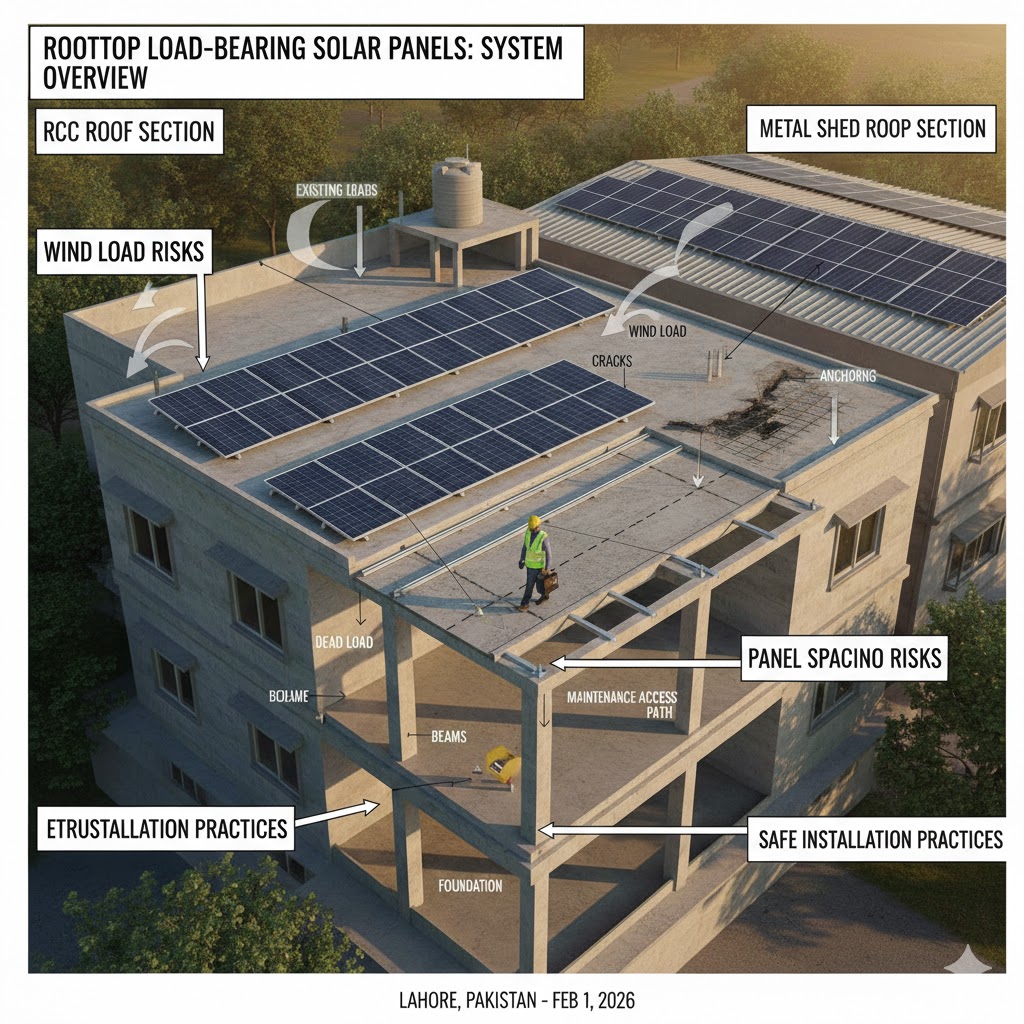
The installation of solar panels on rooftops is not a rare sight in Pakistan. Residential buildings in Lahore, Multan, and Islamabad are installing solar panels on their rooftops to cut down their electricity bills. Industrial buildings are also not far behind. But there is one question that still lingers in the minds of building owners before the installation of solar panels begins.
Can the roof support the solar panels?
This is a valid question. Solar panels are not something that will be removed after a certain period of time. They will also have an effect on the rooftop during extreme weather conditions. Ignoring the pressure of the rooftop can lead to problems in the future that will cost a lot to fix.
This article will provide you with a clear understanding of load-bearing solar panels on rooftops.
Understanding Rooftop Load Bearing for Solar Panels
What Load Bearing Means in a Rooftop Solar Context
Load-bearing refers to the amount of weight that a roofing system can support. It involves the slab, beams, columns, and the way the weight is distributed to the foundation. It is not restricted to the area where the panels are placed.
When solar panels are placed on a roof, a new permanent load is introduced. This load is present every day. Unlike people and furniture, solar panels do not move or disappear.
Most homeowners believe that a load-bearing roof will either collapse or be just fine. The truth is that structural stress usually takes time to develop. Small problems take years, not days.
How Solar Panels Add Weight to a Roof
A single solar panel usually weighs between 25 and 35 kilograms. Mounting rails, clamps, and fasteners add additional weight. Cable trays and junction boxes add smaller loads that still matter when combined.
What matters most is not just total weight. Weight distribution plays a bigger role. Panels spread across a wide area create less stress than heavy items placed in one spot.
Most roofs already support water tanks, parapet walls, and extra plaster. In many cases, a well-designed solar installation adds less stress than these existing loads.
Why Roof Strength Matters Before Installing Solar
Structural Risks of Ignoring Roof Strength
When roof strength is ignored, damage rarely appears immediately. Hairline cracks often form first. Water seepage follows during the monsoon season. Over time, slabs may sag slightly or beams may weaken.
Many homeowners say everything looked fine at the start. That is common. Structural stress builds quietly and becomes visible only after months or years.
Short-Term Safety vs Long-Term Structural Health
A roof may safely hold panels today, but struggle over time. Heat expansion, constant weight, and moisture exposure slowly reduce concrete strength. Steel reinforcement inside slabs may corrode if water enters cracks.
Pakistan’s climate increases this risk. Extreme summer heat and heavy rains place more stress on rooftops than moderate climates. Long-term planning matters more here.
Types of Rooftops and Their Load-Bearing Capacity
Reinforced Concrete Roofs in Pakistan
RCC roofs are the most common in residential buildings. Most modern RCC slabs can support solar panels without issue. Problems arise when slabs are thin, poorly reinforced, or already damaged.
New houses are not automatically safe. Poor construction quality can weaken even new slabs. Visual inspection remains important.
Metal Sheet and Shed Roofs
Metal sheds are lightweight and common in factories and warehouses. These roofs usually handle panel weight well. However, wind uplift becomes a major concern.
Mounting design matters more than panel weight on metal roofs. Improper anchoring can cause panels to lift during strong winds.
Older Buildings and Weakened Roof Structures
Buildings older than 20 years deserve careful attention. Previous leak repairs, extra layers of plaster, or modifications reduce real strength.
Age alone does not make a roof unsafe. Lack of inspection does.
How to Assess Roof Strength for Solar Panels
Visual Signs of Load-Related Issues
Cracks that run across slabs or along beams signal stress. Uneven surfaces or sagging edges also indicate weakness. Water stains often point to deeper structural problems.
Temporary repairs may hide these signs. Always inspect carefully before installation.
Using Structural Drawings and Load Checks
If original drawings are available, installers can estimate roof capacity more accurately. If drawings are missing, a structural engineer can assess the roof safely.
This step is a normal practice. It protects both the building and the investment.
Understanding Dead Load, Wind Load, and Maintenance Load
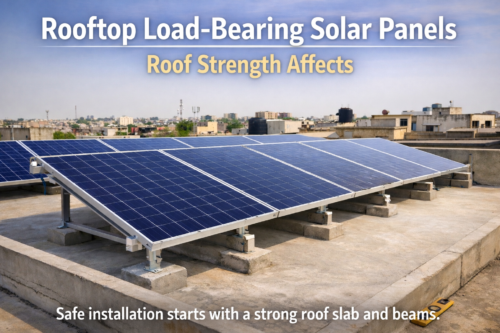
Dead load includes panels and mounting structures. Wind load adds uplift force. Maintenance load comes from technicians walking on the roof.
Many failures occur because installers focus only on weight and ignore wind. This issue often appears in the Rooftop solar mistakes.
Can All Roofs Support Solar Panels Safely?
Situations Where Solar Is Usually Safe
Most modern RCC homes with no visible damage support solar panels safely. Proper mounting spreads weight evenly and avoids weak zones.
These installations rarely face structural issues.
When Reinforcement or Alternative Design Is Needed
Some roofs require changes. Panels may move closer to beams. Extra supports may be added. In a few cases, rooftop installation is not ideal.
Ground installation becomes a safer option in such cases. Learn more through ground-mounted solar panels.
Practical Design Choices That Reduce Roof Stress
Panel Spacing, Tilt, and Layout Planning
Good spacing allows airflow and reduces heat buildup. Proper tilt limits wind pressure. Balanced layouts prevent load concentration.
Layout planning should happen before installation, not after.
Installation Techniques That Protect Roof Strength
Experienced installers distribute the load across rails fixed near structural beams. They avoid drilling into weak slab areas.
Maintenance access paths also matter. Controlled walking zones prevent random pressure on panels and slabs.
Ongoing care keeps systems safe over time. Basic guidance appears in maintenance tips for solar systems in Pakistan’s climate.
Common Myths About Rooftop Load Bearing and Solar Panels
Solar Panels Are Too Heavy for Most Roofs
This belief causes unnecessary fear. Many roofs already carry heavier loads than solar panels.
If There Are No Cracks, the Roof Is Strong Enough
This is not always true. Internal damage may exist even without visible cracks. Inspection matters.
Only Old Houses Have Load Problems
New houses also fail when the construction quality is poor. Strength depends on design and execution, not age.
How Roof Strength Affects System Planning Decisions
Roof strength influences how large a system can be installed. Bigger systems cover more area and add more total load.
Before finalizing capacity, homeowners should understand sizing basics. This process is explained in Home solar sizing in Pakistan.
Battery systems also affect planning. Batteries usually sit indoors, but inverter placement and wiring routes still interact with rooftop layout. Learn more about Home solar battery storage in Pakistan.
Financial planning comes later. Cost discussions should follow safety confirmation. A realistic breakdown of the rooftop solar cost in Lahore.
Policy rules also shape system design. Export limits and approval processes matter. A clear explanation is available on the net metering process in Pakistan.
Final Thoughts: Making Roof Strength the Foundation of Solar Safety
Rooftop load-bearing solar panels are not dangerous by default. Risk comes from assumptions and poor planning. Most roofs in Pakistan can support solar safely. Some need assessment. A few require alternative solutions.
Understanding roof strength removes fear and confusion. It leads to better decisions and longer system life. Solar should bring savings and peace of mind. When roof strength is respected from the start, both goals are achieved.
Independent Power: Connect with Enon Traders Today!
Start your off-grid journey with Pakistan’s most reliable solar partner.
| Connect With Us | Action Link |
| Chat Instantly on WhatsApp | Get an off-grid system quote: Click to Chat Now! |
| Visit Our Website | View our off-grid inverters: Official Website |
| Call Our Experts | Design your custom micro-grid: Contact Page |