Net Metering Rules in Pakistan Explained
January 30, 2026
Three-Phase Solar Inverters in Pakistan
February 2, 2026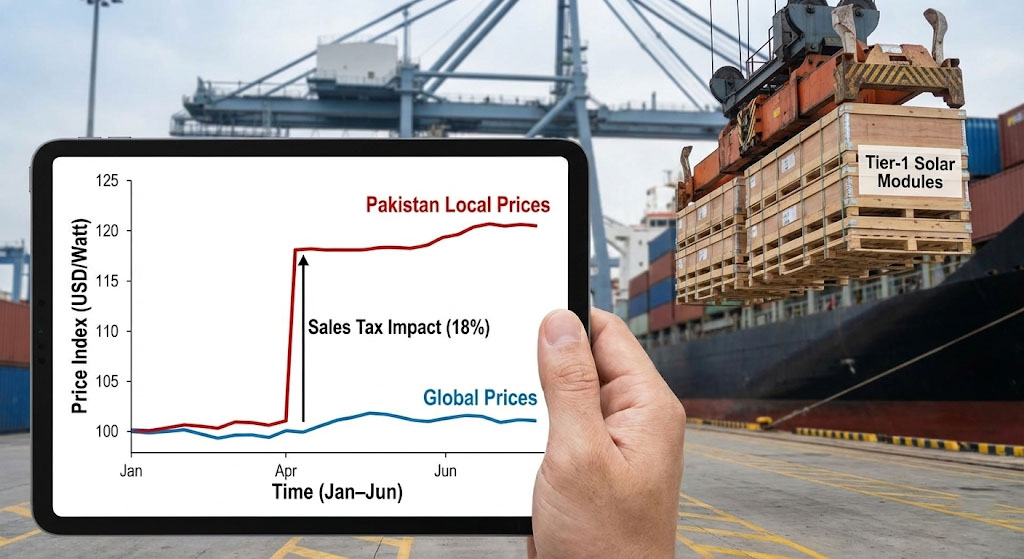
Introduction: The End of “Super Cheap” Solar?
For the past two years, Pakistan saw a massive drop in solar prices. High-quality panels became affordable for everyone.
However, as we enter 2026, the market is shifting. The government’s FY26 Budget and new tax policies are creating a “price floor.” While the days of extreme price drops are over, this change is designed to help Pakistan build its own solar industry.
If you are planning to buy solar panels, you need to understand how the new 18% Sales Tax and local manufacturing push will affect your wallet in Pakistani Rupees (PKR).
The 18% Tax Factor: What it Means
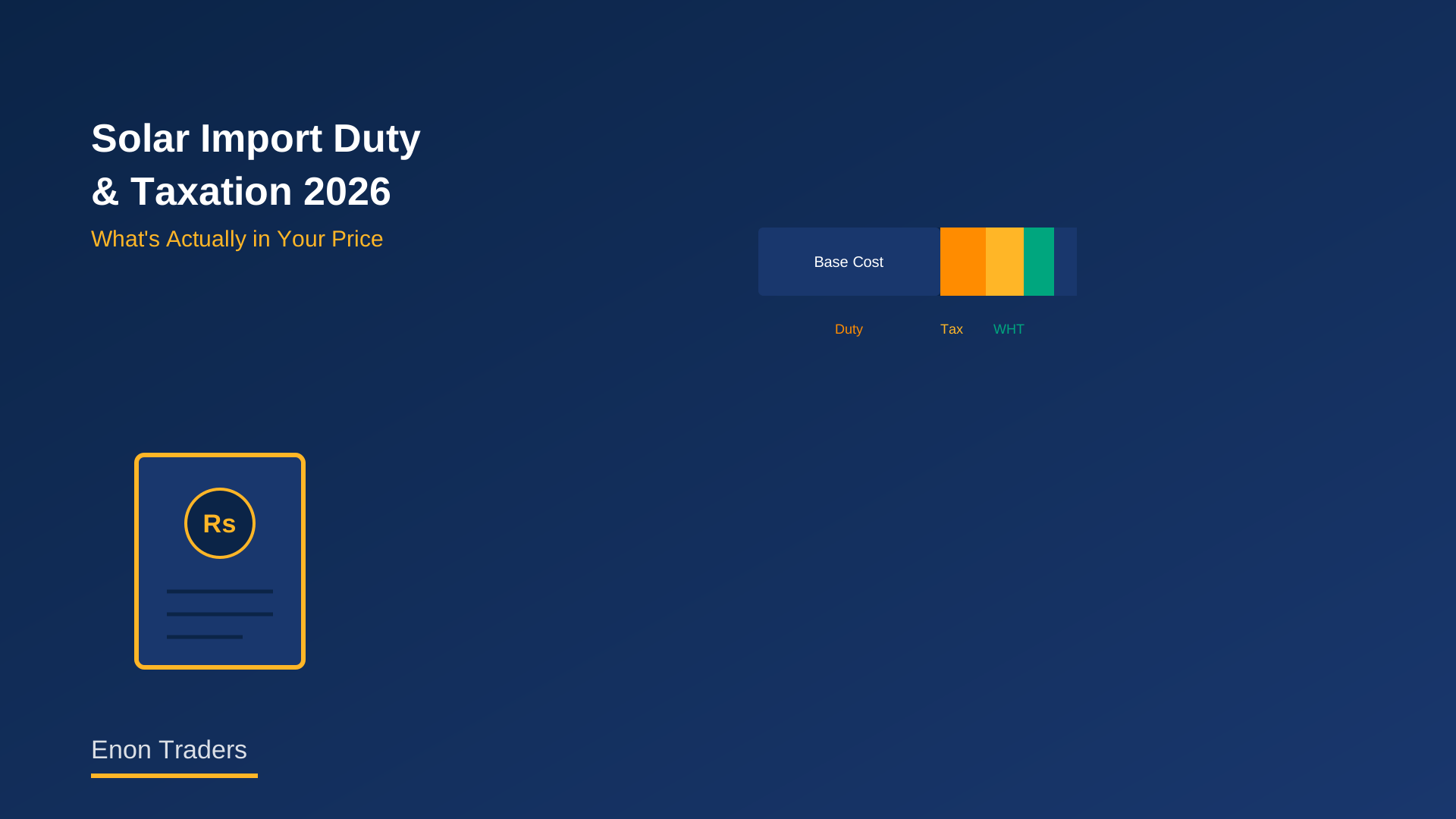
In mid-2025, the government proposed an 18% General Sales Tax (GST) on imported solar modules.4 While there was pushback, the final 2026 policy aims to equalize the market.
- The Goal: To encourage “Made in Pakistan” panels.
- The Impact: Since most Tier-1 panels (like LONGi, Jinko, and Canadian Solar) are imported, the 18% tax adds a direct cost.
- Price Example: If a panel used to cost Rs. 20,000, the new tax could push it toward Rs. 23,600 overnight.
This tax ensures that importers and local assemblers are playing by the same rules.
The “Local Manufacturing” Push
Pakistan is no longer just a buyer; we want to be a builder.
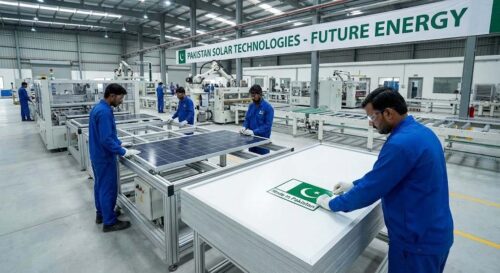
Several international firms are now partnering with local companies to set up assembly lines in Punjab and Islamabad.
- Lower Duties on Parts: While finished panels face 18% tax, the raw materials for local assembly often have lower duties.
- Market Stability: Local production reduces our dependence on the US Dollar exchange rate. This means prices in Pakistani Rupees won’t jump every time the currency fluctuates.
- Job Creation: The shift toward local panels is creating thousands of technical jobs for Pakistani engineers.
Why Prices Might Still Stabilize
Despite the new taxes, you shouldn’t panic. Global manufacturing costs are still falling due to better technology.
- Oversupply in China: China produces more panels than the world can buy. This keeps the “base price” very low.
- Efficiency Gains: Newer N-Type panels produce more electricity in the same space. Even if the price per panel rises slightly, the Price per Watt stays competitive.
- Competition: With many brands fighting for the Pakistani market, Enon Traders can still negotiate better rates for bulk buyers.
How to Buy Smart in 2026
At Enon Traders, we help you navigate these tax changes without losing your ROI.
- Inventory Management: We stock up before major tax deadlines to provide you with the best possible rates in PKR.
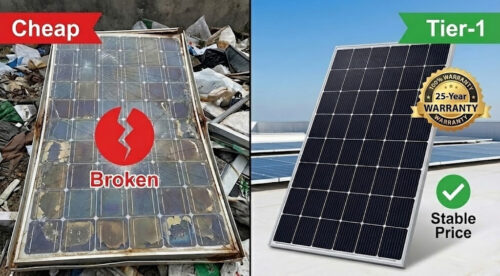
- Tier-1 Quality: Even with local pushes, we ensure every panel—imported or local—meets strict international standards.
- Hybrid Focus: Since panels are a bit more expensive, we recommend hybrid inverters and solar batteries to make sure you use every single watt you pay for.
Final Conclusion
The 18% tax is a reality of the 2026 market. While it makes the initial cost higher, it is leading to a more professional and stable solar industry in Pakistan.
Don’t wait for a “miracle” price drop. Lock in your rates now before the next fiscal cycle.
Secure Your Price: Connect with Enon Traders Today!
Get a quote that includes all 2026 taxes with no hidden surprises.
|
Connect With Us |
Action Link |
|
Chat Instantly on WhatsApp |
Check today’s per-watt price: Click to Chat Now! |
|
Visit Our Website |
Compare Tier-1 Panel Brands: Official Website |
|
Call Our Experts |
Discuss your project budget: Contact Page |