Net Metering Eligibility Criteria in Pakistan (2026): Requirements and Hidden Rules Explained
April 9, 2026
Customs Duty on Solar Panels in Pakistan: GST Rules and Current Tax Policy Explained
April 16, 2026
Most homeowners in Pakistan install solar to reduce their electricity bill. That is a smart decision. But here is what often happens. Year one feels perfect. The system runs smoothly. Bills drop. Everything looks balanced. By year three, reality changes.
A second 1.5-ton air conditioner is added. A deep freezer runs full-time. Work-from-home becomes permanent. Summer loads increase. The inverter that once operated at 60 percent now touches 90 to 100 percent during peak hours. Nothing is faulty. Nothing is defective. The system simply was not designed for growth.
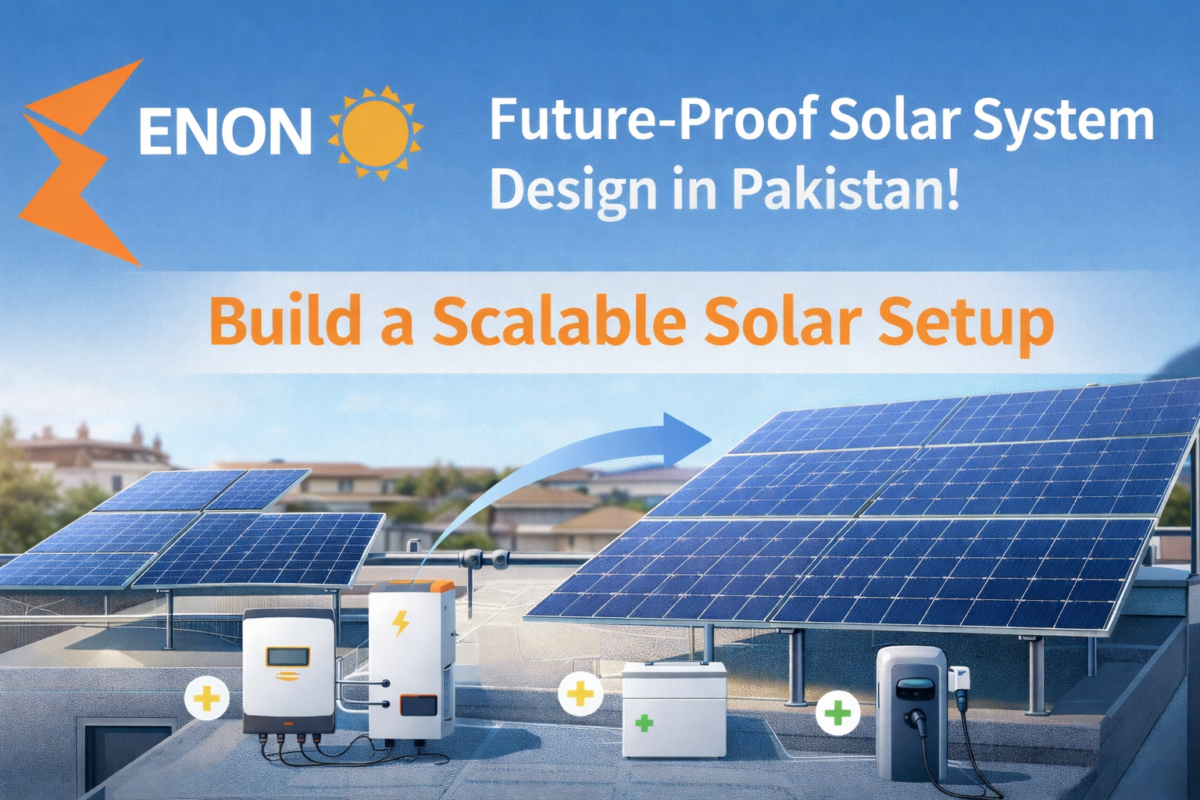
This is where future-proof solar system design in Pakistan becomes critical. A scalable solar system is not about installing the biggest inverter available. It is about designing headroom, flexibility, and clean expansion pathways from day one, so expensive components never need replacement.
Let us break this down with practical engineering clarity.
What Future-Proof Solar System Design Actually Means
Future-proof solar system design means building a system that can expand without forcing replacement.
A properly scalable solar setup includes:
- 20 to 30 percent inverter headroom
- Distribution board spare capacity
- Oversized conduits for future wiring
- Reserved roof space for additional panels
- Battery compatibility planning
- Clean DC string expansion layout
Many homeowners assume buying a larger inverter automatically guarantees scalability. That is not true. Poor design can block expansion even with oversized hardware.
Before planning scalability, your baseline sizing must be accurate. If you have not reviewed the correct sizing fundamentals, first understand how to size your home solar system through this detailed guide. Scalability begins after proper sizing, not before it.
Why Scalability Matters More Than Initial Size
Electricity demand in Pakistani households rarely stays constant.
A realistic growth scenario:
Year 1
• One 1.5-ton inverter AC
• Peak evening load: 3.5 to 4 kW
Year 2
• Second 1.5-ton AC installed
• Startup surge per AC: 3.5 to 4 kW
• Combined surge: 6 to 8 kW
If the installed inverter is 5 kW single-phase, it will now operate near its limit.
Continuous operation above an 85 percent rating increases:
- Thermal stress
- Voltage trips
- Export instability
- Long-term degradation
Three bottlenecks usually appear:
- Inverter saturation
- Distribution board overload
- Cable capacity limitation
Without planning scalability, expansion becomes replacement.
Inverter Architecture: The Core of a Scalable Solar System
Your inverter determines your upgrade flexibility.
Many homes install a 5 kW single-phase inverter because it matches present consumption. But in many Pakistani grids, single-phase export is typically capped at around 5 kW, and voltage trip thresholds occur at around 253V.
Adding more panels later does not increase usable output if the inverter is already saturated. It simply causes clipping. Before choosing, review this practical breakdown of single-phase inverter performance and limitations.
If long-term growth is expected, a 7 to 8 kW inverter operating at 70 to 80 percent load is often more stable than a tightly matched 5 kW system running near 100 percent. Future-proof solar system design in Pakistan is about controlled loading, not maximum loading.
Designing Proper Inverter Headroom With Real Numbers
Headroom means your inverter should not operate at full capacity during the projected peak load.
Recommended engineering guidelines:
- Continuous load target: 70 to 80 percent of rated capacity
- Surge tolerance: 2x to 3x for compressor loads
- Voltage fluctuation buffer: 10 percent margin
Example:
If your projected peak after two years may reach 6 kW, installing a 7.5 kW inverter today prevents a future replacement costing PKR 250,000 to 350,000, including rewiring.
That small upfront planning difference protects long-term stability.
DC Oversizing With a Planned Expansion Ratio
The DC-to-AC ratio directly impacts scalability.
Recommended window in Pakistan:
- DC array at 110 to 130 percent of the inverter AC rating
If the inverter already clips at noon, adding more panels later will not improve output.
A scalable design leaves:
- Additional MPPT capacity
- Spare string planning
- Balanced DC cable sizing
- Protection devices rated above the minimum
Expansion must follow engineering calculations, not assumptions.
Distribution Board and Electrical Infrastructure Planning
This is one of the most ignored areas in Pakistani installations.
Expansion often fails because:
- No spare MCB slots
- Busbar limited to 100A when future load requires 200A
- 4mm wiring where 6mm was required
- Fully packed conduits with no spare pathway
Upgrading a distribution board later can cost PKR 60,000 to 120,000 and may require structural modifications.
If you have not reviewed common installation errors, study the top mistakes to avoid in rooftop systems. Infrastructure is harder to upgrade than panels. Plan it properly the first time.
Battery-Ready Architecture
Even if you are not installing batteries today, future-proof solar system design requires battery readiness.
Battery preparation includes:
- Hybrid-compatible inverter selection
- 16mm to 25mm cable allowance
- Reserved wall mounting space
- Logical load segregation for backup circuits
Before investing in storage, review whether battery storage for home solar in 2026 makes financial sense in your case.
Retrofitting battery wiring later costs more than preparing during initial installation.
Planning for EV Charging and High-Growth Loads
Electric vehicle charging adds a significant load.
Typical draw:
- 3.3 kW on single-phase
- Up to 7 kW on higher-rated lines
Other common additions within three years:
- Second AC
- Electric geyser
- Water pump upgrade
- Home office setup
A scalable solar system in Pakistan assumes at least one major load addition within three years.
Roof Layout and Structural Planning
Scalability is not only electrical. It is structural. Many installers fill the entire roof immediately. Later expansion becomes impossible due to shading conflicts or weak slab zones.
Reserve 15 to 20 percent of usable roof area if possible. Before approving installation, evaluate the rooftop load-bearing solar system. Structural readiness prevents costly redesign later.
Policy and Export Rate Awareness
Solar economics in Pakistan continue to evolve.
Oversizing purely for export without understanding changing buy-back export rate trends may reduce financial efficiency.
Future-proof solar system design in Pakistan must reflect regulatory direction, not outdated net-metering assumptions.
Wiring and DC Protection: Hidden Scalability Factors
Undersized DC cables limit string expansion. Poor MC4 connections increase heat loss. Weak DC breakers reduce the safety margin.
For a correct wiring foundation, review this technical solar DC cables guide. Future scalability begins with proper wiring architecture.
Basic Solar Design vs Future-Proof Solar Design
|
Feature |
Basic Design |
Future-Proof Design |
|
Inverter Headroom |
0 to 5% |
20 to 30% |
|
Thermal Stress |
High |
Controlled |
|
DB Spare Slots |
None |
Reserved |
|
Cable Sizing |
Minimum |
Expansion Ready |
|
Roof Layout |
Fully Used |
Staged Planning |
|
Battery Ready |
No |
Yes |
|
Upgrade Risk |
High |
Low |
|
Long-Term ROI |
Unstable |
Protected |
The difference determines whether you expand or replace.
Common Expansion Mistakes That Force Full Replacement
- Installing a 5 kW inverter with no spare MPPT
- Using a minimum-rated DC cable for long runs
- Filling the distribution board completely
- Ignoring the voltage fluctuation buffer
- Mounting panels without expansion spacing
- Choosing an inverter without hybrid support
Most replacement cases are not equipment failures. They are planning failures.
Real Case Example
A Lahore homeowner installed a 5 kW single-phase system in 2023. By 2025, two AC units will operate together. Overload trips increased. Export dropped at peak sun hours.
The inverter required replacement with an 8 kW architecture at a total cost of near PKR 300,000, including rewiring adjustments.
If headroom had been designed initially, replacement would have been unnecessary. This is the financial impact of ignoring scalability.
Quick Scalability Checklist
Before approving installation, confirm:
- The inverter operates below 80 percent of the projected peak
- Surge loads are calculated realistically
- The distribution board has spare capacity
- Conduits allow future wiring
- Roof space reserved
- Battery integration is simple
- Export policy considered
- Wiring sized above the minimum standard
If these conditions are satisfied, your system is genuinely scalable.
Financial Perspective: Protecting Long-Term ROI
Future-proof solar system design in Pakistan may increase upfront cost by 5 to 10 percent.
However, replacing a major inverter later costs significantly more.
To evaluate return clarity, calculate your solar system’s payback period using this guide:
Scalable design protects both equipment and investment return.
Final Thoughts
Electricity demand in Pakistani homes almost always increases.
Future-proof solar system design in Pakistan ensures:
- Stable performance
- Reduced stress on components
- Clean upgrade pathways
- Controlled long-term cost
- Higher lifespan
- Stronger financial return
Designing only for the present load creates tomorrow’s replacement.
Designing with foresight creates durable energy independence.
True scalability is not about installing more hardware.
It is about installing intelligently.
Independent Power: Connect with Enon Traders Today!
Start your off-grid journey with Pakistan’s most reliable solar partner.
| Connect With Us | Action Link |
| Chat Instantly on WhatsApp | Get an off-grid system quote: Click to Chat Now! |
| Visit Our Website | View our off-grid inverters: Official Website |
| Call Our Experts | Design your custom micro-grid: Contact Page |