
Why Commercial Buyers Need a Different Playbook
Most of this series — including our net metering process guide — is written primarily for residential buyers. Commercial and industrial connections follow the same underlying NEPRA framework covered in our regulations guide, but the practical experience differs meaningfully once load size and connection type scale up.
Planning a commercial or industrial solar project? Ask our team on WhatsApp.
How Rules Scale by Connection Type
Key Differences From Residential Net Metering
| Factor | Residential | Commercial/Industrial |
|---|---|---|
| Typical timeline | 4–8 weeks | 6–12+ weeks, depending on scale |
| Documentation depth | Standard single-line diagram | Detailed technical specs, sometimes grid impact study |
| Common financing route | Cash, SBP Green Line, bank loan | Bank loan for mid-size, PPA for larger projects — see our financing guide |
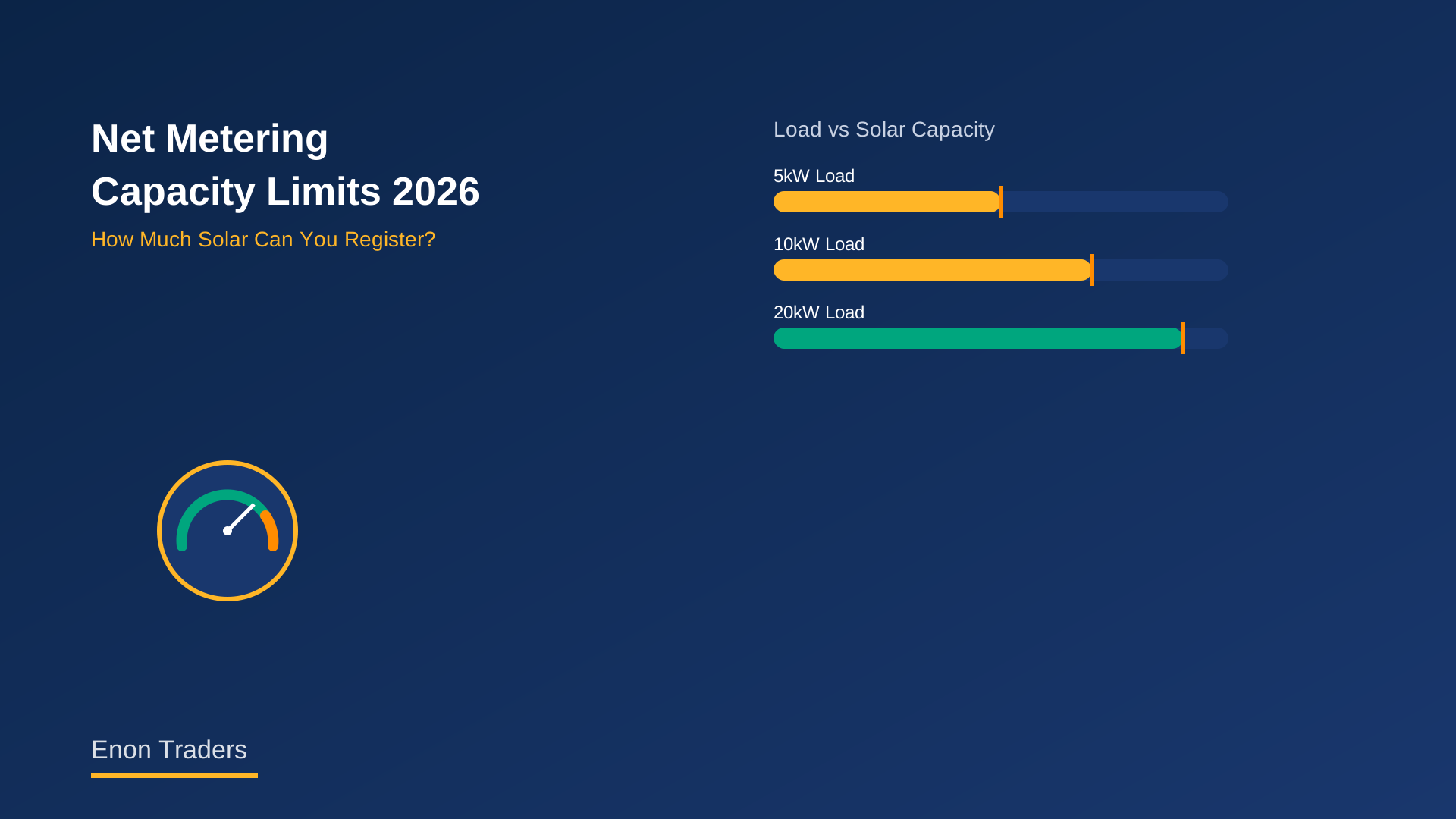
| Capacity ceiling considerations | Tied to sanctioned household load | Tied to sanctioned commercial/industrial load, often larger but still capped |
When PPA Makes More Sense Than Direct Ownership
For large industrial loads, our solar financing guide covers Power Purchase Agreements as an option where a third-party developer owns the system and you simply buy the electricity at a fixed rate. This shifts the net metering registration burden to the developer rather than your business directly — worth considering specifically because commercial-scale net metering paperwork is heavier than residential.
The core net metering right doesn't change for commercial and industrial buyers, but the practical process gets heavier as system size grows — expect more documentation, longer review windows, and a real decision point around whether direct ownership or a PPA structure better fits your business's risk tolerance and administrative capacity.
We handle commercial and industrial net metering applications end to end. Get a free consultation on WhatsApp →
Related Guides
Solar Financing Guide
Compare bank loans, leasing, and PPA structures for larger commercial projects.
View financing guide →50kW Commercial System
Pricing reference for the size point where PPA conversations typically begin.
View 50kW pricing →Net Metering Capacity Limits
How sanctioned load caps apply, including for larger commercial connections.
View capacity limits guide →Frequently Asked Questions
Yes, the underlying policy right applies across residential, commercial, and industrial connections, though the practical documentation and review process scales with system size.
Larger export capacities can have a more meaningful effect on local grid infrastructure, so DISCOs may require additional technical review to confirm the local network can safely handle the export volume.
It depends on capital availability and administrative bandwidth — direct ownership offers more long-term savings but requires managing net metering paperwork directly, while a PPA shifts that burden to the developer at a different cost structure.
The netting methodology generally follows the same national framework, though specific tariff categories can differ between residential and commercial/industrial connections — confirm your applicable rate with your DISCO.
Yes, the Green Line scheme covers SMEs and corporates alongside individuals — see our financing guide for eligibility details.
For larger systems, starting several weeks earlier than the typical residential timeline is a reasonable buffer, especially if the project is tied to a specific operational deadline.