DC Breakers for Solar Systems: How to Choose the Right Protection
April 3, 2026
Battery Inverter Compatibility Chart: A Complete Matching Guide to Avoid Costly Mistakes
April 7, 2026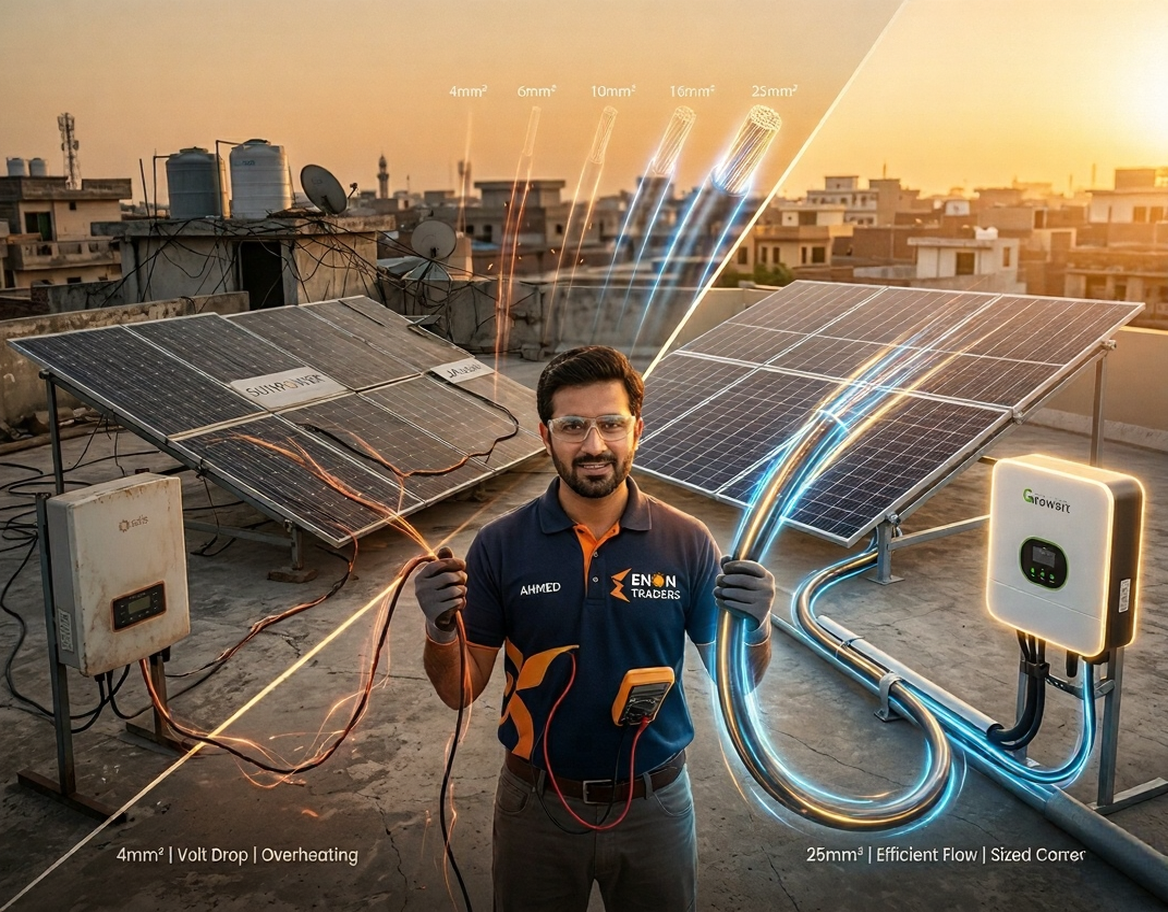
Most solar systems in Pakistan lose 5% to 10% energy daily due to one hidden mistake: wrong DC cable sizing.
People invest in good panels and inverters, but ignore the wiring. This small decision quietly reduces system output, increases heat, and shortens equipment life.
If your cable is not sized correctly, your system will never perform at its full capacity.
In simple words, a weak cable slowly eats your solar savings.
Quick Answer: DC Cable Sizing (Simple Summary)
- DC cable sizing means choosing the right thickness of cable for the solar current
- The ideal voltage drop should stay between 2% to 3%
- Longer distance = thicker cable required
- Higher current = thicker cable required
- In Pakistan’s heat, always choose one size bigger for safety
Why DC Cable Sizing Matters in Solar Systems
DC cables carry electricity from panels to the inverter. This is the most sensitive part of the system.
If the cable is too thin, resistance increases. This leads to energy loss and heat generation.
In Pakistan, the problem becomes serious due to high temperatures. Heat already affects performance. When combined with thin cables, it creates long-term damage.
Many installers reduce cable size to save cost. But this causes hidden losses every single day.
To understand installation mistakes better, read the top mistakes to avoid when installing rooftop solar in Pakistan
Understanding Voltage Drop in Simple Terms
Voltage drop is the loss of energy when electricity travels through a wire.
In simple words,
The longer the wiring, the greater the voltage loss.
Every cable has resistance. When current flows, some energy turns into heat. This reduces the voltage reaching your inverter.
Industry experts recommend keeping the voltage drop under 3% for solar systems.
How Voltage Drop Affects Your System Performance
Voltage drop directly reduces power output.
For example:
If your system produces 5000 watts and loses 5%, you lose 250 watts daily.
This loss continues every day, every month, every year.
In Pakistan, where systems often have long wiring distances, this issue becomes even more important.
To understand full system sizing, check how to size your home solar system in Pakistan.
Key Factors That Decide DC Cable Size
Cable sizing depends on a few simple factors:
- System size
- System voltage
- Distance between panels and inverter
- Cable material (copper is best)
- Temperature conditions
In Pakistan, high temperatures increase resistance. That is why local conditions must always be considered.
For a deeper understanding, visit the solar DC cables guide.
Basic Rule for Choosing Cable Size
You do not need complex formulas.
Just remember:
- Higher current needs a thicker cable
- Longer distance needs thicker cable
For example, using a 4mm cable for a 5kW system over 20 meters is risky. A 10mm cable is a safer and more efficient choice.
DC Cable Size Table for Solar Systems in Pakistan
Standard Recommendation Table
|
System Size |
Distance |
Recommended Cable |
|
1kW |
Up to 10m |
4mm |
|
1kW |
10-20m |
6mm |
|
3kW |
Up to 10m |
6mm |
|
3kW |
10-25m |
10mm |
|
5kW |
Up to 15m |
10mm |
|
5kW |
15-30m |
16mm |
|
10kW |
Up to 20m |
16mm |
|
10kW |
20-40m |
25mm |
These values are practical and safe for Pakistan’s conditions.
DC Cable Sizing Chart (Quick Visual Guide)
Think of cable sizing like this:
- Small system + short distance: thin cable
- Medium system + medium distance: medium cable
- Large system + long distance: thick cable
Simple pattern:
1kW: 4mm to 6mm
3kW: 6mm to 10mm
5kW: 10mm to 16mm
10kW: 16mm to 25mm
Always move one step up if unsure.
Practical Rules Installers Follow
Experienced installers use simple rules:
- If the distance increases, increase the cable size
- If the weather is hot, increase the cable size
- If the load is high, increase the cable size
A slightly thicker cable improves efficiency and reduces heat.
To understand the savings impact, read the solar ROI calculator guide.
Real Cost of Choosing the Wrong Cable
Many people ignore this, but the impact is serious.
Wrong cable size leads to:
- Daily energy loss
- Higher electricity bills
- Overheating wires
- Reduced inverter life
- Safety risks
Over time, these losses become bigger than the cost saved on cable.
Learn how to avoid poor equipment decisions. Read this topic on choosing quality solar equipment in Pakistan.
Common Mistakes to Avoid
Most common mistakes include:
- Ignoring cable distance
- Choosing cable based on price only
- Using AC cable logic for DC systems
- Ignoring temperature effects
These mistakes reduce system efficiency without you even noticing.
Pakistan-Specific Considerations
Solar systems in Pakistan face unique challenges:
- High temperatures increase resistance
- Long rooftop distances increase the voltage drop
- Dust affects system efficiency
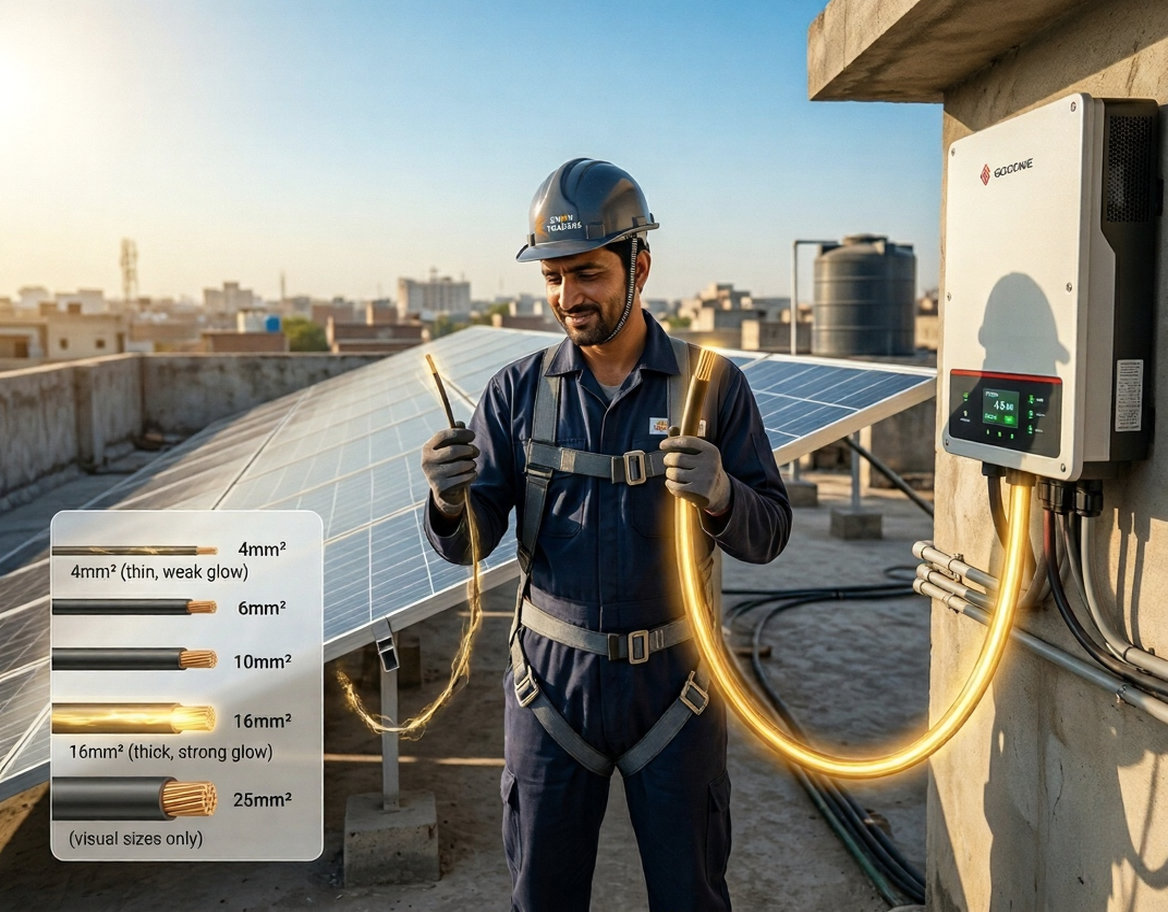
Common cable sizes available are 4mm, 6mm, 10mm, 16mm, and 25mm.
To improve system life, check maintenance tips for solar systems in Pakistan’s climate.
DC vs AC Cable Sizing – Key Difference
DC and AC cables behave differently.
- DC cables are more sensitive to voltage drop
- A small loss in DC reduces the total system output
- AC systems are more forgiving
That is why DC cable sizing must be more accurate.
To understand system performance better, check the inverter efficiency ratings.
Final Thoughts: Choose Smart, Save More
DC cable sizing is not a minor detail. It directly affects your solar system performance. A correct cable improves efficiency, safety, and long-term savings.
Always consider distance, current, and temperature. If you are unsure, choose one size bigger.
This small decision can save you thousands of rupees over time. Solar is a long-term investment. Smart planning gives you better results.
Independent Power: Connect with Enon Traders Today!
Start your off-grid journey with Pakistan’s most reliable solar partner.
| Connect With Us | Action Link |
| Chat Instantly on WhatsApp | Get an off-grid system quote: Click to Chat Now! |
| Visit Our Website | View our off-grid inverters: Official Website |
| Call Our Experts | Design your custom micro-grid: Contact Page |