A-Grade Solar Panels in Pakistan: Meaning, Quality and B-Grade Differences
January 6, 2026
Solar Panel Performance Ratio Explained
January 8, 2026
In Pakistan, most imported solar panels come from China, but the label ‘imported’ alone does not guarantee quality, performance, or long-term reliability. Solar panels are a long-term investment, and choosing the wrong type can affect your electricity savings, system performance, and even the resale value of your property.
In Pakistan’s solar market, the word imported is used everywhere. Installers say it confidently. Sellers highlight it as a quality signal. Buyers often assume it guarantees better performance. At the same time, China’s solar panels are frequently praised and criticised in equal measure, leaving many people unsure what to believe.
What is missing from most discussions is clarity. What does imported actually mean once panels reach Pakistan? Are China-manufactured panels genuinely better, or is the label being overused? And how much of this matters for real rooftop performance in Pakistani conditions?
This article answers those questions clearly and honestly. It does not try to sell you a product. Instead, it explains how imported solar panels work in Pakistan, where misunderstandings begin, and how you can evaluate them intelligently rather than relying on labels alone.
What “Imported Solar Panels” Really Means in Pakistan?
In straightforward terms, imported solar panels are panels manufactured outside Pakistan and brought into the country through commercial import channels. In practice, most imported panels come from China, even if the brand name suggests a different origin.
What many buyers do not realise is that imported is not a quality category. Imported panels can include factory-sealed export stock, surplus batches, cosmetically imperfect panels, or mixed shipments that are reclassified locally. Once panels arrive in Pakistan, they pass through multiple hands before installation.
During this process, original factory grading and documentation may no longer be clearly traceable. This is where confusion begins. Two panels sold as imported can have very different production histories, even if they look identical on paper.
Why China Dominates Imported Solar Panels in Pakistan?
China dominates global solar manufacturing because of scale, not shortcuts. More than two-thirds of the world’s solar panels are produced in Chinese factories, including panels sold under European and international brand names.
This is why China’s solar panels should not be viewed as a single quality level. Chinese factories produce panels across a wide spectrum, from premium export-grade modules to cost-optimised batches intended for price-sensitive markets.
A common mistake buyers make is assuming that the country of manufacture determines performance. In reality, consistency of production, cell technology, quality control, and handling after import matter far more than geography.
How are imported Chinese solar Panels graded Before Export?
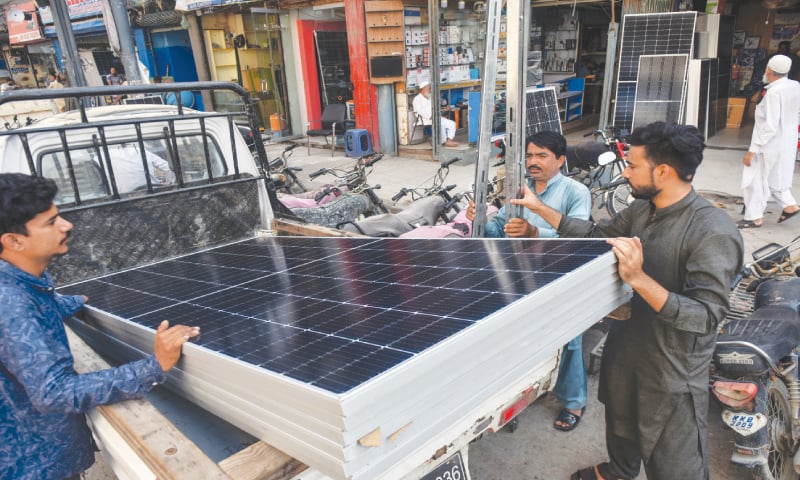
Inside manufacturing plants, panels are tested and graded based on electrical output, visual consistency, and tolerance thresholds. Panels that meet strict export requirements are separated from those with cosmetic or minor electrical variations.
By the time panels reach Pakistan, original classifications may no longer be verifiable due to repackaging, mixed shipments, or incomplete documentation. This is why buyers should look beyond labels like “A-grade imported” and understand the real difference explained in A Grade vs B Grade Solar Panels before evaluating imported solar panels.
This does not mean all imported panels are unreliable. It does mean that grading language in Pakistan is often commercial rather than technical. Buyers who understand this are less likely to be misled by confident sales terms.
How Imported Solar Panels Perform on Pakistani Rooftops?
Most articles focus on laboratory efficiency ratings. What they rarely explain is how those numbers translate to rooftops in Lahore, Karachi, Islamabad, or Multan.
Pakistan’s climate places unique stress on solar systems. High temperatures, heavy dust accumulation, pollution, and voltage instability all affect long-term output. Under these conditions, real performance depends more on cell stability, glass quality, frame durability, and degradation rate than on headline efficiency figures.
This is why two imported panels with the same wattage rating can perform very differently over time. Understanding this difference is more valuable than chasing the highest printed number. For deeper context, this connects directly with solar panel degradation rate in Pakistan, which explains why output slowly declines under local conditions.
Imported vs Locally Assembled Panels: A Practical Comparison
The comparison between imported and locally assembled panels is often oversimplified. Imported panels generally offer better batch consistency, more predictable long-term output, and access to newer cell technologies.
Locally assembled panels, however, can still be suitable in cost-focused projects, temporary installations, or situations where replacement cost matters more than peak efficiency.
The mistake is assuming one option is always superior. The right choice depends on roof space, expected system lifespan, and long-term energy goals rather than labels alone.
Common Misconceptions About Imported Solar Panels in Pakistan
One widespread belief is that imported automatically means better. This assumption exists because imported panels are associated with international manufacturing, but it ignores what happens after import, including storage and handling.
Another misconception is that all China-made panels are identical. In reality, manufacturing quality varies significantly within China, just as it does in any industrial sector.
A third misunderstanding is equating higher wattage with higher real-world output. Wattage ratings are measured under ideal conditions and often mislead buyers when applied directly to Pakistani rooftops. This confusion is closely linked to solar panel efficiency comparison in Pakistan, where laboratory efficiency figures do not always reflect actual energy generation.
How to Verify Imported Chinese Solar Panels Before Choosing Them?
Buyers often feel verification is impossible without technical expertise. While no method is perfect, a few practical checks can reduce risk.
Look for consistent serial numbers across a batch. Ask whether flash test reports are available. Examine packaging quality and check whether it appears factory-sealed or repacked. Be cautious of vague claims that cannot be supported with documentation.
Equally important is asking informed questions. Where was the panel sourced from? Is warranty support available locally, or is it only theoretical? How long has the distributor handled this brand? These questions matter more than marketing language.
When do Imported Solar Panels Make Sense in Pakistan?
Imported solar panels often make sense when roof space is limited and long-term performance stability matters. They are also suitable for homeowners planning to use their system for many years, where gradual degradation has a financial impact.
That said, imported panels are not always necessary. In many cases, correct system design has more influence on results than panel origin. Understanding your actual electricity demand is critical, which is why this topic aligns closely with how to size your home solar system in Pakistan.
The most informed buyers match panel choice to usage patterns, climate exposure, and long-term expectations rather than following market hype.
Final Thoughts: Making Sense of Imported Solar Panels in Pakistan
Imported solar panels in Pakistan are neither a guaranteed solution nor a marketing trick. They are a broad category with real strengths and real grey areas.
China’s solar panels dominate global manufacturing because of scale and capability, not because all panels are identical. Quality varies, grading language can become blurred after import, and real-world performance depends on far more than specifications. The most reliable approach is to treat imported as a starting point, not a conclusion. Focus on consistency, verification, and suitability for Pakistani conditions. Buyers who understand this make calmer, more confident decisions and avoid disappointment driven by misplaced trust in labels.
Independent Power: Connect with Enon Traders Today!
Start your off-grid journey with Pakistan’s most reliable solar partner.
| Connect With Us | Action Link |
| Chat Instantly on WhatsApp | Get an off-grid system quote: Click to Chat Now! |
| Visit Our Website | View our off-grid inverters: Official Website |
| Call Our Experts | Design your custom micro-grid: Contact Page |