Solar Charge Controller Pakistan (2026): How to Choose the Right Controller
March 24, 2026
Battery Temperature Tolerance Pakistan: How Much Heat Resistance
March 26, 2026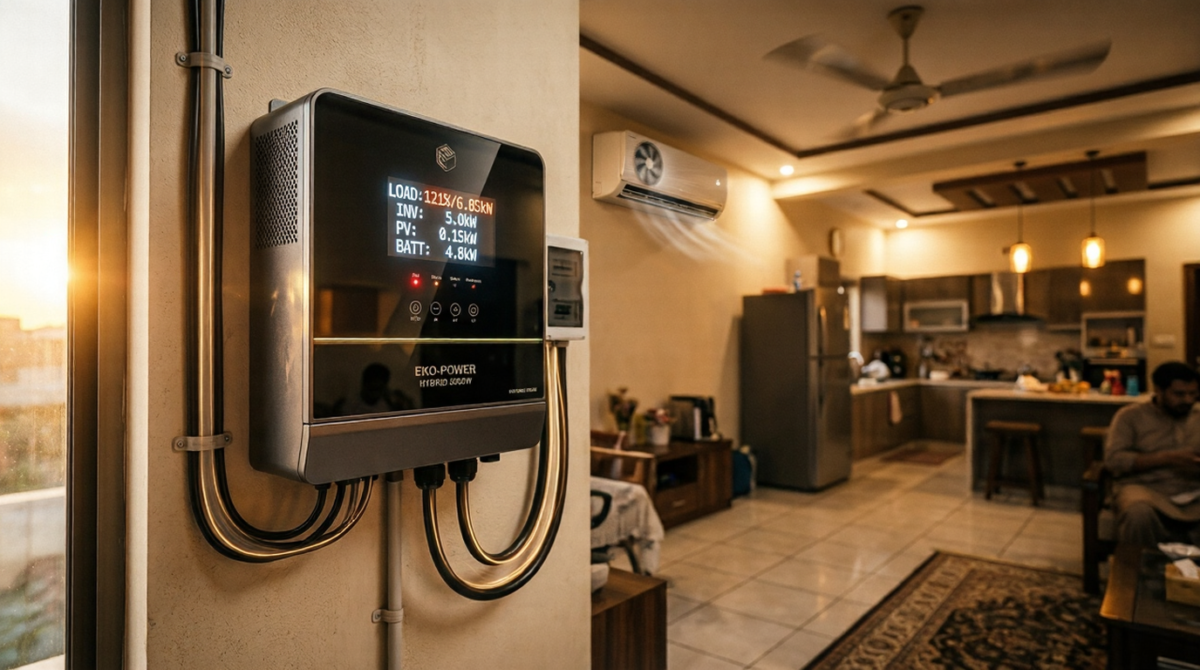
In Pakistan, most homeowners choose an inverter by looking at only one number: the kW rating. That sounds practical, but during peak summer, it often creates confusion. The AC compressor starts. The fridge kicks in. Someone turns on the iron. Suddenly, the inverter beeps, shows overload, or shuts down.
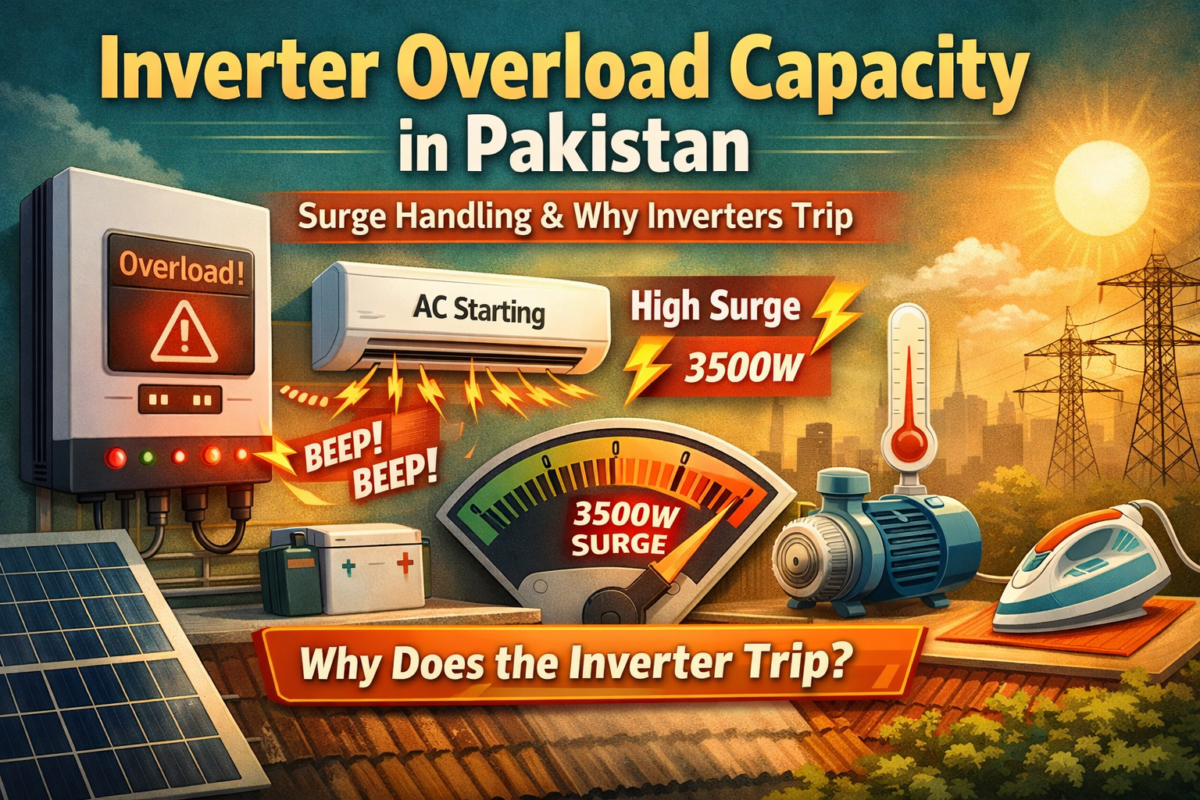
This is where the real question begins: what is inverter overload capacity in Pakistan, how does surge handling work, and why do inverters trip even when the total running load looks safe?
Inverter overload protection exists for a reason. Many appliances in Pakistani homes demand two to four times their normal running power at startup. If that surge exceeds the inverter’s short-term tolerance window, the system trips. Understanding overload rating, surge capacity, and real home load behaviour is essential if you want a stable solar setup.
This guide explains inverter overload capacity in simple, practical terms. You will learn the difference between continuous and overload ratings, why surge loads trip inverters, how voltage conditions in Pakistan affect performance, and how to plan loads confidently.
Inverter Overload Capacity in Pakistan Explained
Inverter overload capacity is the inverter’s ability to supply more than its continuous rated power for a short duration. It is designed to support startup surges from motors and compressors.
Continuous power rating vs overload rating
Every inverter has a continuous rating. This is the power it can deliver safely for extended periods. A 5kW inverter can normally supply close to 5kW without stress under proper conditions.
Overload rating is different. It allows the inverter to tolerate temporary spikes. Many hybrid inverters in Pakistan allow:
110% to 125% overload for 30-60 seconds
130% to 150% overload for 5-10 seconds
This does not mean you can operate above the rated load continuously. Overload capacity only supports short surge events.
What “150% for 10 seconds” actually means
If a 5kW inverter allows 150% for 10 seconds, it can handle up to 7.5kW briefly. If the surge lasts longer than the allowed time window, the inverter activates protection.
Protection behaviour may include:
- Reducing output power
- Triggering an alarm
- Automatic shutdown
This is normal safety design, not a fault.
Surge Handling in Solar Inverters
Surge handling refers to the inverter’s ability to manage short spikes in power demand. In Pakistani homes, overload complaints are usually caused by surge loads, not steady running loads.
What a startup surge load looks like in real homes
Startup surge happens when motors or compressors overcome inertia and pressure. Common examples in Pakistan include:
- Inverter AC and non-inverter AC compressors
- 1 HP and 1.5 HP water pumps
- Deep freezers
- Refrigerators
- Washing machines
Typical real surge values in Pakistan:
|
Appliance |
Running Watts |
Startup Surge Range |
|
1.5 Ton Inverter AC |
1200-1600W |
2500-3500W |
|
1 HP Water Pump |
750-1000W |
2000-3000W |
|
Refrigerator |
200-300W |
600-900W |
|
Deep Freezer |
300-400W |
800-1200W |
Even if your total running load is 3kW, a 3kW surge spike can temporarily push demand above 6kW.
Surge load vs continuous load
Continuous load is what appliances draw after stabilising. Surge load is the short burst during startup.
This is why your inverter may run all day perfectly, but trip the moment a pump or AC starts.
How inverters respond during a surge
When a surge hits, the inverter can:
Support it within the overload window
Limit current, causing the appliance to fail to start
Trip for protection
If trips happen exactly when heavy appliances start, surge handling is the likely cause.
Why Inverters Trip in Pakistani Homes
Load stacking during peak hours
Common scenario: AC running. Pump starts. Iron switches on. Combined startup spike exceeds overload window.
Wrong inverter size selection
Many buyers choose inverter size by guesswork. A 5kW inverter may run one AC comfortably, but struggle when the pump and AC start together.
For proper selection logic, refer to the checklist before buying a solar panel inverter from the Pakistan market.
Battery voltage drop during a surge
In hybrid systems, weak batteries can worsen overload events. When surge demand hits, battery voltage may dip. The inverter compensates by drawing higher current, increasing the overload risk.
For a deeper understanding of battery behaviour, refer to How to integrate battery backup with your solar system in Pakistan.
Low grid voltage factor in Pakistan
In many areas, grid voltage drops to 180V–210V. When the voltage drops, appliances draw more current to maintain power. Higher current increases stress on the inverter during startup. This extends surge duration and increases trip probability.
This factor is often ignored in generic guides.
How to Check If Your Inverter Can Handle Your Load
Step 1: Calculate continuous running load
Example:
- Fans and lights: 400W
- Fridge: 250W
- TV and internet: 200W
- 1 inverter AC: 1500W
Continuous load: around 2.3kW
Step 2: Identify the largest surge appliance
Usually, an AC compressor or pump.
Step 3: Compare with the overload specification
Read the inverter’s overload percentage and time duration carefully.
If designing from scratch, use the How to size your home solar system in Pakistan step-by-step guide.
Practical Overload Examples by Inverter Size
3kW inverter
Comfortable for lights, fans, and fridge. May struggle with the pump or AC startup, depending on the surge rating.
5kW inverter
Common residential choice. Usually handles one AC plus household loads. Can trip if the pump and AC start together or the batteries are weak.
Proper wiring matters. Voltage drop can increase stress. For cable planning, see Solar DC Cables Guide.
10kW inverter
Better surge headroom for larger homes. Still vulnerable to multiple simultaneous motor starts. Installation quality matters. For system design awareness, review the top mistakes to avoid when installing rooftop solar in Pakistan.
What Happens Inside the Inverter During Overload
Thermal protection
Higher current generates rapid heat. If the temperature rises beyond the safe limit, the inverter reduces output or shuts down.
Current limiting
Some inverters limit current instead of instantly tripping. The motor may hum but fail to start.
Automatic shutdown
If the overload exceeds the allowed window, the inverter shuts down and resets after cooling. This behaviour protects expensive internal components.
Should You Oversize Your Inverter?
Oversizing can reduce nuisance trips if your home uses motor-heavy appliances.
Oversizing makes sense if:
You frequently run the AC and pumps
Your area has voltage dips
You want higher surge tolerance
Oversizing may not be necessary if: You only run fans and lights. The load is light and stable
Efficiency also affects thermal performance. For reference, see inverter efficiency ratings.
Common Myths About Inverter Overload Capacity
My 5kW inverter can run anything under 5kW. Surge events can exceed 5kW even if the continuous load is lower. If it trips, the inverter is faulty.
Trips usually result from load stacking, voltage dip, or battery weakness. A bigger battery increases overload capacity. Battery size increases backup time. Overload tolerance depends mainly on inverter design.
Safe Load Planning for Pakistani Conditions
Avoid starting multiple heavy appliances simultaneously.
Stagger pump and AC usage.
Maintain proper ventilation.
Check wiring and tighten connections regularly.
For long-term reliability, follow maintenance tips for solar systems in Pakistan’s climate.
Conclusion
Inverter overload capacity is short-term tolerance, not extra daily power. Surge handling helps appliances start, especially compressors and pumps. When inverters trip in Pakistani homes, the reason is usually predictable: surge stacking, voltage dips, weak batteries, or poor installation.
If you understand overload rating and surge behaviour, you stop guessing. You plan based on real appliance behaviour and voltage conditions. That clarity reduces trips, protects equipment, and ensures stable performance during peak summer when your solar system carries the load.
Independent Power: Connect with Enon Traders Today!
Start your off-grid journey with Pakistan’s most reliable solar partner.
| Connect With Us | Action Link |
| Chat Instantly on WhatsApp | Get an off-grid system quote: Click to Chat Now! |
| Visit Our Website | View our off-grid inverters: Official Website |
| Call Our Experts | Design your custom micro-grid: Contact Page |