The “Net Billing” Trap: Why the Rs. 10/Unit Buyback Rate Changes Your ROI
January 20, 2026
The “Capacity Charge” Shock: Preparing for Fixed Grid Taxes in 2026
January 22, 2026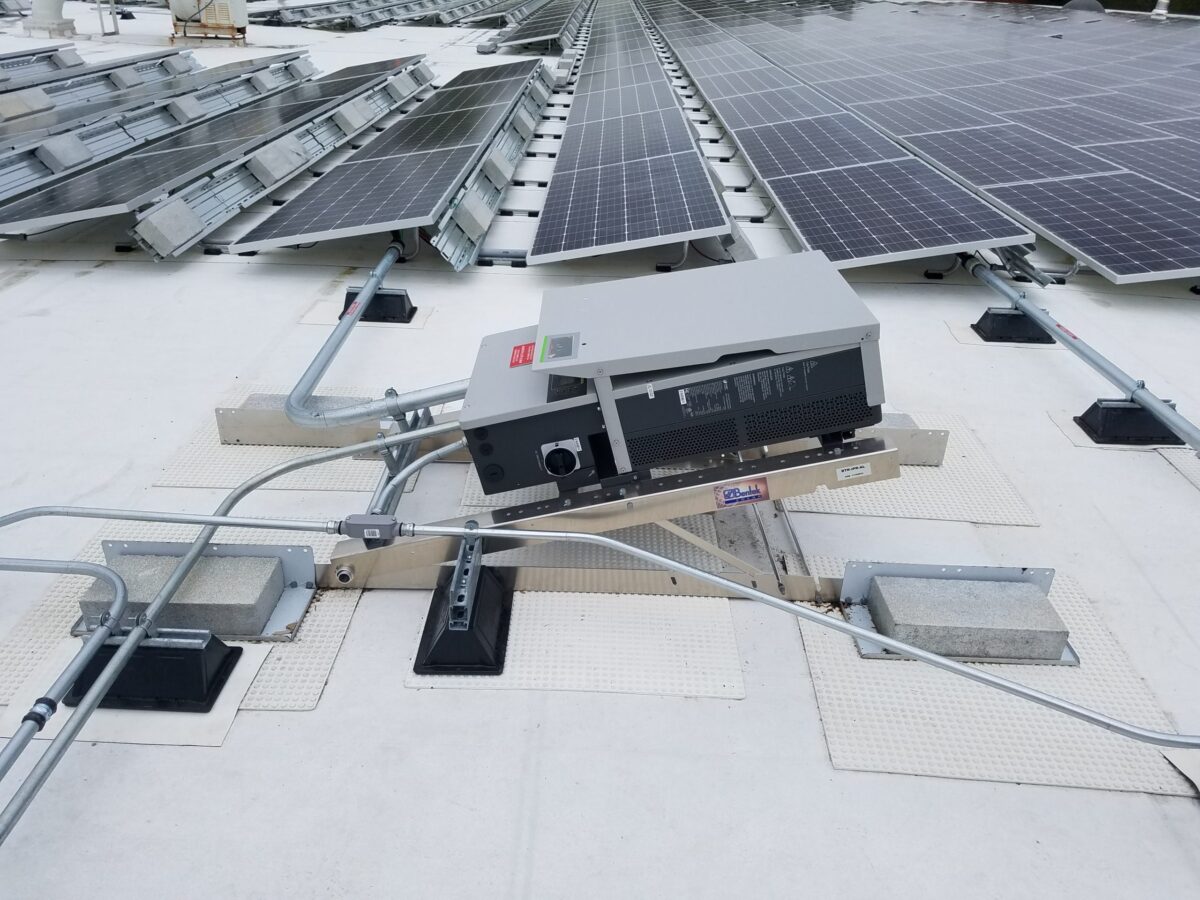
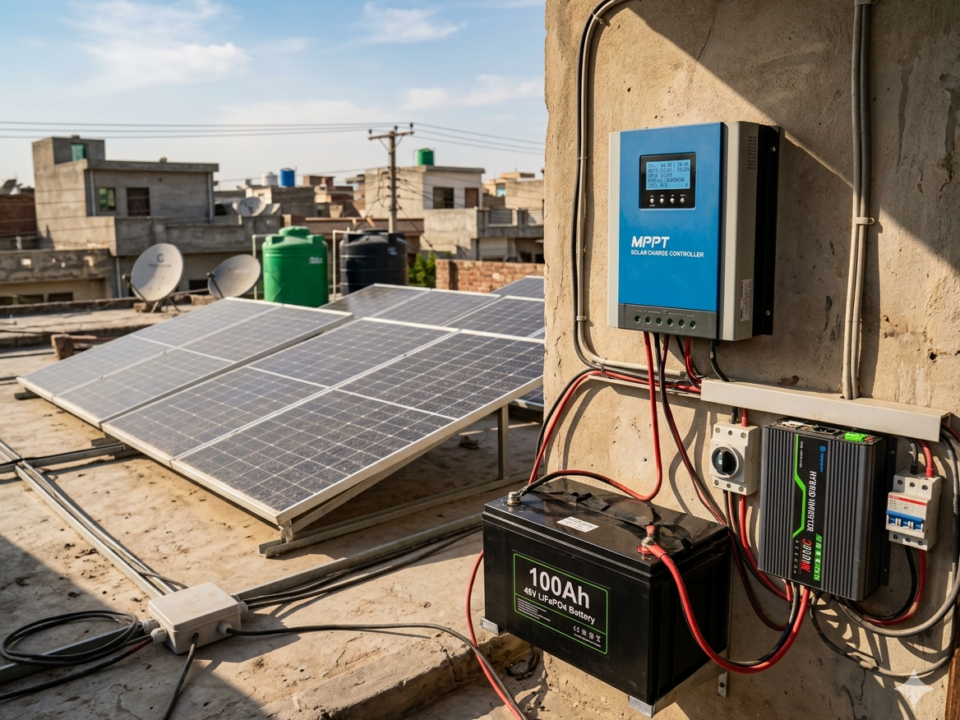
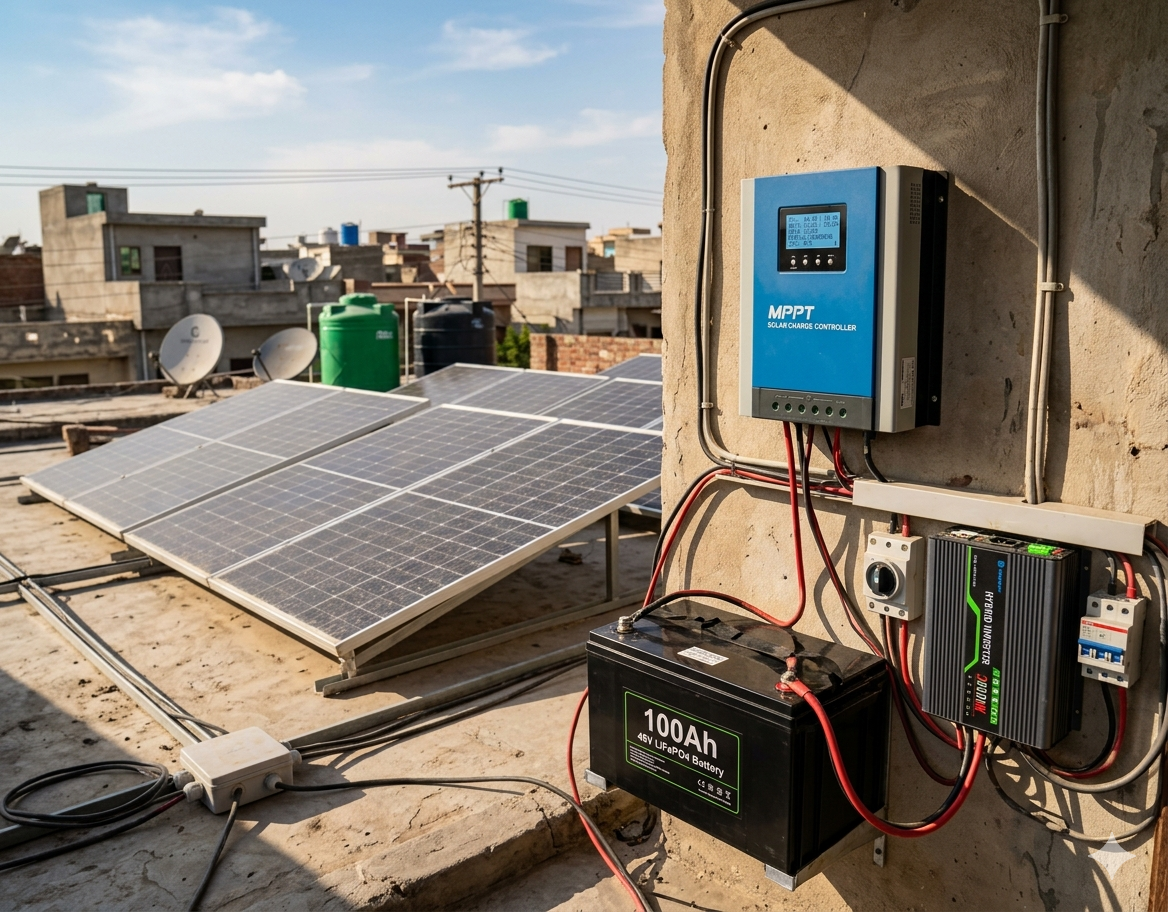
In Pakistan, solar inverters are often marketed with ‘MPPT technology’. However, several consumers are left wondering what they actually do with this technology after installation is complete. They expect some kind of miraculous result that never manifests, or it is merely a marketing gimmick, and they are left with a solar charger that charges very slowly or performs poorly when it comes to solar power generation.
The reality lies somewhere in between these two extremes. MPPT Inverter Technology does not enhance the physical capabilities of solar panels, but it depends on how a solar system performs when exposed to real conditions. Even the milder climate of Pakistan, characterized by hot weather, dust, instability of voltages, and load shedding, makes a difference in this regard.
Below is a detailed explanation of the technology of inverters that use Maximum Power Point Tracking in Pakistan in a no-nonsense, easy-to-understand manner. By the end of this article, you will have no doubts in deciding whether a solar energy system is any good or not, regardless of whether it is based on MPPT technology or not.
What MPPT Inverter Technology Actually Means?
The basic idea behind MPPT, in simple terms
Solar panels never produce the same power all day. Sunlight changes, temperature rises, clouds pass, and dust settles. Because of this, the voltage and current coming from panels keep changing.
At any given moment, there is one point where a solar panel produces the maximum possible power. This is called the maximum power point.
An MPPT inverter continuously adjusts how it draws power from the panels so they stay as close to this best point as possible.
Instead of forcing panels to work at one fixed voltage, the inverter keeps adjusting automatically, many times every second.
The role of the MPPT controller inside an inverter
Inside the inverter, a small electronic system called the MPPT controller does this work.
It:
- Monitors panel voltage and current
- Calculates where maximum power is available
- Adjusts operation to capture that power
Not all MPPT controllers are equal. Some react faster, some track more accurately, and some handle unstable conditions better. This is why two inverters with MPPT written on the box can perform very differently in real life.
How MPPT Technology Works in Real Solar Conditions?
Solar panel behaviour throughout the day
In the morning, sunlight is weak, and the voltage is low.
At midday, sunlight is strong, but heat reduces panel voltage.
In the evening, sunlight drops again while panels may still be hot.
Add to this:
- Dust on panels
- Passing clouds
- Partial shading from walls or water tanks
All of these constantly change the panel output.
How does MPPT track and adjust power continuously?
An MPPT controller constantly tests small changes in voltage and current to locate the point where power output is highest. As sunlight weakens or panel temperature rises, that point shifts. The controller follows it automatically.
MPPT does not increase panel capacity. Instead, it reduces wasted potential by adapting to changing conditions. Over an entire day, these small adjustments often add up to noticeably higher usable energy.
Why MPPT Inverter Technology Matters in Pakistan?
Heat, voltage fluctuation, and grid instability
High temperatures in Pakistan reduce solar panel voltage. Without MPPT, charging becomes inefficient during hot weather. MPPT helps the inverter adapt to this voltage drop, which is why systems with MPPT often perform better in summer.
MPPT helps offset voltage loss by adjusting how panels operate. This improves performance during hot weather when non-MPPT systems often struggle. The benefit becomes clearer when comparing solar inverter efficiency under real operating conditions rather than brochure figures.
MPPT performance during load shedding
During load shedding, solar systems often get short and irregular charging time.
MPPT helps capture maximum power quickly when sunlight is available. This makes a noticeable difference in areas where load shedding is frequent and unpredictable.
MPPT vs Non-MPPT (PWM) Inverters in Practical Use
Energy harvest differences over a full day
PWM inverters operate solar panels at a fixed voltage close to battery voltage.PWM inverters run panels at a fixed voltage, close to battery voltage. Any mismatch between panel voltage and battery voltage wastes potential power.
MPPT inverters adjust continuously, allowing panels to operate more efficiently throughout the day. Over weeks and months, this difference becomes noticeable in total energy production.
Battery charging efficiency and system stress
MPPT improves battery charging efficiency by delivering power more effectively during weak sunlight. Batteries receive steadier charging currents, which reduces stress and uneven charging.
This behaviour supports longer battery life, particularly in environments affected by frequent partial charging. Understanding battery storage lifespan helps explain why MPPT systems often age more gracefully.
MPPT Controllers and Overall Solar System Efficiency
Matching solar panels with inverter voltage ranges
Every inverter has a defined voltage range where its MPPT operates efficiently. Poor matching between panels and the inverter causes losses even when MPPT is present.
MPPT does not guarantee maximum output under all conditions. Poor installation, shading, undersized wiring, or incorrect settings can eliminate its benefits, especially when the system is incorrectly sized. Following a proper solar system sizing guide helps avoid these issues early.
MPPT optimises within limits. It does not fix flawed system design.
MPPT and overall system efficiency
Many buyers confuse inverter efficiency with system efficiency. MPPT improves system efficiency by increasing usable energy capture, not by changing the inverter’s conversion rating.
This distinction matters when comparing systems based on real output instead of headline percentages.
Common Myths About MPPT Inverter Technology in Pakistan
MPPT always means maximum output
MPPT does not guarantee maximum output under all conditions. Poor installation, shading, undersized wiring, or incorrect settings can eliminate its benefits, which is why understanding the rooftop solar installation mistakes is critical before finalising a system.
MPPT optimises within limits. It does not fix flawed system design.
MPPT is only useful for large solar systems
Small residential systems also benefit from MPPT, especially where sunlight varies throughout the day. Homes with partial shading or limited roof space often see meaningful improvements.
All MPPT inverters perform the same
Controller quality, tracking speed, and firmware design vary widely. These factors explain why performance differs even among systems with similar specifications and similar PWM inverter limitations.
When MPPT Technology Makes the Biggest Difference?
Homes with partial shading or limited roof space
Shading from nearby buildings, trees, or water tanks causes fluctuating output. MPPT responds to these changes more effectively than fixed voltage systems.
Areas with frequent or unpredictable load shedding
Short and irregular charging windows benefit most from MPPT. Faster energy capture improves daily backup availability.
Hybrid and solar battery systems
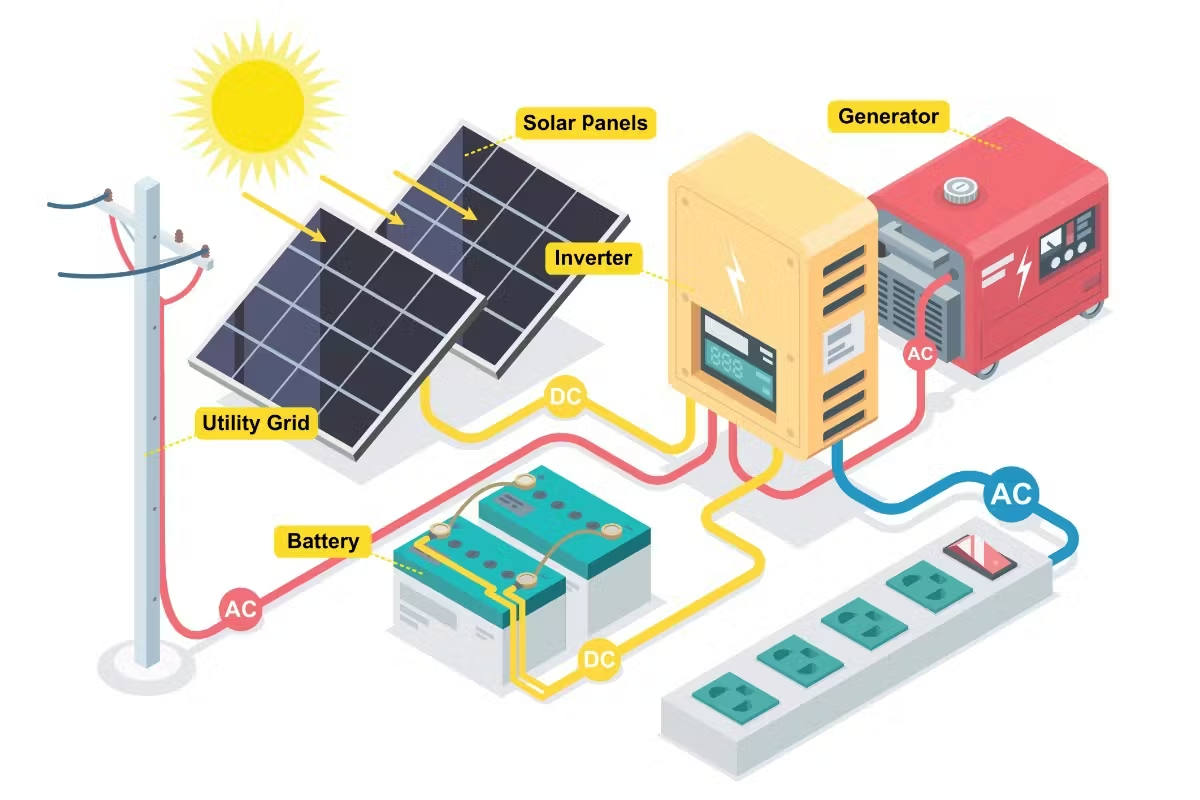
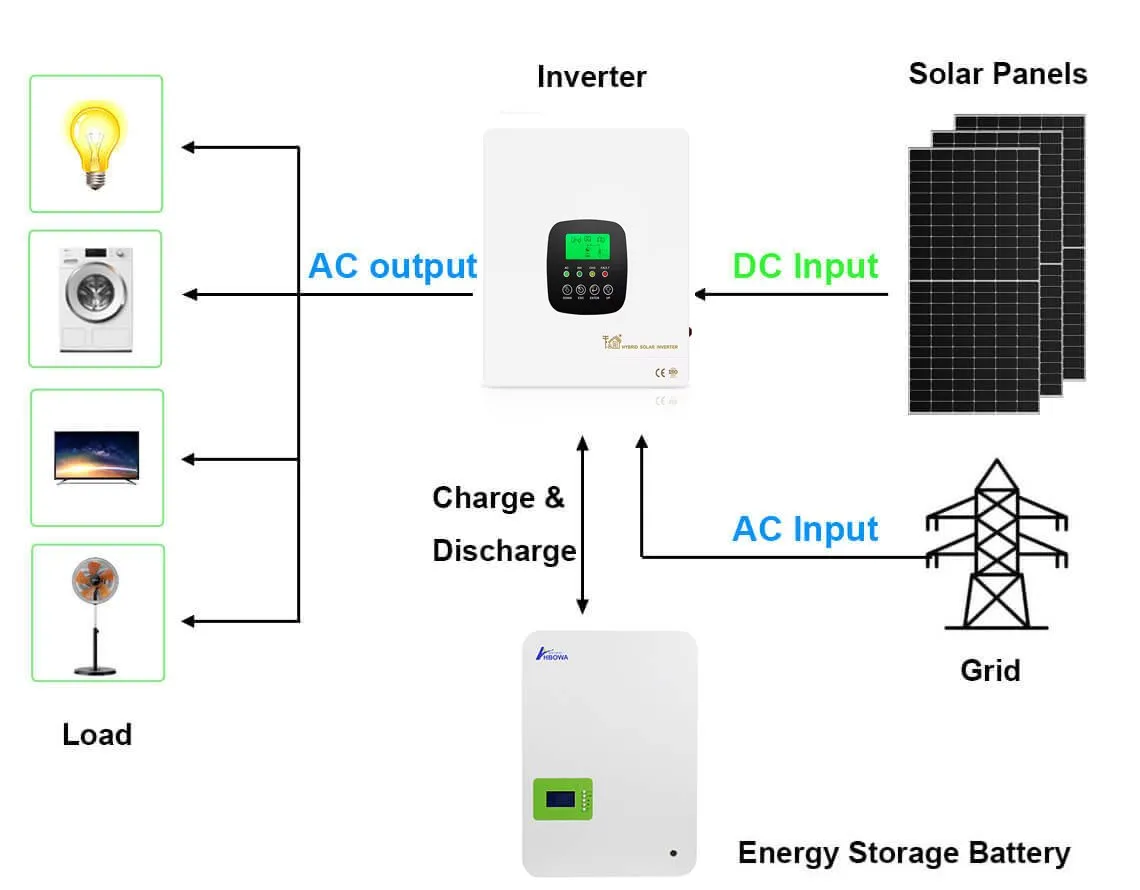
Hybrid setups rely heavily on efficient charging coordination. MPPT supports smoother interaction between panels, batteries, and loads. Understanding battery-integrated solar systems helps maximise this advantage.
Situations Where MPPT May Not Add Much Value
When MPPT May Not Add Much Value?
MPPT benefits may be limited when:
- Solar input is very small
- The system is mainly grid-based
- Roof orientation and sunlight are near perfect all day
In such cases, the price difference may not justify the upgrade.
How to Evaluate MPPT Inverter Technology Before Choosing?
Questions to ask beyond does it have MPPT
Look beyond labels. Ask about MPPT voltage range, number of trackers, and tracking accuracy. Multiple MPPT trackers support complex panel layouts more effectively, which is why following an inverter buying checklist matters.
Instead of just asking “Does it have MPPT?”, ask:
- What is the MPPT voltage range?
- How many MPPT trackers are there?
- How does it perform in heat?
Good system design matters more than features alone.
Importance of system design over features
Even the best MPPT controller cannot overcome poor system planning. Reviewing solar panel string configuration and wiring quality ensures MPPT works as intended.
Conclusion: Making Sense of MPPT Inverter Technology in Pakistan
MPPT inverter technology helps solar systems use sunlight more effectively, especially in Pakistan’s hot, dusty, and unstable grid conditions.
It does not fix bad system design, poor installation, or unrealistic expectations.
When combined with:
- Proper panel sizing
- Correct wiring
- Good installation
MPPT improves energy capture, battery charging, and daily reliability. Understanding how MPPT works allows you to make decisions based on real performance, not sales promises and that’s the biggest advantage of all.
Independent Power: Connect with Enon Traders Today!
Start your off-grid journey with Pakistan’s most reliable solar partner.
| Connect With Us | Action Link |
| Chat Instantly on WhatsApp | Get an off-grid system quote: Click to Chat Now! |
| Visit Our Website | View our off-grid inverters: Official Website |
| Call Our Experts | Design your custom micro-grid: Contact Page |