MPPT Charge Controller in Pakistan (2026): How to Choose the Right Solar Regulator
April 1, 2026
DC Breakers for Solar Systems: How to Choose the Right Protection
April 3, 2026
If you are planning to install solar in Pakistan, one question matters more than anything else: how does NEPRA’s net metering policy actually work?
Most people hear simple claims. They are told they can eliminate their electricity bill or even earn from solar. That sounds attractive, but it is not the full picture.
The truth is simple. Net metering in Pakistan is a regulated system. It follows strict rules. Your savings depend on how well you understand those rules before installing a system.
If you get it right, you reduce your electricity cost and improve your long-term return. If you misunderstand it, you may invest more than needed and still feel disappointed.
This guide explains the NEPRA net metering policy clearly. No confusion. No sales talk. Just how it actually works in real life.
What Is NEPRA Net Metering Policy and How It Works
NEPRA net metering allows solar users to export excess electricity to the national grid and offset their consumption.
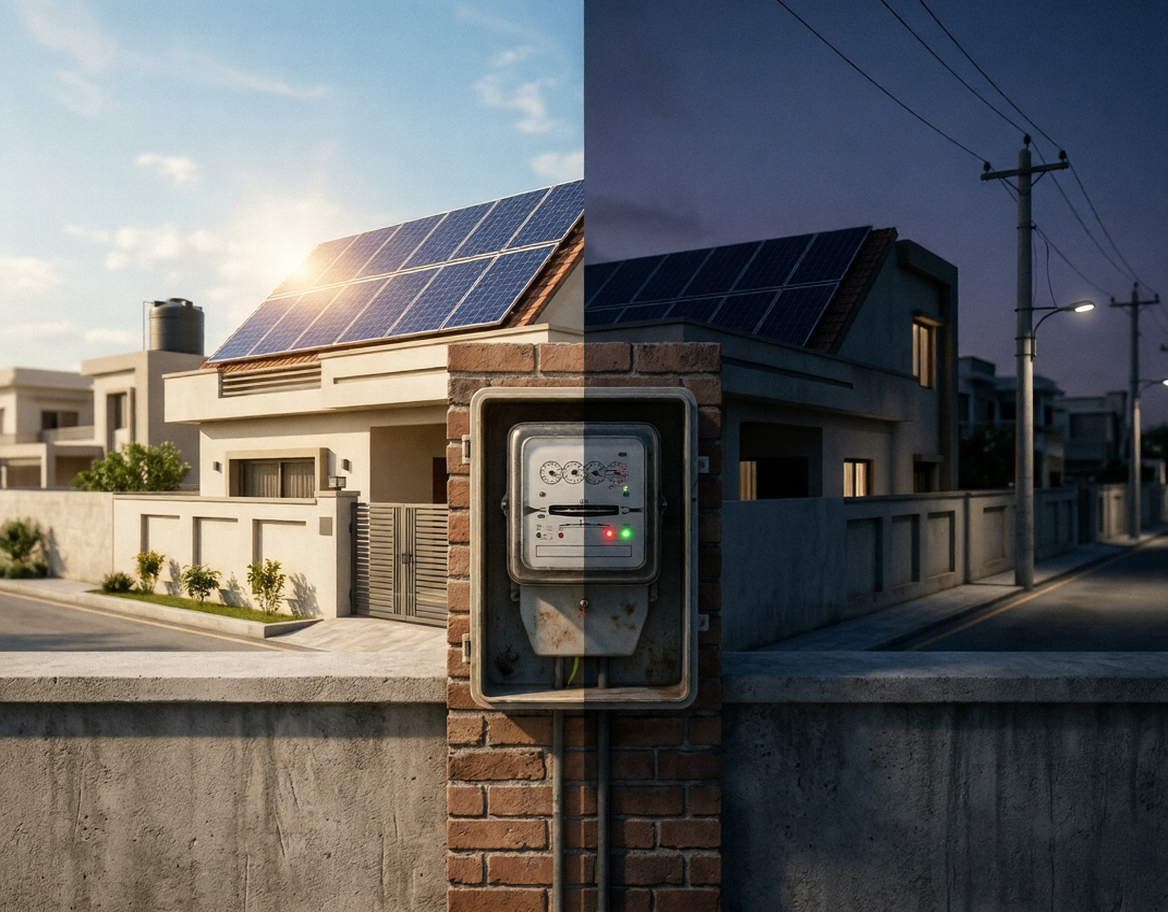
During the day, your solar system produces electricity. If your usage is lower than production, the extra units are exported. At night, you import electricity from the grid.
This is called unit adjustment.
But here is the key point most people miss:
This is not a full exchange system. It works under strict rules defined by NEPRA. The system is controlled, not unlimited.
Understanding the NEPRA Regulatory Framework in Pakistan
NEPRA is the authority responsible for designing the net metering policy.
Distribution companies like LESCO, IESCO, and KE are responsible for implementing it.
NEPRA controls:
- Policy structure
- Export rates
- Technical requirements
DISCOs handle:
- Application approvals
- Site inspections
- Meter installation
- Billing
This distinction matters. Most delays happen at the DISCO level, not at NEPRA.
Eligibility Criteria for NEPRA Net Metering
Not every solar system qualifies for net metering.
To be eligible, you must:
- Have a legal electricity connection
- Match your solar system size with the sanctioned load
- Use approved equipment
System sizing is critical.
If your sanctioned load is 5 kW and you install a 15 kW system, your application may be rejected or delayed.
Before installation, it is important to understand proper sizing through the solar system sizing guide.
How NEPRA Net Metering Billing Works in Reality
This is where most confusion happens.
Let’s take a realistic example:
- Monthly consumption: 600 units
- Exported units: 400
Net units = 200 units
But your bill will not be based only on 200 units.
You still pay:
- Fixed charges
- Taxes
- Fuel price adjustments
This is why your electricity bill never becomes zero.
Many people expect zero bills and feel confused when they still receive charges. This misunderstanding leads to wrong investment decisions.
What Happens When You Export More Electricity Than You Use
If your solar system exports more electricity than you consume, you do not receive cash.
Instead, the extra units are carried forward as credit.
This is very important to understand:
Net metering is not an income system. It is a bill adjustment system.
If you want to understand how changing policies affect export value, review the net metering export policy changes.
NEPRA Export Rates and Their Real Impact
Export rates are always lower than import rates.
This is intentional and based on:
- Grid infrastructure costs
- Distribution losses
- Policy control
Many sellers do not explain this clearly, which leads to unrealistic expectations.
Lower export rates directly affect your savings and payback period.
To understand your financial return properly, go through the solar ROI calculation guide.
Step-by-Step Net Metering Application and Approval Process
The application process is structured but often slow.
It includes:
- Application submission
- Technical verification
- Site inspection
- Green meter installation
You can explore full details in the net metering application process.
Common delays happen due to:
- Incomplete documentation
- Transformer capacity limits
- High application load
Planning for delays helps you avoid frustration.
Latest NEPRA Policy Updates and 2026 Changes
Net metering policies in Pakistan continue to evolve.
Changes may include:
- Adjustments in export rates
- Stricter approval rules
- Limits on system size
These changes directly affect your ROI.
For example:
Lower export rates increase your payback period.
To stay updated, check Pakistan’s solar policy updates.
Benefits of NEPRA Net Metering Policy
When used correctly, net metering offers strong advantages:
- Reduces electricity bills
- Improves long-term ROI
- Uses the grid as a virtual battery
It works best for homes and businesses with high daytime electricity usage.
For industrial users, savings can be significant, as explained in industrial solar savings insights.
Limitations and Real Challenges You Should Know
Net metering is powerful, but it has limitations.
Approval Delays
Applications can take months.
Grid Constraints
Transformer capacity may limit approvals.
Billing Confusion
Many users misunderstand billing calculations.
System Design Errors
Oversized systems reduce efficiency and ROI.
To avoid these issues, learn from common solar installation mistakes.
Common Misconceptions About Net Metering in Pakistan
Several myths create confusion in the market.
Myth: Solar means zero electricity bill
Reality: Fixed charges always apply
Myth: Export generates cash income
Reality: Units are credited, not paid
Myth: A bigger system gives better savings
Reality: Oversizing reduces efficiency
Understanding these facts helps you avoid costly mistakes.
Who Should Use Net Metering and Who Should Not
Net metering is not ideal for everyone.
It works best if:
- You have high daytime electricity usage
- You want to reduce long-term electricity costs
- You have stable grid access
It may not be ideal if:
- Most of your usage is at night
- You expect immediate ROI
- You rely heavily on backup power
In such cases, battery storage can improve performance. Learn more about battery storage for solar systems.
Key Takeaways for Solar Users in Pakistan
- Net metering is a regulated system, not free electricity
- Export units are valued lower than import units
- Your bill never becomes zero due to fixed charges
- Policy changes directly impact your savings
- Proper system sizing is essential for maximum benefit
Conclusion: Understand NEPRA Policy Before You Invest in Solar
NEPRA’s net metering policy is not complicated. It is misunderstood. Most problems arise when people rely on assumptions rather than understanding how the system actually works.
When you understand the policy:
- You design the right system
- You set realistic expectations
- You protect your investment
Solar is a long-term decision. The policy behind it determines your results. Take the time to understand it properly before installing. That is what separates a smart investment from a costly mistake.
Independent Power: Connect with Enon Traders Today!
Start your off-grid journey with Pakistan’s most reliable solar partner.
| Connect With Us | Action Link |
| Chat Instantly on WhatsApp | Get an off-grid system quote: Click to Chat Now! |
| Visit Our Website | View our off-grid inverters: Official Website |
| Call Our Experts | Design your custom micro-grid: Contact Page |