Solar Mounting Structures in Pakistan (2026 Complete Engineering Guide)
March 3, 2026
Wind Load Calculation for Solar Panels Explained (2026 Guide)
March 5, 2026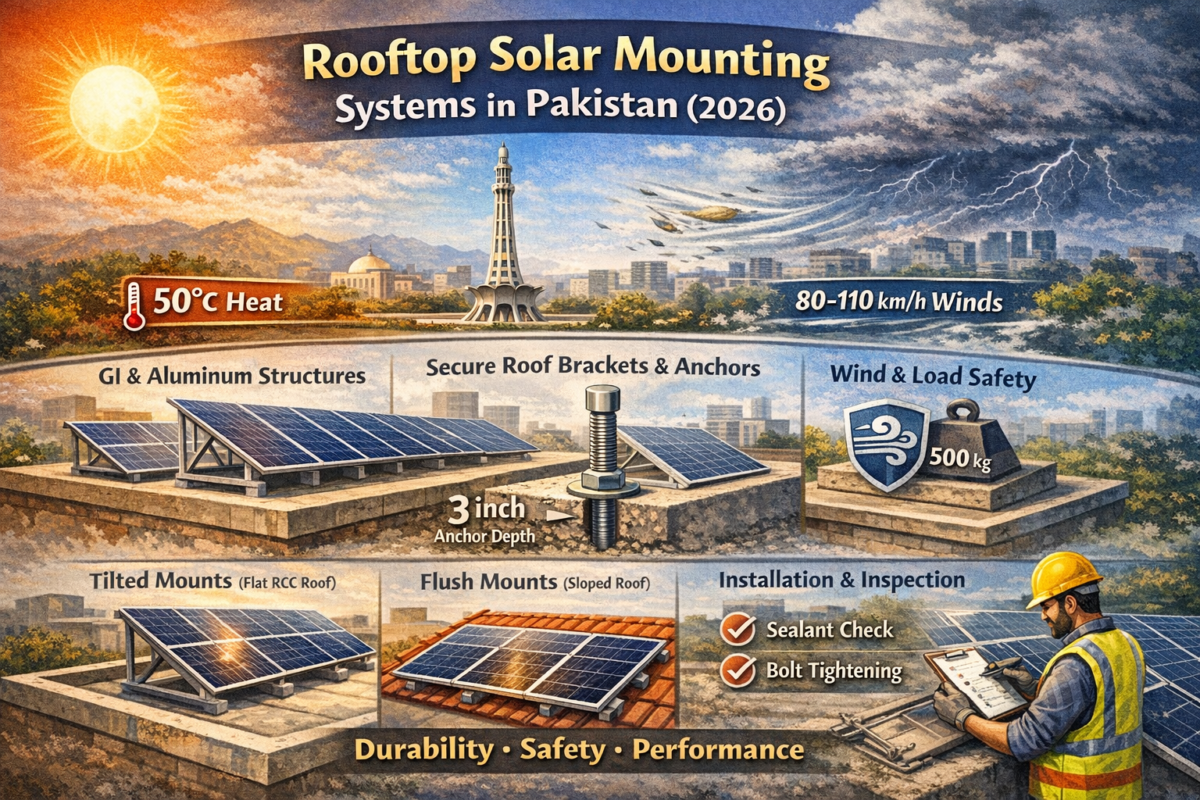
When homeowners in Pakistan consider installing solar panels, they usually compare the quality of solar panels, inverters, and battery life. Very few people ask the most important structural question:
What about the rooftop solar mounting structure?
That is where long-term troubles begin.
A rooftop solar mounting structure is more than a metal frame. It is the backbone of your entire solar investment. In Pakistan’s harsh climate, where rooftop temperatures soar above 50°C, monsoon winds reach 80-110 km/h, and humidity corrodes exposed metal, the mounting structure holds the key to whether your system will last 25 years or start vibrating in two seasons.
If the structure is weak, ill-anchored, or improperly spaced, even the best Tier-1 panels and inverters will be unable to safeguard your investment.
In this complete guide, you will learn:
- What rooftop solar mounting systems are
- How roof brackets work
- Structural load and wind uplift calculations
- Mounting structure thickness standards in Pakistan
- Solar mounting structure price in Pakistan (2026)
- Installation checks before your installer leaves
What Are Rooftop Solar Mounting Systems and Why Do They Matter?
A rooftop solar mounting system is the engineered framework that secures solar panels safely onto your roof.
Panels cannot sit directly on concrete, tiles, or metal sheets. They require:
- Proper tilt for maximum sunlight
- Elevation for airflow and cooling
- Anchoring points to resist wind uplift
- Even weight distribution across the slab
A well-designed mounting system performs three critical functions:
- Distributes panel weight evenly
- Resists wind uplift and vibration
- Protects the roof from long-term leakage or cracking
Most residential systems in Pakistan use hot-dip galvanized iron (GI) or aluminum structures fixed onto RCC slabs. The material thickness, bracket spacing, and anchor quality determine structural stability after 5-10 years.
Solar Mounting Structure Price in Pakistan (2026)
Many people ask directly:
What is the solar mounting structure price in Pakistan?
On average:
- Standard residential GI structure: PKR 12,000 – 18,000 per kW
- Heavy-duty 3 mm GI structure: PKR 18,000 – 25,000 per kW
- Aluminum structure: Slightly higher cost but lighter weight
For a 10 kW system, structure cost typically ranges between PKR 150,000 – 220,000, depending on:
- Material thickness
- Wind design requirements
- Roof type
- Chemical anchor usage
- Installer quality
Avoid choosing the cheapest structure. Thin GI below 2.5 mm often bends within a few years.
Core Components of a Rooftop Mounting System
Every rooftop solar mounting system includes:
- Base supports or L-stands
- Horizontal rails
- Mid clamps and end clamps
- Anchor bolts or chemical fasteners
- Roof brackets
The roof bracket is the most critical structural connection. It transfers the load from panels directly into the slab.
If bracket spacing is too wide or anchor embedment is shallow, uplift pressure can loosen the system during monsoon winds.
Best practice in Pakistan:
- Bracket spacing: 3 to 4 feet
- Minimum anchor embedment: 3 inches into solid concrete
- Chemical anchors are preferred for older slabs
Structural Safety: Load Calculations Before Installation
Many homeowners calculate ROI but ignore structural capacity. That is risky.
Before installation, review your rooftop load-bearing solar capacity.
An average panel weighs 22-28 kg. A 10 kW system with a structure adds approximately 450-550 kg. If distributed correctly, most RCC roofs handle this safely. Uneven distribution, however, creates stress points and slab cracks.
Wind Uplift and Monsoon Resistance
Wind does not just push panels down. It creates upward suction, especially on roof edges. In cities like Lahore, Islamabad, Faisalabad, and Multan, seasonal winds reach 80-110 km/h. Uplift force on a single panel can exceed its own weight.
That is why:
- Edge panels require closer bracket spacing
- Structural thickness must be a minimum of 2.5 mm
- Anchors must penetrate solid RCC, not plaster
Loose bolts and vibration usually appear after the first monsoon if the installation quality is poor.
Material Selection: GI vs Aluminum in Pakistan
Galvanized Iron (GI)
- Stronger under wind load
- More cost-effective
- Heavier
- Must be hot-dip galvanized to resist rust
Aluminum
- Lighter weight
- Corrosion resistant
- Expands more under heat
- Slightly higher cost
For most residential rooftops in Pakistan, hot-dip galvanized GI with a minimum 2.5-3 mm thickness is recommended. In coastal cities like Karachi, corrosion protection becomes more important.
Roof Protection and Waterproofing
Improper drilling causes seepage. Some installers apply low-grade sealant, which cracks after one season.
Always confirm:
- Type of chemical anchor used
- Sealant grade
- Flashing around penetrations
Correct sealing prevents long-term leakage.

Types of Rooftop Solar Mounting Systems
1. Flush Mount Systems (Sloped Roofs)
Flush mounts sit close to sloped roofs.
Advantages:
• Lower wind exposure
• Cleaner look
• Reduced material cost
Disadvantage:
• Limited airflow if spacing is tight
2. Tilted Mount Systems (Flat RCC Roofs)
Most Pakistani homes use flat RCC slabs.
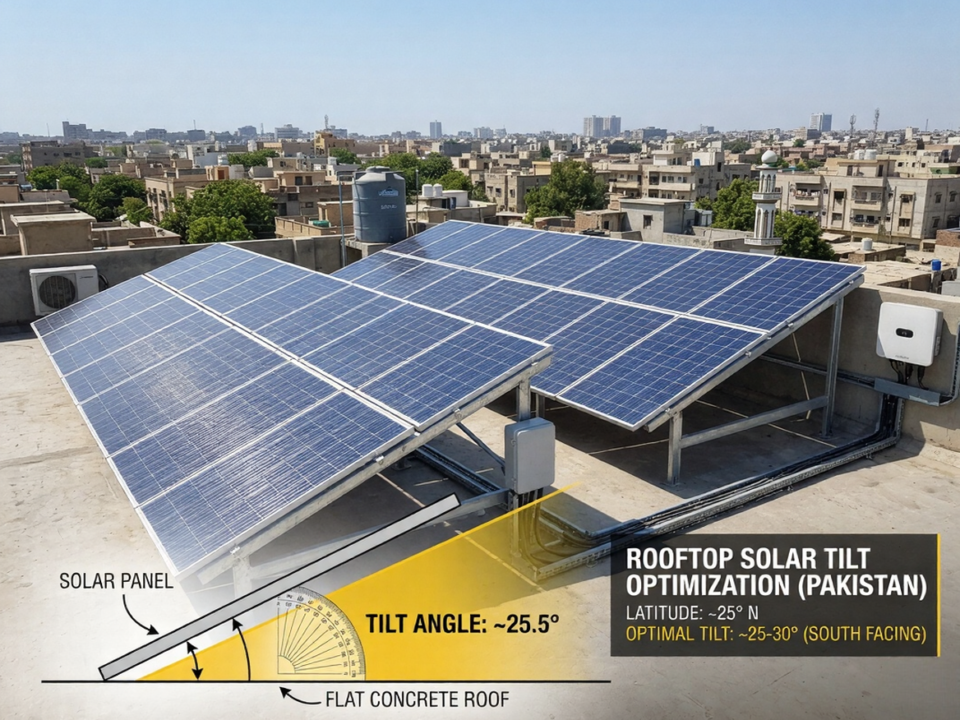
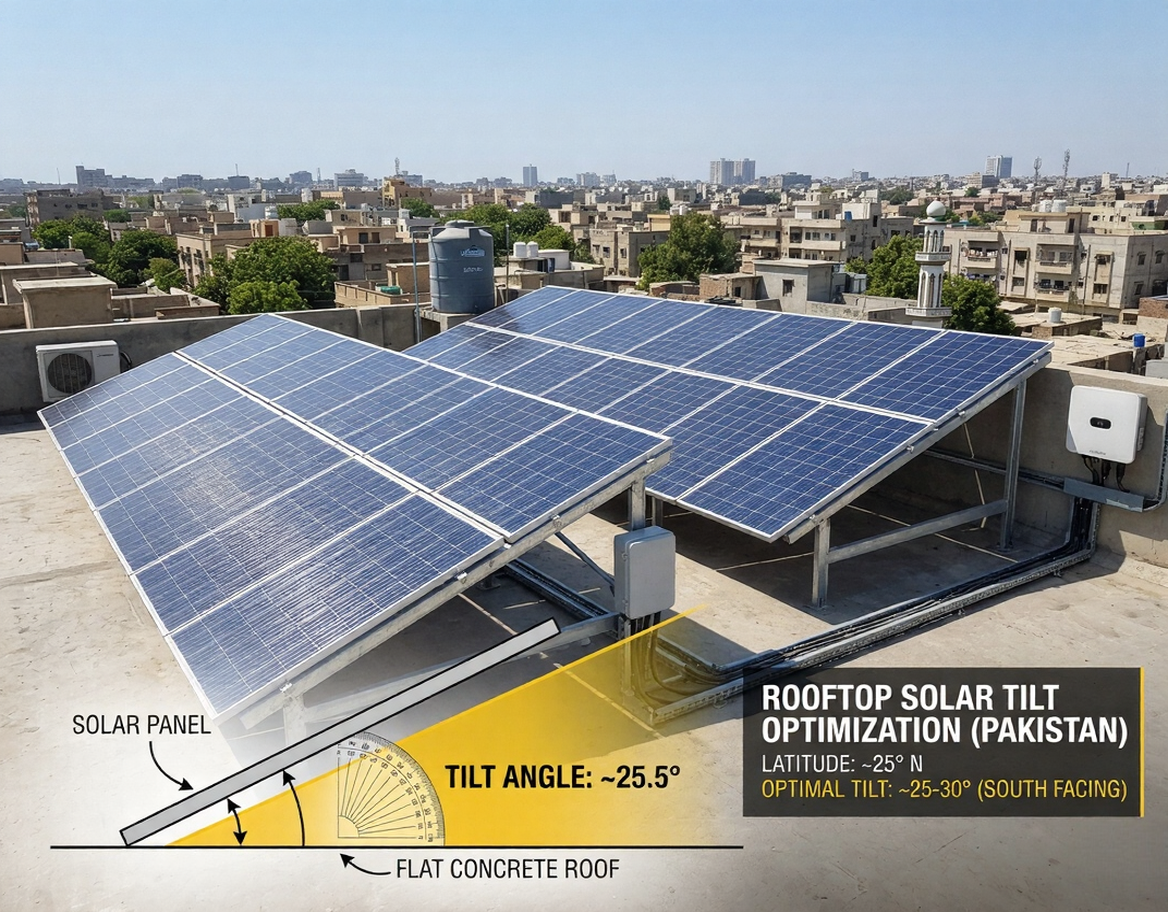
Tilted GI structures with a 25-30° angle offer:
- Optimal sunlight capture
- Better rain cleaning
- Balanced wind resistance
To understand tilt sizing better, read how to size your home solar system in Pakistan.
3. Ballasted Mount Systems
These avoid drilling and use concrete blocks for weight. Common in commercial buildings. Not suitable for weak residential slabs due to the added dead load.
Roof Type Compatibility and Bracket Selection
RCC Concrete Roofs
Use chemical anchors or expansion bolts. Avoid cracked slabs.
Metal Sheet Roofs
Standing seam clamps are preferred. Drilling must be sealed properly.
Tile Roofs
Tile hook brackets anchor beneath tiles. Poor work cracks tiles and causes hidden leakage. To avoid structural errors, review the top mistakes to avoid when installing rooftop solar in Pakistan.
Tilt Angle and Solar Performance
Pakistan’s latitude supports a fixed tilt between 25 and 30 degrees for most cities.
Higher tilt increases wind exposure. For a deeper comparison, review the solar panel efficiency comparison. Efficiency and tilt must work together.
Common Installation Mistakes in Pakistan
Even premium panels fail on weak structures.
Common issues:
- Thin GI below 2.5 mm
- Poor bolt tightening
- No lightning protection
- Improper earthing
- Weak cable routing
Good structural design must align with safe wiring. Review the solar DC cables guide.
Always use quality modules from Tier 1 solar panel brands in Pakistan.
Installation Checklist Before the Installer Leaves
Before signing off:
- Anchor depth confirmed
- Bracket spacing measured
- Sealant properly applied
- Structure thickness verified
- Lightning protection installed
- Earthing tested
- Panel alignment checked
This checklist prevents 90% of post-install complaints.
Maintenance and Annual Inspection
Mounting systems require yearly inspection.
Check for:
- Rust
- Loose fasteners
- Sealant cracks
- Structural vibration
After storms, inspect brackets immediately.
Combine inspection with maintenance tips for solar systems in Pakistan’s climate. Preventive inspection avoids expensive repairs.
Final Conclusion: Build Strong from the Base
Rooftop solar mounting systems are not secondary components. They are the structural backbone of your entire solar investment. In Pakistan’s harsh climate, heat expansion, dust, wind uplift, and monsoon pressure test every installation.
A strong mounting system:
- Protects your roof
- Stabilizes panel alignment
- Prevents vibration
- Maintains long-term energy production
- Protects resale value
Before installation:
- Check roof strength
- Select the correct roof brackets
- Confirm wind uplift design
- Verify sealing
- Inspect material thickness
Panels and inverters get attention. Mounting systems deserve equal focus. A properly engineered structure ensures safety, performance stability, and long-term peace of mind.
Independent Power: Connect with Enon Traders Today!
Start your off-grid journey with Pakistan’s most reliable solar partner.
| Connect With Us | Action Link |
| Chat Instantly on WhatsApp | Get an off-grid system quote: Click to Chat Now! |
| Visit Our Website | View our off-grid inverters: Official Website |
| Call Our Experts | Design your custom micro-grid: Contact Page |