Seasonal Solar Production in Pakistan Explained
February 24, 2026
Net Metering Approval Time in Pakistan: Real Processing Time, Delays, and What to Expect
February 26, 2026
Solar system load calculation means estimating the maximum power (watts) your appliances use at the same time. Accurate load calculation ensures correct inverter sizing, stable battery backup, and realistic system performance.
They do not begin with faulty panels or weak inverters. They begin with poor load calculation. Homeowners and installers often rely on assumptions and rough estimates, leading to systems designed on guesswork. At first, everything seems fine. Then the inverter trips. Backup feels weak. Batteries drain faster than expected. Frustration follows.
This solar system load calculation guide explains how to estimate real power needs accurately. It avoids unnecessary technical language. It focuses on how electricity is actually used in Pakistani homes. The goal is clarity, not complexity. It is about understanding how electricity is used in real life.
Quick Reality Check Before You Begin
Before going further, one thing must be clear.
Solar load calculation is an estimation, not laboratory precision. A small variation is normal. A difference of 10 to 15 per cent does not mean the system is wrong.
Electricity bills do not show load. Monthly units do not tell you peak demand. Load calculation is about how appliances run together, not how much you pay WAPDA.
Once this is understood, the rest becomes much easier.
What Load Means in a Solar System
Understanding electrical load in simple terms
Electrical load is the power your appliances draw when they operate. It is measured in watts. Fans, lights, refrigerators, air conditioners, and motors all contribute to the load.
Load is not your electricity bill. Bills show energy usage over time. Load shows instant demand. This misunderstanding causes incorrect solar system design.
Connected load vs usable load
Connected load is the total wattage of all appliances added together. Usable load is the wattage of appliances running at the same time.
Most Pakistani homes have a high connected load but a much lower usable load. For example, the iron, microwave, water pump, and AC rarely operate together. Ignoring this difference leads to unnecessary oversizing.
This mistake appears frequently in rooftop solar mistakes in Pakistan.
Why Accurate Load Calculation Matters Before Solar Design
How wrong estimates damage performance
When the load is underestimated, inverters overload and shut down. Batteries discharge faster than planned. Backup hours have reduced sharply.
When the load is overestimated, the system cost increases. Panels remain underutilised. Inverter efficiency drops at low operating levels.
Solar systems reward precision. Guesswork creates long-term problems.
Oversizing is not a safe shortcut
Many people believe bigger systems perform better. In reality, oversized inverters operate inefficiently at low loads. Batteries cycle poorly. Capital gets locked without benefit.
These issues often become visible later when homeowners try the solar payback period in Pakistan and realise expectations were unrealistic.
Key Concepts You Must Understand Before Power Estimation
Watts, kilowatts, and kilowatt-hours are explained clearly
Watts show instant power usage. Kilowatts equal one thousand watts.
Kilowatt-hours represent energy used over time. A 100-watt fan running for ten hours consumes one kilowatt-hour.
Power determines inverter size. Energy determines panel size. Confusing the two leads to a system imbalance.
Peak load vs daily energy demand
Peak load is the highest power draw at any moment. Daily energy is the total electricity consumed in a day.
Inverters handle peak load. Solar panels supply daily energy. Treating these as the same number causes design errors.
Step-by-Step Solar System Load Calculation Guide
Step 1: List appliances you truly use
Start with appliances used daily. Exclude items that operate rarely.
Typical household loads include ceiling fans, LED lights, a refrigerator, TV, Wi-Fi router, washing machine, and sometimes air conditioners. Unrealistic lists create unstable systems.
Step 2: Identify realistic wattage values
Check appliance labels. Remember that inverter ACs and refrigerators do not run continuously at rated power. Motors draw higher current at startup. Ignoring this causes inverter alarms. Understanding inverter behaviour improves after reviewing inverter efficiency ratings.
Step 3: Estimate usage hours honestly
Fans run longer in summer. AC usage increases at night. Refrigerators cycle on and off. Avoid assuming continuous operation at full load. That assumption does not match real homes.
Step 4: Calculate daily energy requirement
Multiply appliance wattage by hours of use. Add all values. Convert the result into kilowatt-hours. This number shows how much energy your solar system must produce each day.
|
Appliance |
Power (Watts) |
Usage Hours |
Daily Energy |
|
Ceiling Fan |
75 |
12 |
0.9 kWh |
|
LED Light |
15 |
6 |
0.09 kWh |
|
Refrigerator |
150 |
24 (avg) |
3.6 kWh |
A Simple Household Load Example
Consider a typical urban home.
Three ceiling fans at 75 watts each run for 12 hours.
Six LED lights at 15 watts run for 6 hours.
One refrigerator averages 150 watts over the day.
One inverter AC averages 800 watts for 6 hours.
Peak load occurs when fans, lights, and AC run together. That peak matters for inverter sizing. Daily energy comes from adding all usage over time. That energy matters for panel sizing. This single example explains why peak load and daily energy are not the same thing.
Power Estimation and Load Overlap Explained
Power estimation is structured thinking. It is not guesswork.
Appliances overlap naturally. Fans and lights overlap often. Washing machines and irons usually do not. This overlap is called diversity. Homes have built-in diversity. Ignoring it inflates system size and cost without improving performance.
Common Load Calculation Mistakes Homeowners Make
Many homeowners include future appliances they never buy. Others copy a neighbour’s system size blindly. Some believe batteries provide unlimited backup.
Battery backup always depends on the load. Not expectations. This confusion is common in home solar battery storage in Pakistan.
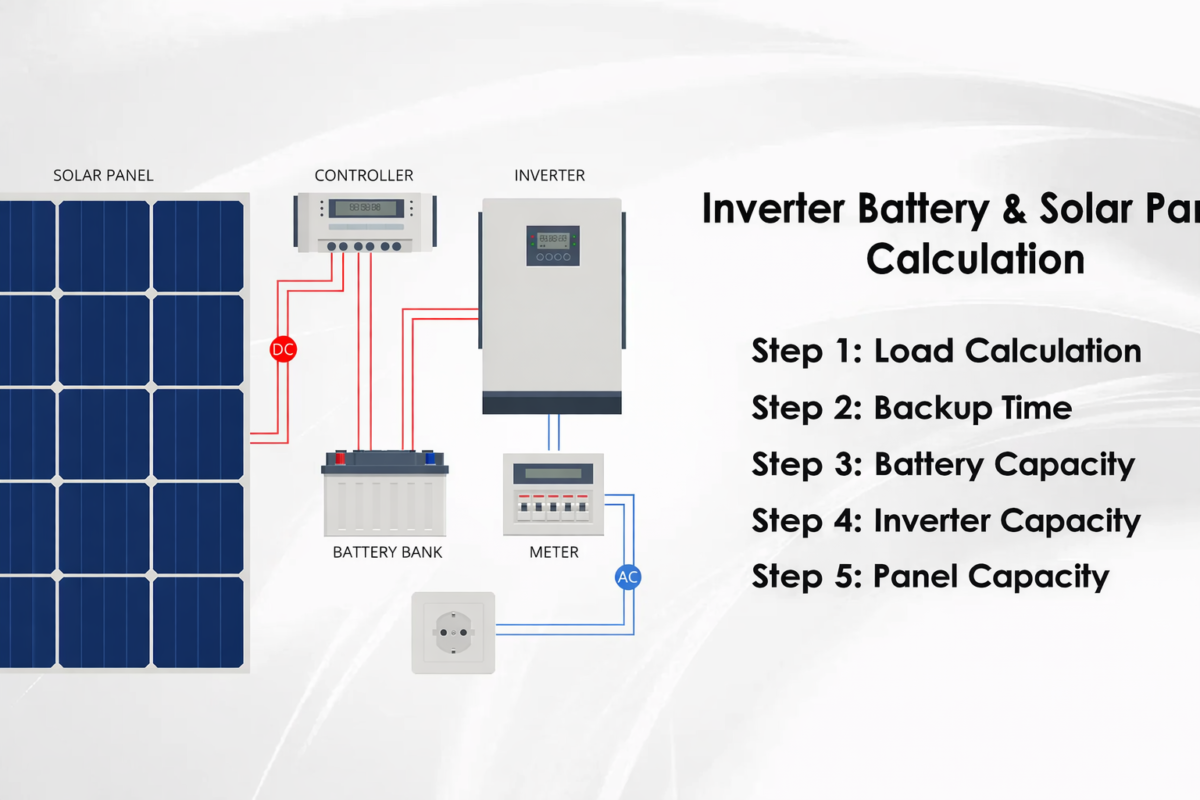
How Load Calculation Influences System Design
Impact on inverter sizing
Inverter capacity depends on peak load. ACs and motors matter most here. Poor load estimation leads to inverter shutdowns and operational stress.
Impact on battery backup planning
Backup duration depends on daily energy usage. Heavy loads drain batteries quickly. This connection becomes clear when planning solar battery integration in Pakistan.
Impact on panel quantity
Solar panels must generate daily energy demand. Roof space limits capacity.
Many homeowners select panels before calculating the load. A proper way to size your home solar system in Pakistan always starts with load estimation.
How Much Safety Margin Is Enough
A small buffer is reasonable. It helps account for minor usage changes. Large margins are harmful. They increase cost and reduce efficiency. Designing “just to be safe” often causes more problems than it solves.
Practical Tips to Keep Load Calculation Realistic
Prioritise essential loads first.
Separate daytime and nighttime usage.
Improve efficiency before adding capacity.
LED lighting, inverter fans, and efficient appliances reduce load quietly. These steps improve long-term reliability, especially when paired with maintenance tips for solar systems in Pakistan’s climate.
When You Should Recalculate Your Load
Recalculate when installing new air conditioners.
Recalculate when shifting from on-grid to hybrid or off-grid.
The load is not fixed. Solar systems should evolve with usage.
What This Guide Does Not Cover
This guide explains load calculation only.
It does not cover system pricing, battery sizing formulas, net metering rules, or ROI calculations. Each of those topics requires separate, focused guidance. Keeping boundaries clear prevents confusion.
Clear Final Takeaway
Solar load calculation is not advanced mathematics. It is about understanding real usage. A solar system should match how electricity is actually consumed, not how it is imagined. When load is calculated honestly, system design becomes simpler, costs stay controlled, and performance improves.
If you remember one rule, remember this: solar systems fail on paper before they fail on roofs. Honest load calculation prevents both.
Independent Power: Connect with Enon Traders Today!
Start your off-grid journey with Pakistan’s most reliable solar partner.
| Connect With Us | Action Link |
| Chat Instantly on WhatsApp | Get an off-grid system quote: Click to Chat Now! |
| Visit Our Website | View our off-grid inverters: Official Website |
| Call Our Experts | Design your custom micro-grid: Contact Page |