Genuine Solar Panel Identification: How to Spot Fake Panels
January 16, 2026
Inverter Efficiency Rating in Pakistan Explained
January 19, 2026
The adoption of solar energy in Pakistan has increased with a sudden rise in recent years. The increased prices of electricity, intermittency in the supply of electricity from the energy grid, and reduction in costs associated with solar technology have motivated consumers to adopt solar energy. With the rise in adoption of solar energy, a serious issue has quietly come into prominence. How does one know if the solar products being sold to them satisfy any acceptable standards?
Terms like IEC certified, international quality, and Tier-1 qualifications are also commonly used among sellers, though they hardly ever qualify to assist the consumer in making an educated purchase decision. People believe certification ensures quality performance, while others just disregard specifications and rely on wattage and cost alone.
This article sheds more light on the solar panels’ quality criteria in Pakistan. This article is based entirely on defining solar panels’ criteria and interpreting them based on the local market. After reading this article, you should be able to assess the quality criteria without having to rely solely on trust.
Why Solar Panel Quality Standards Matter in Pakistan?
The Pakistani solar industry relies heavily on imported solar panels. These solar panels involve a number of stages before they are placed on rooftops. In such a supply chain, a baseline for quality metrics could potentially be established.
Some panels which do not meet the required standards may fail to indicate defects until they are put to use. The defects may be noticed through a decrease in power generated, uneven heating, malfunctioning, or inverter failure. These factors are easily attributable to environmental changes or improper installation. However, in most instances, the defect may be caused by the use of sub-standard panels.
Another reason standards matter is the growing misuse of brand names. Well-known labels are sometimes applied to refurbished or downgraded panels. Without understanding quality standards, buyers have little defence against these practices. Learning genuine solar panel identification techniques can help avoid such risks early.
Are There Official Solar Panel Quality Standards in Pakistan?
Pakistan does not manufacture solar panels at scale, so quality control depends heavily on international benchmarks rather than local production standards. Instead of maintaining independent national testing facilities, Pakistan relies on globally recognised certifications.
Although regulatory oversight is exercised, this happens in a rather indirect manner. Panels meant for grid-connect or net metering arrangements are required to adhere to established international norms with respect to import and documentation. Testing of individual panels physically is uncommon.
This puts the onus on more than one player. Importers report compliance, installers advise on products, and buyers have the discretion on whether or not to check the claims made. Knowledge of how quality standards operate can help the buyer in their joint participation in a relatively safe environment.
Understanding IEC Standards for Solar Panels
IEC standards are the most widely recognised benchmarks for the safety of solar panels and resistance to different environmental conditions globally. Founded by the International Electrotechnical Commission, this standard itself specifies how the panels would be tested before being approved for commercial sale.
Two IEC standards are, however, extremely relevant:
IEC 61215 for performance and durability
This test tries to see if the panel will withstand environmental conditions. The panel will be put through high temperatures, cyclic heating/cooling, humidity, mechanical load, and ultraviolet radiation. When the panel has passed all tests, it will mean that the design will be able to withstand conditions existing outside for several years.
IEC 61730 for electrical and fire safety
The standard mainly deals with safety risks: insulation strength, grounding, resistance to electric shock, and fire hazards. Observance of the requirements reduces the possibility of accidents that can lead to property damage or put users in danger.
What IEC certification confirms is that a specific panel model passed controlled laboratory tests. It does not guarantee identical performance from each unit sold in the market.
How IEC Standards Apply to Solar Panels Sold in Pakistan?
In Pakistan, IEC certification is widely expected but not always verified beyond paperwork. Most reputable suppliers rely on IEC-compliant panels because they integrate more smoothly into approved solar systems.
For net-metered installations, documentation showing compliance is often required. While enforcement varies between distribution companies, panels without clear certification frequently cause approval delays. Understanding solar panel net metering requirements in Pakistan can help avoid such complications.
It is also important to understand that IEC certification applies to a specific tested model. It does not automatically cover every shipment or batch entering the country later. Storage conditions, ageing inventory, and relabelling can all affect real-world quality.
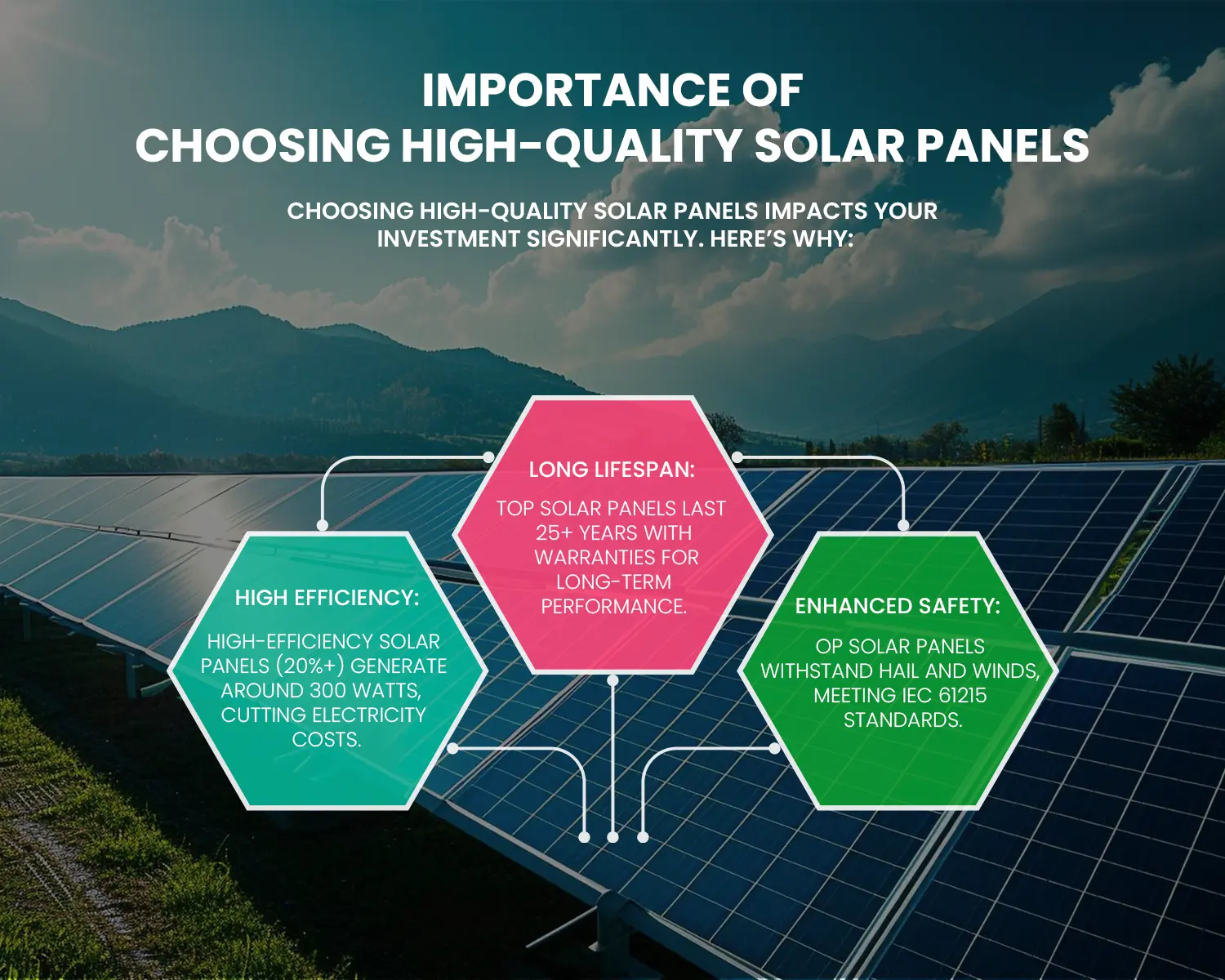
Common Misunderstandings About Solar Panel Quality Standards
One thing that is often mistakenly believed to be true regarding IEC certification is that it means superior quality. On the contrary, IEC specifications are minimums regarding safety and durability. Efficiency, lifespan, and brand quality are in no way measured by IEC certifications.
Another common misconception is that the higher the wattage of the panel, the better the quality of the panel. If a panel has a lot of watts and is barely able to meet the standards set for its quality, and the materials used to produce the panels are not of the best quality, then the panel will last for a
Additionally, several buyers also believe that once qualified, each screen bearing the label must also meet those criteria. However, it is true that market available units may differ from those in which it was first tested.
Quality Standards vs Local Market Realities in Pakistan
“The climatic conditions in Pakistan are very challenging for solar panels. Hot ambient temperature, roof heating, dust accumulation, and voltage variations are the main factors that affect the performance of the solar panels.”
Even when panels meet IEC standards, they may not function properly if they are inappropriately matched to their environment or set up inadequately. IEC standards do not consider dirty roofs, inconsistent cleaning practices, or hot summer conditions.
Installation quality is just as important. Improper mounting angles, loose connectors, and weak grounding can significantly reduce output even when panels meet standards. For a deeper understanding of long-term performance, review solar panel lifespan in Pakistan and how environmental stress affects degradation.
How to Verify Whether a Solar Panel Meets Quality Standards?
The verification process begins with documentation. Look out for mentions of IEC 61215 and IEC 61730 certification on the solar panel label and data sheet. None of the following words can be substituted: “globally tested” or “international quality.”
Make sure the part number on the data sheet matches the one on the board. Legitimate boards have identical numbers, proper manufacturer names, and high-quality printing.
Be cautious if suppliers hesitate to share datasheets or provide incomplete paperwork. These are common warning signs. Buyers comparing panel categories should also understand A-grade vs B-grade solar panels alongside certification claims.
What Quality Standards Can and Cannot Protect You From?
Quality standards mitigate certain risks. Quality standards help to decrease the risk of early structural failure, severe safety risk, and extreme loss of product output.
Yet standards do not shield against poor installation practices, excessive heat due to improper mounting of the panels, and premature aging due to exposure to dust and lack of maintenance. Standards do not ensure, either, that panels sold as “new” panels are indeed unused.
This is why standards should be treated as one evaluation layer, not the final decision. Understanding solar panel temperature coefficient explained helps buyers judge how panels behave in heat, which standards alone do not reveal.
How to Use Quality Standards as a Smart Buyer in Pakistan?
The smartest strategy, then, is to leverage standards as a filter. Eliminate those panels without verifiable compliance, then evaluate the remainder based on suitability for your roof, climate, and system design.
Ask direct questions. Which IEC standards does this model respond to? Can you provide the datasheet? Do the serial numbers match the documentation?
Use standards to squash outlandish claims and secure decisions based on fact, not marketing. Those buyers who couple certification checks with appropriate system sizing, using a solar panel size calculator, frequently realise much better long-term outcomes.
Conclusion: Making Confident Solar Decisions Through Better Understanding
The standards for solar panels in Pakistan are not confusing or nonsensical. The standards set by IEC are a good benchmark to screen out options with potential dangers. These standards are no guarantee when it comes to optimal functionality.
When buyers have an idea of what is tested and what is not, and the dynamics between them and their surroundings, decision-making becomes easier and more confident for everyone involved. To make good panel selections, one does not have to be an engineer. They just have to know the right questions to be answered and how to answer them.
Independent Power: Connect with Enon Traders Today!
Start your off-grid journey with Pakistan’s most reliable solar partner.
| Connect With Us | Action Link |
| Chat Instantly on WhatsApp | Get an off-grid system quote: Click to Chat Now! |
| Visit Our Website | View our off-grid inverters: Official Website |
| Call Our Experts | Design your custom micro-grid: Contact Page |