Solar System Payback Period in Pakistan
February 5, 2026
Solar Installation in Pakistan: Best Practices That Protect Your Investment
February 10, 2026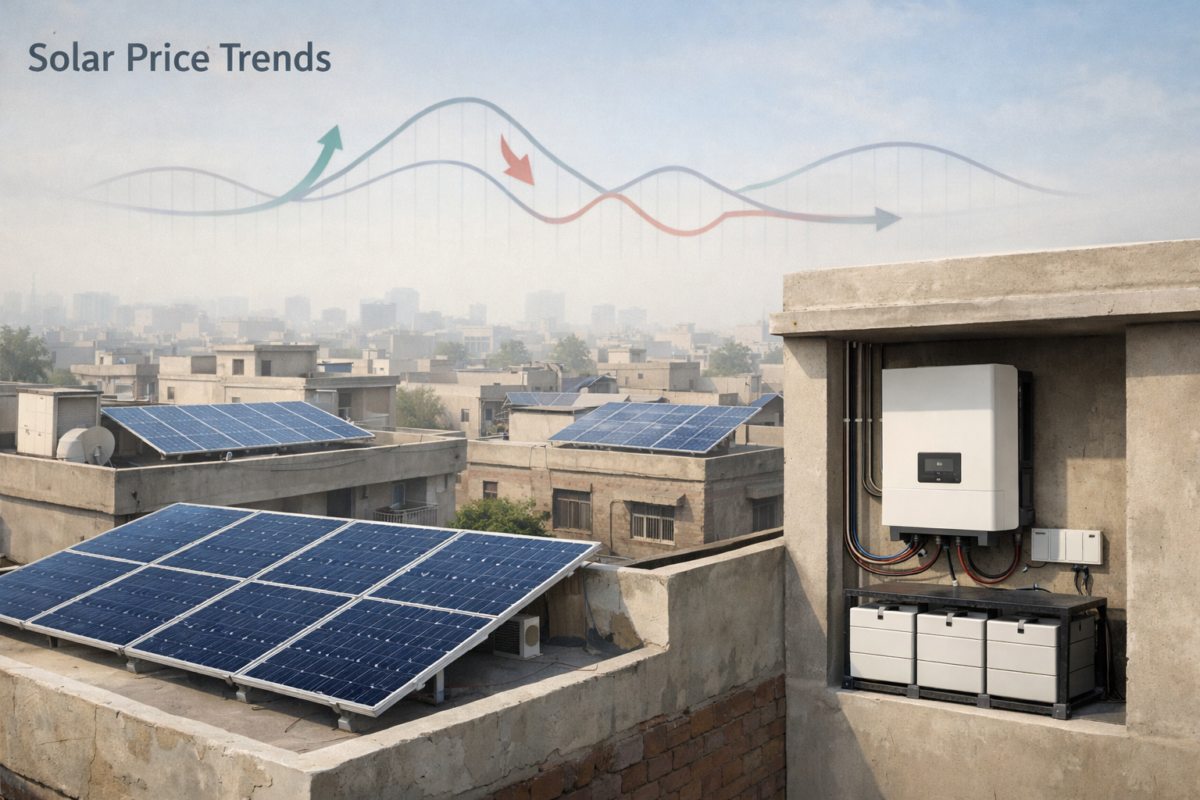
Solar prices in Pakistan rarely stay still. They rise, fall, pause, and then move again. Many homeowners only realise this when a neighbour installs solar more cheaply, or when an installer revises a quote after a few weeks. That confusion leads to hesitation, rushed decisions, or regret.
If you searched for the solar price trend in Pakistan, you are not looking for a single number. You are trying to understand direction. You want to know what is changing in the market and why. Most importantly, you want clarity before making a decision.
This article explains how solar prices behave in Pakistan, what drives market fluctuation, and how to read trends without getting misled. The goal is simple. You should finish this article more confident than when you started.
Why do solar prices in Pakistan keep changing
Solar pricing in Pakistan depends heavily on imports. Panels, inverters, batteries, and protection equipment all arrive through supply chains influenced by currency rates, government policy, and global manufacturing cycles. Even when demand stays constant, prices can change.
Think of solar pricing as a system with three layers.
The first layer is the global manufacturing cost.
The second layer is the Pakistan landing cost, including shipping, duties, and currency.
The third layer is local market behaviour, such as demand, installer capacity, and competition.
When one layer moves, the final price changes.
Why price trend matters more than today’s price
It helps you understand whether a price drop is temporary or part of a broader correction. It also shows which component is actually changing. Sometimes panels get cheaper while batteries become expensive. Sometimes, inverter prices rise due to limited supply or warranty shifts.
Quick Summary: What the Solar Price Trend Signals Right Now
- Panels: Prices are generally stable to soft, following global manufacturing cycles rather than local demand alone.
- Inverters: Pricing remains model-dependent, influenced by brand availability, warranty structure, and supply consistency.
- Batteries: Prices are demand-driven and often rise during periods of heavy load shedding or backup-focused installations.
- Timing: For most homeowners, long-term savings usually outweigh the benefit of waiting for a perfect price drop.
Common misconceptions that cause confusion
One common belief is that solar prices always fall. That is not true. Prices move in cycles. Another mistake is focusing only on panel rates. The total system cost also includes inverter capacity, protections, wiring, mounting, and installation quality. Ignoring those factors leads to misleading comparisons.
A simple look at the solar price trend over recent years
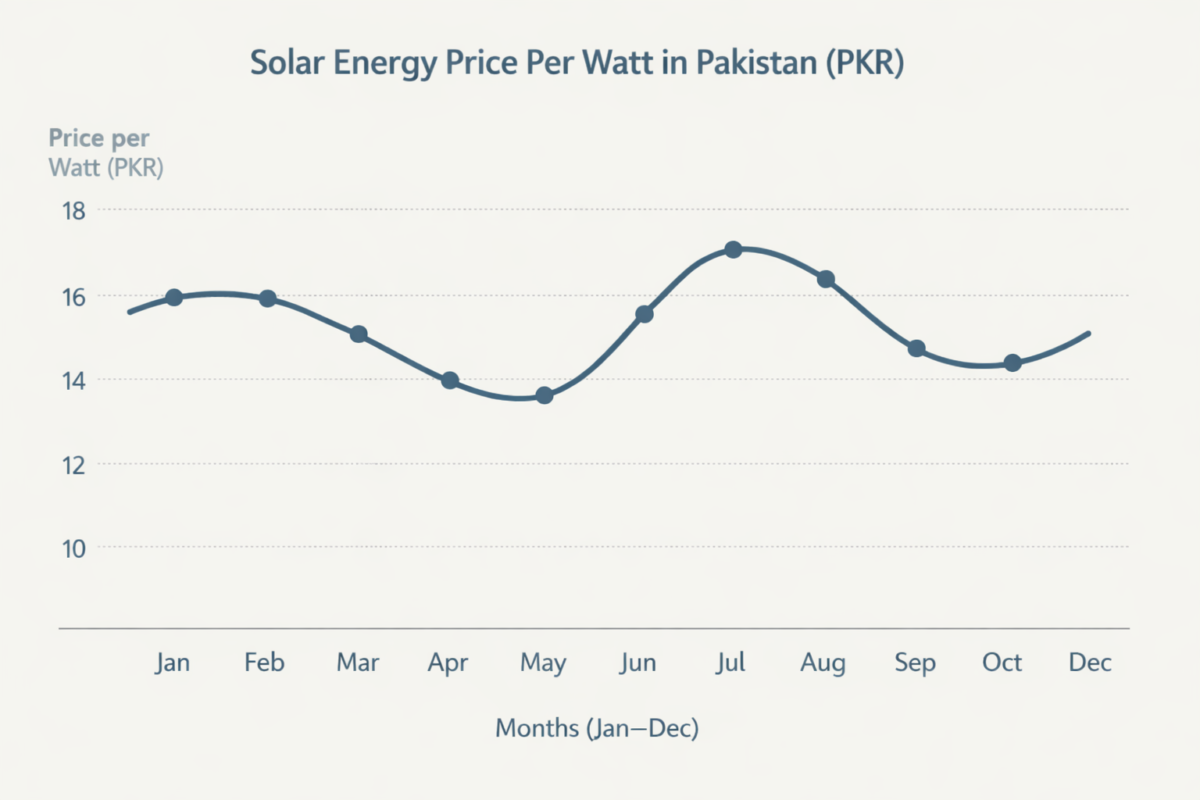
Demand surged during periods of high electricity tariffs and long load shedding hours. Prices softened when global panel supply increased. They rose again when currency pressure returned.
Another pattern appears regularly. Large shipments arrive at lower global rates. Distributors lower prices to clear inventory. Once that stock runs out, prices climb again. The trend looks like steps rather than slopes.
This behaviour explains why two installations done a few months apart can have very different pricing without any wrongdoing.
Key factors driving solar market fluctuation in Pakistan
Currency movement and import dependence
Most solar equipment prices react to the dollar. Even when global prices fall, a weaker rupee can cancel the benefit. That is why the same panel model can cost more locally despite international price reductions.
Global oversupply and manufacturer pricing
When global manufacturers overproduce, panel prices drop. Pakistan benefits after a delay. However, shipping costs, duties, and currency changes often reduce how much of that drop reaches the homeowner.
Policy signals and market confidence
Policy changes influence confidence, not just exports. When future export returns feel uncertain, some homeowners rush to install. That rush creates short demand spikes, which can temporarily push prices up.
For context on where policy direction stands, see Pakistan Solar Policy 2026.
Seasonal demand and installer capacity
Demand rises before summer and during peak billing periods. Installers become overloaded. Labour costs increase. Delivery timelines stretch. Some vendors raise prices simply because availability tightens.
Different components follow different trends
Panels often follow global manufacturing cycles. Inverters react to brand availability, warranty structure, and demand. Batteries respond to backup needs and raw material costs. Treating all components as one price hides important differences.
For a focused explanation of this split, read the imported solar modules and batteries cost trends.
Why prices drop and then rise again
Price drops usually happen for clear reasons. Distributors clear inventory. Global rates fall. Demand slows for a short period. Competition increases in certain cities.
Prices rise again when the rupee weakens, landing costs increase, demand returns, or popular models run out of stock.
A common scenario looks like this. A homeowner receives a low quote during a slow period. Installation gets delayed. Two weeks later, the installer says rates changed. The installer offers a cheaper alternative. Often, the price did not change. The quality did.
What the current solar price trend usually signals
Trend analysis is not about predicting exact prices. It is about reading signals that help decision-making.
Panel price drops do not always reduce system cost
When only panels become cheaper, the total system cost may barely change. Inverters, protections, mounting, and labour often stay the same.
Policy uncertainty creates short spikes, not long trends
Export rate or net metering uncertainty often causes temporary demand surges. These spikes do not always signal long-term price increases.
To understand how export changes affect returns, see the impact of changing the buy-back export rate.
Battery pricing behaves differently
Backup demand rises during heavy load shedding. Battery prices can increase even when panel prices fall. This matters for hybrid and backup-focused systems.
If backup is part of your plan, review battery storage for home solar.
How to read solar price trends without getting misled
Do not rely only on per-watt comparisons
Per-watt pricing ignores installation quality, protections, warranties, and component grades. It also hides whether the quote includes genuine or mixed stock.
Watch for quality trade-offs
Market drops often bring lower-grade equipment into circulation. Prices look attractive. Long-term performance suffers. Always question why a price is unusually low.
A practical way to avoid this mistake is outlined in how to Choose Quality Solar Equipment.
Do not obsess over perfect timing
Waiting for the lowest possible price often costs more in lost savings. Electricity bills continue. Policy conditions change. A reasonable decision today often beats a perfect decision that never happens.
Should you wait or act based on the trend?
Waiting makes sense if your electricity usage is low, bills are manageable, or installation timing is flexible. Acting makes sense if your bills hurt every month, your system size is clear, or summer demand is approaching.
A practical way to judge timing is through savings analysis rather than price guessing. For that, see the payback period for your home solar system.
If you want a real market benchmark for a major city, review the rooftop solar system cost in Lahore.
Common questions people still ask about solar price trends
Will solar prices keep falling in Pakistan
Prices can fall if global supply stays high and the currency remains stable. They can rise again if currency pressure or demand returns.
Do global price drops fully reflect locally?
Not always. Shipping, duties, and exchange rates reduce the effect.
How quickly do fluctuations reach homeowners?
Usually with a delay. Some sellers adjust quickly. Others hold prices until old stock clears.
Final perspective: understand the trend, not just the price
Solar price trends help you think clearly. They reduce panic buying and protect you from fake discounts. They also help you plan timing based on reality rather than rumours.
Prices will continue to move. That is normal. A good decision comes from understanding why prices move, not from chasing the lowest quote.
When you understand the solar price trend in Pakistan, you make decisions with confidence instead of pressure.
Independent Power: Connect with Enon Traders Today!
Start your off-grid journey with Pakistan’s most reliable solar partner.
| Connect With Us | Action Link |
| Chat Instantly on WhatsApp | Get an off-grid system quote: Click to Chat Now! |
| Visit Our Website | View our off-grid inverters: Official Website |
| Call Our Experts | Design your custom micro-grid: Contact Page |