Monetizing Your Roof: How to Register for “Mitigation Outcomes” in 2026
January 29, 2026
The “Solar Graveyard” Warning: Upcoming EPA Regulations on Battery Disposal
January 30, 2026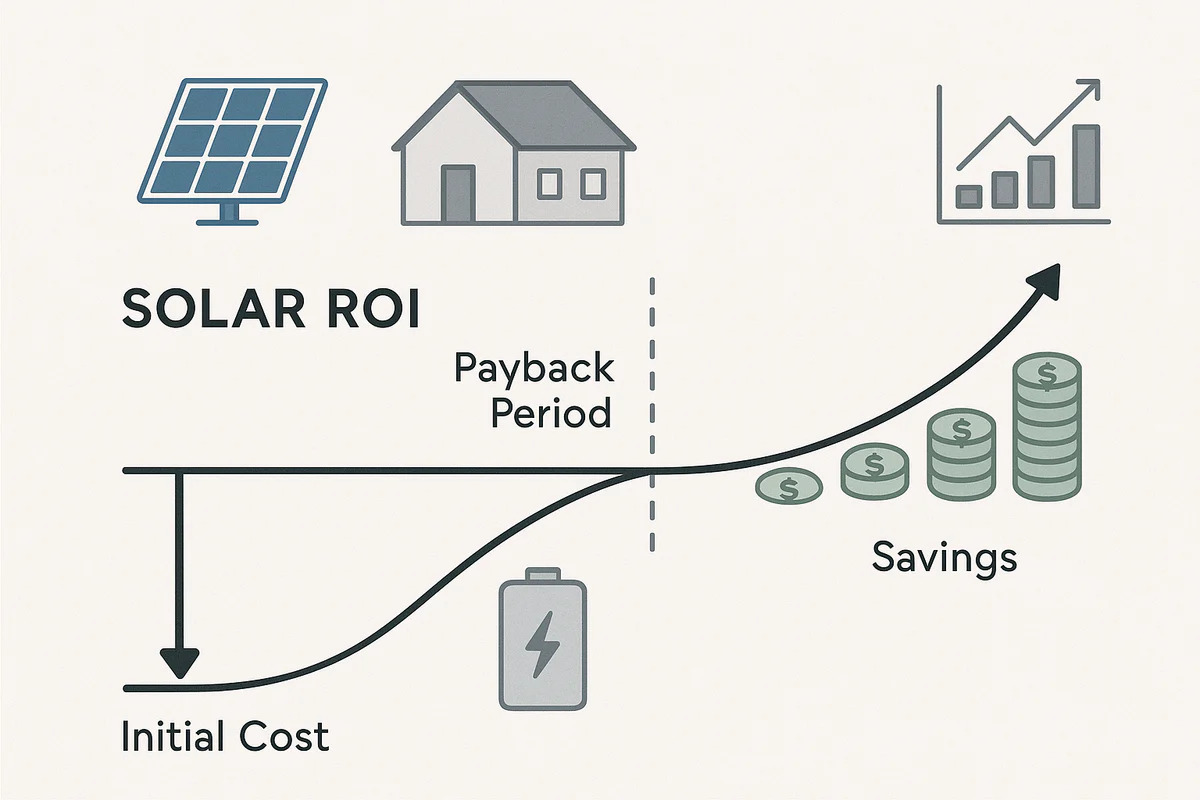
For many households and businesses in Pakistan, installing solar is no longer only about backup power or escaping load shedding. It has become a serious financial decision. Before committing large savings, people want a clear answer to one question. Will solar recover its cost and deliver real long-term savings?
This is why searches for a solar ROI calculator in Pakistan continue to rise. People are not looking for marketing claims or exaggerated payback promises. They want a realistic way to estimate investment return, payback time, and financial risk before installing a system.
This guide explains how solar ROI works in Pakistan, how ROI calculators estimate savings, and how to interpret those results correctly. The goal is not to push solar, but to help you decide with clarity and confidence.
What Solar ROI Really Means in Pakistan?
Solar return on investment is the time that your savings in electricity take to equal the amount invested in that solar solution. Taking an average solar solution costing of PKR 1.6 million, which aligns closely with the rooftop solar system cost in Pakistan, Example Solar ROI Calculation for a Typical Pakistani Home, and saving PKR 35,000 per month on electricity bills, your solar return on investment is approximately four years.
The ROI of solar power does not mean making money quickly. It means making energy bills from month to month go from an expense to an asset that keeps earning returns for several decades. After that, it means using energy from solar power for free, considering minor maintenance.
Knowing the difference helps to avoid unrealistic expectations later on.
Why does solar ROI behave differently in Pakistan?
Pakistan’s electricity environment makes solar ROI unique. Tariffs change frequently, slab-based billing penalises higher usage, and net metering policies evolve over time. Load shedding and voltage instability further affect consumption patterns.
Because of these variables, two identical solar systems can deliver very different ROI results depending on how electricity is used. This is why imported ROI figures or generic calculators often fail to reflect real Pakistani conditions.
How a Solar ROI Calculator in Pakistan Works?
Most solar ROI calculators rely on a few core inputs:
- Solar system size in kilowatts
- Total installed system cost
- Average monthly electricity units
- Per-unit electricity rate
- Net metering status
Some calculators also include battery usage, though many still exclude battery replacement costs. The accuracy of these inputs matters far more than the calculator tool itself.
What does a solar ROI calculator actually estimate?
A solar ROI calculator typically estimates:
- Monthly electricity savings
- Annual savings
- Payback period in years
- Long-term investment return over system life
It does not predict future tariff changes or policy shifts. It simply models savings based on assumptions. Understanding this limitation prevents blind trust in precise-looking numbers.
Example Solar ROI Calculation for a Typical Pakistani Home
| System Detail | Value |
| System size | 6kW |
| Total installed cost | PKR 1,650,000 |
| Average monthly units | 900 units |
| Average unit rate | PKR 55 |
| Estimated monthly savings | PKR 45,000 |
| Estimated annual savings | PKR 540,000 |
| Estimated payback period | ~3.1 years |
This example assumes proper installation, stable net metering, and average urban consumption. Results vary significantly based on usage habits and electricity slabs, which is why it is important to calculate the payback period for your home solar system using your actual bills and load profile.
Key Factors That Shape Solar Investment Return in Pakistan
Electricity pricing in Pakistan follows slab-based billing. Higher consumption pushes users into expensive per-unit rates. When solar offsets these higher slabs, savings increase sharply.
Homes with lower consumption often experience slower ROI even with similar system sizes. Understanding slab behavior is essential when interpreting ROI results.
Many users misjudge ROI because they do not understand how slab reduction amplifies savings. This issue often overlaps with solar system sizing mistakes.
Net metering and export rates
Net metering allows excess daytime solar production to offset nighttime usage. This improves ROI, but export rates matter.
If buyback policies change, payback timelines shift. Calculators that assume permanent export benefits without explaining this risk oversimplify the picture.
Understanding the net metering impact alongside solar net metering rules in Pakistan helps avoid disappointment.
System cost and installation quality
Lower upfront cost does not always mean better ROI. Poor installation, undersized inverters, weak wiring, or low-grade panels reduce output over time.
Reduced production directly slows ROI regardless of what a calculator predicts. Installation quality is often more important than brand selection.
This is where solar inverter efficiency rating plays a direct role in long-term returns.
City and climate impact
Solar output varies by location. Dust accumulation, summer heat, shading, and seasonal weather all reduce real-world production.
Most calculators use national averages. Actual performance in Lahore, Karachi, or Islamabad may differ considerably.
Ignoring these variables inflates ROI expectations.
Typical Solar Payback Periods in Pakistan
These systems suit homes with moderate consumption. Typical payback ranges from four to six years, depending on tariffs, net metering approval, and appliance usage timing.
Homes that shift heavy loads to daytime often achieve faster recovery.
Medium residential and commercial systems (6kW to 10kW)
Higher consumption generally improves ROI. Businesses operating during daylight hours often see payback between three and four years.
This is where solar investment becomes financially strongest, especially for offices, workshops, and shops.
When payback becomes slower than expected
ROI slows when consumption is low, systems are oversized, or most usage occurs at night. Many disappointments arise from planning errors rather than system failure.
Poor planning is often linked with off-grid solar system design issues or unrealistic expectations.
Common Mistakes When Using a Solar ROI Calculator
Many users assume perfect sunlight year-round. In reality, dust, heat losses, inverter efficiency, and wiring losses reduce output.
Ignoring these factors inflates ROI projections.
Assuming electricity prices remain fixed
Electricity tariffs rarely remain stable in Pakistan. Rising tariffs may improve ROI, while policy shifts can affect projections.
Calculators that freeze tariff assumptions oversimplify reality.
Ignoring battery replacement costs
Batteries improve reliability but extend payback periods. Many calculators exclude replacement cycles entirely. Understanding how tointegrate battery backup with your solar system in Pakistan is essential before trusting ROI figures involving storage.
How to Use a Solar ROI Calculator Correctly?
Use real electricity bills rather than estimates. Enter realistic system costs instead of marketing minimums. Assume conservative production values.
Planning with slightly lower expectations is safer than relying on best-case scenarios.
Interpreting results with the right mindset
A longer payback does not automatically mean solar is a poor decision. Stability, protection from future tariffs, and energy independence matter too.
For new users, reviewing solar system maintenance planning helps align financial expectations with long-term performance.
Solar ROI Calculator Results vs Real-World Outcomes
Usage habits change, equipment ages, and policies evolve. No calculator can predict every variable. Treat ROI results as directional guidance, not guaranteed outcomes.
Aligning expectations with reality
Compare multiple scenarios. Focus on long-term value rather than perfect precision. This mindset prevents post-installation regret.
Key Takeaways Before Relying on a Solar ROI Calculator
A solar ROI calculator helps estimate feasibility, compare system sizes, and plan payback timelines. It cannot promise savings or predict policy decisions.
Used correctly, it supports informed decisions rather than emotional ones.
Final Thoughts on Calculating Solar Investment Return in Pakistan
Solar ROI in Pakistan is neither guaranteed nor unpredictable. It depends on electricity usage, tariff behavior, system quality, and realistic expectations.
A good calculator does not sell solar. It helps you think clearly. When you understand how ROI truly works, you stop guessing and start deciding with confidence.
Independent Power: Connect with Enon Traders Today!
Start your off-grid journey with Pakistan’s most reliable solar partner.
| Connect With Us | Action Link |
| Chat Instantly on WhatsApp | Get an off-grid system quote: Click to Chat Now! |
| Visit Our Website | View our off-grid inverters: Official Website |
| Call Our Experts | Design your custom micro-grid: Contact Page |