Wind Load Calculation for Solar Panels Explained (2026 Guide)
March 5, 2026
Inverter Warranty Terms in Pakistan Explained: What Warranty Coverage Really Includes
March 8, 2026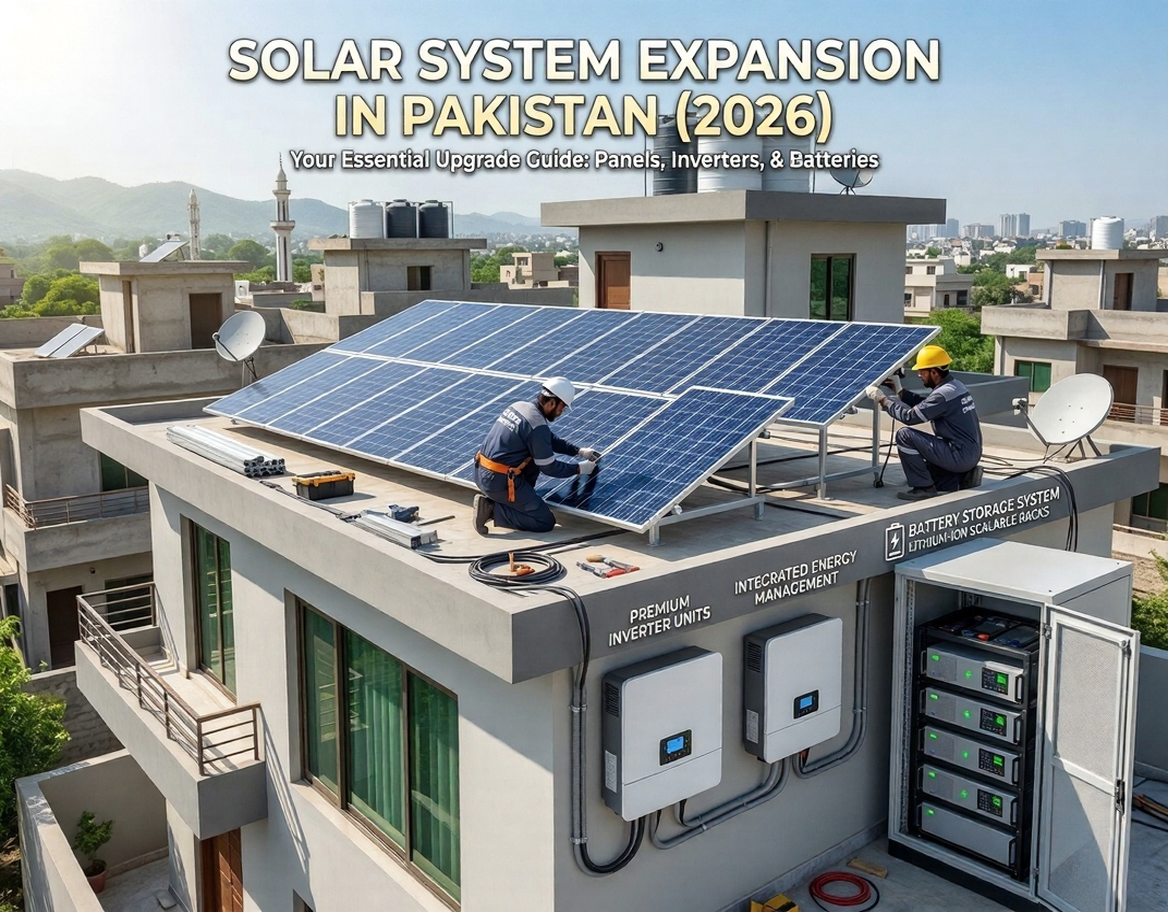
In Pakistan, household electricity consumption may increase by 25-40% within three years after installing solar systems. Upgrades in lifestyle, increased family size, and increased usage during summer months lead to this increase. A system that was previously just right starts to struggle.
The electricity bills begin to increase once again. Inverter overload messages become more common. This is where most people make a costly mistake.
Inadequate technical assessment may lead to PKR 300,000 to 600,000 being wasted. Adding solar panels without an inverter capacity may lead to clipping. Installing batteries without checking compatibility may lead to integration issues.
The search for solar system expansion solutions in Pakistan is on the rise as homeowners look for smarter upgrades without having to tear down what they already invested in. Expansion is always possible, but only within system constraints.
This resource will walk you through solar system expansion in Pakistan based on real-life loading conditions, realistic costs, and strict technical parameters to help you expand your solar system with confidence and avoid costly errors.
What Solar System Expansion Actually Means
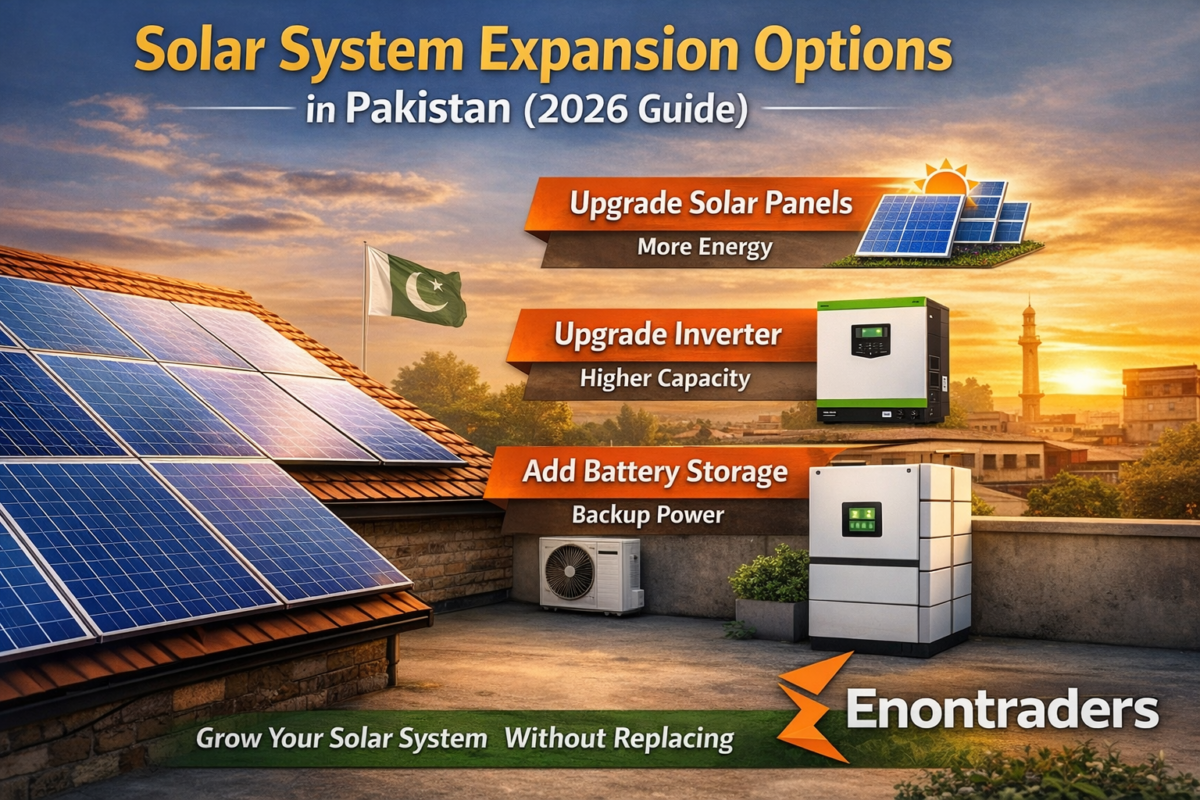
Solar expansion is not just about adding panels. It usually involves one of three directions.
1. Expanding Solar Panels
You add panels when:
- Daytime bill remains high
- Units exported are low
- The load has increased
- Net metering capacity allows for more export
This is the most common upgrade in Pakistan.
But adding panels without checking inverter limits leads to clipping losses.
Real Example
A typical 5kW inverter in Pakistan allows around 6.5kW to 7kW DC input.
If a homeowner already has 6kW installed and adds 3kW more, the total becomes 9kW.
Result:
The inverter can still only process about 6kW AC.
Excess production is clipped during peak sun hours.
2. Upgrading Inverter Capacity
You upgrade the inverter when:
- DC input is already near maximum
- MPPT channels are fully used
- AC load exceeds the inverter rating
- Net metering approval allows larger export
Real Load Example
Two 1.5-ton inverter AC units:
- Startup surge: 3.5kW to 4kW each
- Running load: 1.6kW to 2kW each
Add refrigerator, freezer, washing machine, fans, and lights.
Peak demand can reach 7kW to 8kW.
If your inverter is rated 6kW, it runs near 100% capacity daily. That reduces lifespan and increases voltage instability.
3. Adding Battery Storage Later
Battery expansion supports:
- Load-shedding backup
- Nighttime consumption
- Reduced grid dependency
- Better self-consumption
But storage only integrates smoothly if the original system was designed for it.
Can You Add More Solar Panels Later?
In many Pakistani homes, yes. But only if four conditions are satisfied:
- Inverter DC headroom exists
- MPPT channels are available
- Roof structure supports added weight
- Electrical protection is sized properly
Check DC/AC Ratio First
In Pakistan’s climate, a healthy DC/AC ratio is usually between 1.2 and 1.4.
Example:
5kW inverter
Ideal panel size: 6kW to 7kW
If you are already at a 1.4 ratio, expansion is not efficient without an inverter upgrade. Anything beyond that causes heavy clipping in summer.
MPPT Channels Matter More Than People Think
If an inverter has two MPPTs and both are already fully loaded:
Adding panels requires either:
- Re-stringing
- Combining mismatched arrays
- Or upgrading the inverter
Mixing east-facing and south-facing panels on one MPPT causes mismatch loss. You may add 2kW but gain only 1.5kW in actual output.
Roof Load and Structural Safety
Expansion increases rooftop weight and wind load.
Before adding panels, always verify structural strength through: rooftop load-bearing solar. Overloading a roof to chase extra kW is never worth the structural risk.
When Inverter Upgrade Becomes Necessary
Inverter replacement becomes unavoidable when:
- DC input limit is reached
- MPPTs are full
- The AC output is constantly overloaded
- You want higher net metering approval
If your house runs on single-phase, expansion must respect phase limits. Voltage tripping often happens when this detail is ignored. Understand these constraints clearly through a single-phase inverter home.
Hybrid vs On-Grid: Planning for Future Expansion
If you plan to add batteries later, hybrid systems offer cleaner expansion. On-grid systems reduce bills but do not provide backup. Expansion architecture matters.
DC Coupling
Panels and batteries connect to the same hybrid inverter.
AC Coupling
Existing on-grid inverters remain. A battery inverter is added separately. AC coupling protects your existing investment but increases wiring complexity. Planning this early avoids expensive redesign later.
Adding Battery Storage Without Regret
Battery addition changes system behavior.
A 5kWh lithium battery typically supports:
- 6 fans
- 8 to 10 LED lights
- 1 refrigerator
For approximately 4 to 5 hours on average.
But integration depends entirely on the inverter type. Before planning storage, review: How to integrate battery backup with your solar system in Pakistan.
And evaluate financial logic through: Battery storage for home solar in 2026.
Cost of Solar System Expansion in Pakistan (2026 Estimates)
Realistic ranges:
- Panel expansion: PKR 180,000 to 250,000 per kW
- Hybrid inverter upgrade: PKR 250,000 to 450,000
- 5kWh lithium battery: PKR 400,000 to 550,000
- Distribution board upgrade: PKR 40,000 to 80,000
Real Scenario Comparison: 5kW System Expansion Paths
Scenario:
5kW inverter
6kW panels
Monthly usage increased from 550 units to 900 units
1 – Add 2kW panels
Cost: ~PKR 400,000
Result: Clipping unless the inverter is upgraded
Option 2 – Replace the inverter with an 8kW hybrid
Cost: ~PKR 350,000 to 450,000
Result: Proper scaling + future battery flexibility
Option 3 – Add 5kWh battery only
Cost: ~PKR 450,000
Result: Backup + night support, but no increase in daytime production
This comparison prevents wrong upgrade paths.
Net Metering and Expansion
Increasing system size beyond approved capacity requires updated documentation.
Understand the process clearly through: How to apply for net metering in a Pkistan, process eligibility tips. Export rate changes also affect expansion logic. If buy-back rates decline, adding panels purely for export becomes less attractive.
Review: Impact of Changing Buy-Back Export Rate for Solar in Pakistan.
Solar Expansion Planning Checklist
Before expanding:
- Confirm inverter DC headroom
- Confirm MPPT availability
- Check DC/AC ratio
- Review the roof structural limits
- Upgrade cable sizing if needed
- Verify breaker ratings
- Confirm net metering approval
- Ensure battery compatibility
Common Expansion Mistakes
Adding Panels Without Verifying DC Limits
Leads to clipping and thermal stress.
Mixing Panel Types Without Planning
Mismatch reduces efficiency.
Ignoring Wiring Upgrades
Higher current requires upgraded DC cables.
Review proper cable sizing through the Solar DC Cables Guide.
Repeating Installation Errors
Avoid common field mistakes by reviewing the top mistakes to avoid when installing rooftop solar in Pakistan.
When Expansion Is Not Advisable
Expansion may not make sense if:
- The inverter is nearing the end of its life
- The roof is heavily shaded
- The distribution board is undersized
- Net metering caps limit export
- The original installation quality was poor
In such cases, redesigning the system may deliver better long-term stability.
Final Thoughts
By 2026, homes that plan scalability into their solar architecture will remain stable. Those who upgraded impulsively will face clipping losses, inverter stress, voltage trips, and unnecessary replacement costs. Ignoring even one of these creates an imbalance.
Calculate ROI carefully using: How to calculate payback period for your home solar system in Pakistan.
In many cases, a simple inverter upgrade delivers better long-term scalability than adding panels blindly. In others, improving self-consumption with storage is smarter than chasing export units. The correct path depends on engineering math, not bill frustration.
The smartest next step is to conduct a structured system audit. Once your system limits are clear, expansion becomes predictable instead of risky.
Independent Power: Connect with Enon Traders Today!
Start your off-grid journey with Pakistan’s most reliable solar partner.
| Connect With Us | Action Link |
| Chat Instantly on WhatsApp | Get an off-grid system quote: Click to Chat Now! |
| Visit Our Website | View our off-grid inverters: Official Website |
| Call Our Experts | Design your custom micro-grid: Contact Page |