Inverter WiFi Monitoring in Pakistan: How to Track Your Solar System From Your Phone
May 5, 2026
Pakistan’s Wholesale Solar Market: How Bulk Solar Buying Actually Works in 2026
May 7, 2026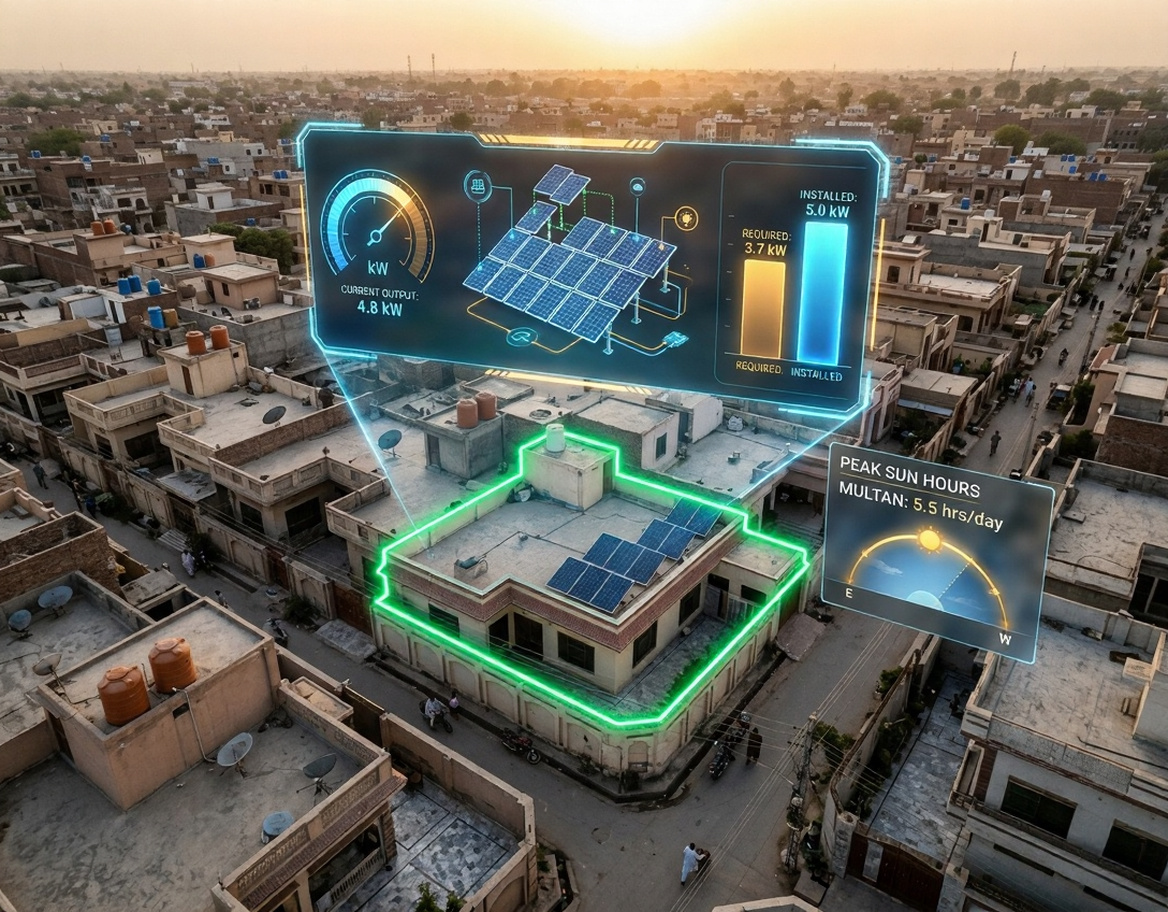
Most homeowners in Pakistan install a solar system and still receive a high electricity bill the next month. The panels are running. The inverter is working. But something still feels off.
The problem is rarely the equipment. It is the sizing. Most solar systems in Pakistan are sold, not sized. A vendor visits, looks at the roof, and quotes a 5kW or 10kW package. Nobody sat down and calculated what the home actually consumes daily.
That is exactly what load-based sizing solves. If you skip it, you either overpay for capacity you never use or end up with a system that cannot keep up with your actual home usage. This guide walks you through the full process so you can go into any vendor conversation with clarity.
What Load-Based Actually Means in Solar Sizing
Load vs. Capacity: The Distinction That Changes Everything
Your electrical load is the total power your home consumes. Panel count, inverter size, and battery capacity all come after that number, not before it.
Most vendors start with what they sell. A residential load-based solar system starts with what you use. That one shift in direction changes the entire outcome and protects you from buying the wrong system.
How to Calculate Your Home’s Electrical Load
Step 1: List Every Appliance and Its Wattage
Write down every device in your home. Check the label on the back or inside the door panel. Do not guess. A modern inverter AC draws around 900 to 1,200 watts. An older non-inverter model pulls almost double that.
Common appliances and their average wattages in Pakistani homes:
|
Appliance |
Wattage (Approx.) |
|
Inverter AC (1.5 ton) |
900 to 1,200W |
|
Ceiling Fan |
70 to 80W |
|
LED Bulb |
8 to 12W |
|
Inverter Refrigerator |
100 to 150W |
|
Water Pump (0.5 HP) |
400W |
|
LED TV (40 inch) |
60 to 80W |
|
Washing Machine |
400 to 500W |
|
Electric Geyser |
2,000W |
Not every appliance runs all day. Usage hours matter just as much as wattage.
Step 2: Calculate Daily Watt-Hours Per Appliance
Use this formula for each appliance:
Watts x Hours Used Per Day = Watt-Hours (Wh)
Example calculation for a medium-sized Pakistani home:
|
Appliance |
Watts |
Hours/Day |
Wh/Day |
|
Inverter AC |
1,000W |
8 hrs |
8,000 Wh |
|
4 Ceiling Fans |
300W |
12 hrs |
3,600 Wh |
|
8 LED Bulbs |
80W |
6 hrs |
480 Wh |
|
Refrigerator |
120W |
24 hrs |
2,880 Wh |
|
TV |
70W |
5 hrs |
350 Wh |
Step 3: Add It Up to Find Your Total Daily Load
Add every daily Wh figure together. In the example above, the total comes to roughly 15,310 Wh per day, or about 15.3 kWh. This number is your foundation for sizing everything else correctly.
From Load Calculation to System Size
How Daily Load Determines the Number of Solar Panels
Pakistan receives 5 to 5.5 peak sun hours per day across most cities. Lahore, Multan, and Faisalabad sit comfortably in this range. Karachi gets slightly more.
Use this formula to find your required solar output:
Daily Load (Wh) / Peak Sun Hours = Required Solar Output (W)
Using the example above:
15,310 Wh / 5 hours = 3,062W of solar output needed
Add a 20 per cent efficiency buffer for wiring losses, heat, and dust on panels. That brings the figure to around 3.7kW. For a full breakdown of how these numbers translate into a complete system, read our guide on how to size your home solar system in Pakistan step by step.
How Load Affects Inverter Sizing
Here is what almost every competitor misses: your inverter must handle your peak simultaneous load, not your average daily consumption figure.
If your AC, refrigerator, two fans, and lights all run at the same time, the combined load at that moment can hit 2,000 to 2,500W. Your inverter must comfortably exceed that figure.
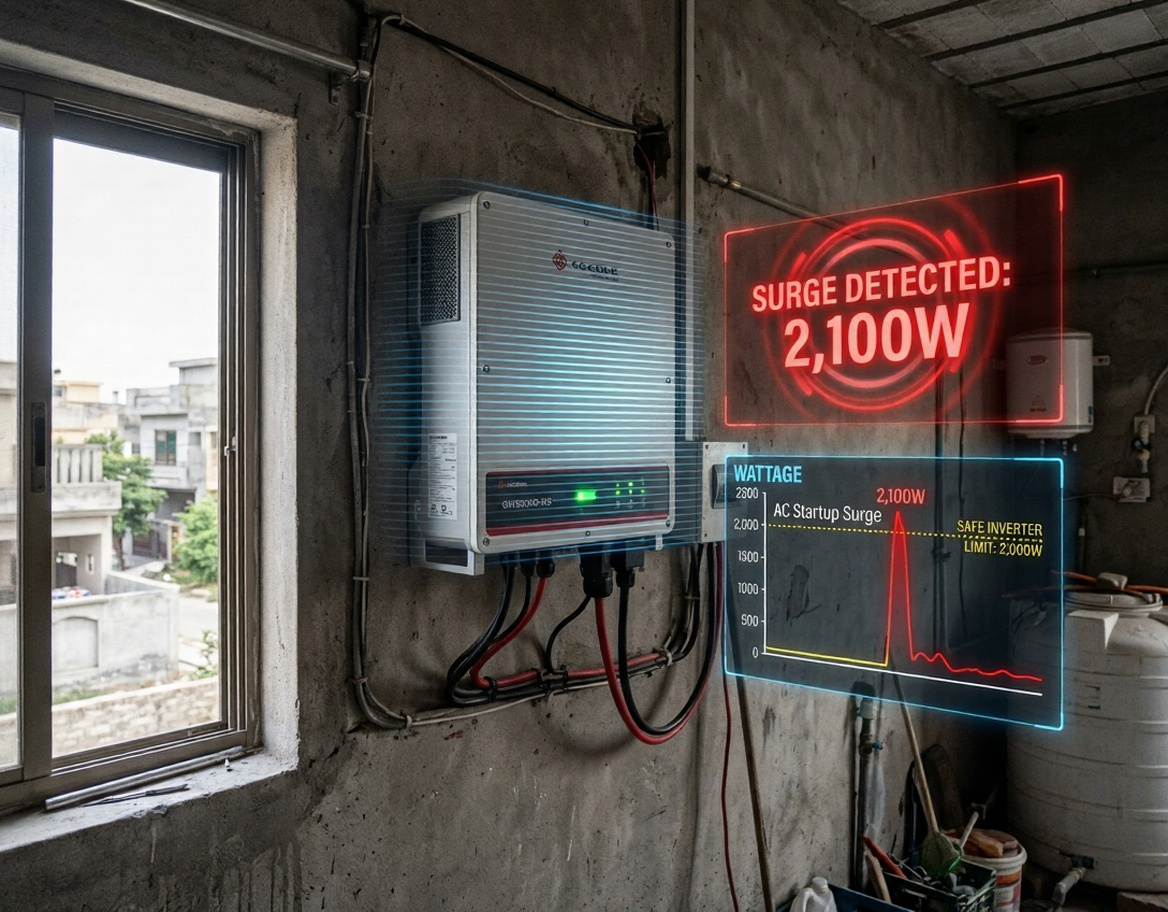
There is another factor most buyers never hear about: surge wattage. An AC, water pump, or geyser draws significantly more power during startup than during normal operation. A 1,000W AC can pull 1,800 to 2,200W for the first few seconds when it starts. An undersized inverter will trip every time the compressor kicks in. Understanding inverter overload capacity before you finalise any purchase protects you from this exact problem.
Does Your Load Require a Battery Bank?
The answer depends entirely on when your household uses electricity.
- If most appliances run during daylight hours, a batteryless or on-grid setup may work well.
- If your heaviest usage falls in the evening when panels produce nothing, you need storage.
Read our full breakdown on battery storage for home solar and whether it is worth it in Pakistan before making this decision.
Why Most Residential Solar Systems Are Wrongly Sized
The Standard Package Problem
Vendors across Pakistan typically offer fixed packages: 3kW, 5kW, 8kW, 10kW. These work for average households. But your home may not match the average.
A 5kW package for a family in Multan running two ACs for eight hours a day will fall short by a wide margin. The same 5kW package for a family in Karachi with one AC and careful usage habits may exceed what they actually need. Both families received the same quote without anyone calculating their actual load first.
This is the single most expensive mistake in Pakistan’s solar market today. Our guide on the top mistakes to avoid when installing rooftop solar in Pakistan covers this, and several other traps buyers walk into before signing a contract.
Seasonal Load Shifts Nobody Warns You About
In summer, AC usage spikes heavily. A home consuming 15 kWh per day in December may consume 28 kWh per day in July. A system sized for winter usage will leave you short during the hottest months when you need it most.
Always size your system around your highest consumption month, not your yearly average. Most installers will not tell you this unless you ask directly.
How Your Home Usage Pattern Shapes the Right System
Daytime-Heavy Households vs. Evening-Heavy Households
Two homes can have identical monthly electricity units and need completely different solar systems.
A home where someone stays in during the day runs ACs, fans, and appliances during peak solar production hours. That household benefits directly from a grid-tied or batteryless hybrid setup where solar output offsets consumption in real time.
An evening-heavy household, where everyone leaves in the morning and returns at night, gets far less value from solar without a battery. Panels generate power all day, and nobody is there to use it. Knowing your usage pattern before buying determines your inverter battery compatibility and whether battery storage adds real value or just cost.
High-Load Appliances That Skew Your Calculation
Three appliances in particular distort load calculations when ignored:
- AC units: Use inverter-type models only. Size using running wattage, not listed capacity. A 1.5-ton inverter AC consumes 900 to 1,200W during operation.
- Water pumps: A half-horsepower pump draws around 400W running but can surge to 700W during startup.
- Electric geysers: These pull 2,000W or more. A single geyser used without thought can add 4 to 6 kWh to your daily load.
Ignoring surge wattage on these appliances leads to inverter trips at the worst moments. Understanding single-phase inverter requirements for home use helps you match the right inverter to your real load demands.
A Simple Load-Based Sizing Checklist Before You Go Solar
Use this checklist before speaking to any vendor:
- List every appliance with its wattage from the label, not from memory
- Multiply each appliance’s wattage by daily usage hours to get Wh per day
- Add all Wh per day values to find your total daily load
- Divide the total load by 5 to get the required solar output in watts
- Add 20 per cent to that figure for efficiency losses
- Identify your peak simultaneous load to choose the right inverter
- Note surge-wattage appliances: AC, water pump, geyser
- Decide if your usage is daytime-heavy or evening-heavy before committing to batteries
- Size your system on your highest-usage month, not your average
Run your final figures through the solar panel size calculator before talking to a single vendor.
What Comes Next
A correctly sized residential load-based solar system starts with your actual home usage, not a product catalogue or a vendor’s best guess. Once you complete your load calculation, you hold every number a good installer needs to design the right system for your specific situation.
That shift from passive buyer to informed decision-maker is what separates homeowners who get real savings from those who get expensive regrets.
Independent Power: Connect with Enon Traders Today!
Start your off-grid journey with Pakistan’s most reliable solar partner.
| Connect With Us | Action Link |
| Chat Instantly on WhatsApp | Get an off-grid system quote: Click to Chat Now! |
| Visit Our Website | View our off-grid inverters: Official Website |
| Call Our Experts | Design your custom micro-grid: Contact Page |