Solar Panel Quality Standards in Pakistan Explained
January 19, 2026
Lithium vs Tubular Battery in Pakistan: A Practical Battery Comparison
January 20, 2026
When selecting a solar inverter for the Pakistani market, buyers often feel more confused than necessary. Catalogs highlight impressive efficiency ratios, but they rarely explain how those numbers hold up when the inverter faces real conditions such as heat, voltage fluctuations, and load shedding.
Most people assume that the efficiency of the inverter is irrelevant or that it is always good if the number is higher. The truth is that inverter efficiency in Pakistan actually matters, but it’s not what you’ll probably find in most marketing materials related to the inverter you buy.
“This user’s guide helps you understand how the efficiency of an inverter is rated in Pakistan. It would help you know what values an efficiency measure comprises, at what stage the conversions take place, the change in efficiency during the day, and how to interpret inverter specifications. After this user’s guide, you should be able to interpret inverter efficiency without having any doubts about your choice.”
What does an Inverter Efficiency Rating Actually Measure?
An inverter efficiency rating measures the percentage of DC power from solar panels or batteries that is successfully converted into usable AC electricity, with the remainder lost mainly as heat during the conversion process.
| Efficiency Metric | Typical Range | What It Means in Real Use |
|---|---|---|
| Peak Efficiency | 96–99% | Best-case performance under ideal lab conditions |
| Weighted Efficiency | 94–97% | Real-world daily performance across varying loads |
| Optimal Load Range | 50–80% | Where most inverters operate most efficiently |
| Below 50% Load | Lower efficiency | Idle losses become proportionally higher |
| High Heat Conditions | Slight drop | Efficiency reduces as internal temperature rises |
The basic concept behind inverter efficiency
An inverter converts DC electricity from solar panels or batteries into AC electricity that powers household or commercial appliances. This conversion process is never perfect. Some energy is always lost, mainly in the form of heat generated inside the inverter.
The efficiency rating shows how much of the input power becomes usable output under specific test conditions. For example, an inverter with a 95 percent efficiency rating delivers 95 percent of the incoming energy as usable electricity, while it loses the remaining 5 percent during the conversion process.
These losses are normal and unavoidable. No inverter, regardless of brand or price, can operate at 100 percent efficiency.
Input power versus usable output
Energy that does not appear as usable output is not wasted randomly. It is consumed by internal electronics, switching components, cooling systems, and monitoring circuits. Most of it is released as heat.
Over time, these losses influence internal temperature, component stress, and long-term reliability. This is why efficiency affects more than just short-term energy output. Accurate solar system sizing in Pakistan ensures your system matches real household load, seasonal sunlight, and local grid conditions.
How Conversion Losses Occur Inside an Inverter?
DC to AC conversion losses explained simply
Inside an inverter, electronic switches rapidly turn DC electricity into AC electricity. Each switching action produces a small amount of heat. When this process occurs thousands of times per second, even tiny losses add up.
Higher quality components reduce these losses but cannot eliminate them. This is why even premium inverters have an upper efficiency limit.
Why efficiency changes with load?
Inverter efficiency is not fixed. It varies depending on how much power the inverter is supplying.
Most inverters operate most efficiently at moderate to high loads. At very low loads, internal electronics still consume power, making losses proportionally higher. This explains why peak efficiency figures rarely reflect day-to-day performance.
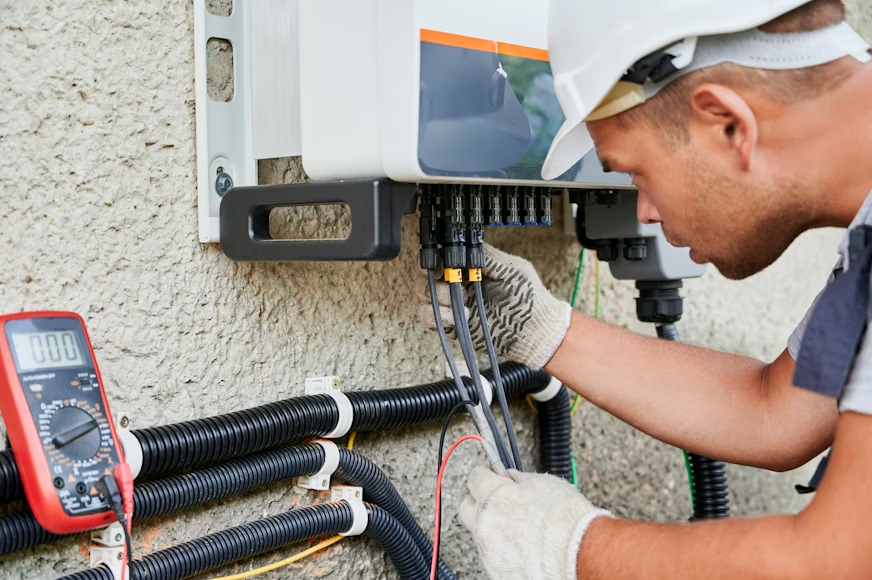
Idle and standby losses that many users miss
Even when appliances are turned off, inverters usually remain active. Displays, communication modules, and safety circuits continue drawing small amounts of power.
Over long periods, especially at night or during backup operation, these idle losses become noticeable. Many users incorrectly blame batteries when the real issue is improper battery backup integration and normal inverter behavior. A deeper breakdown of this effect is covered in inverter standby power consumption.
Understanding Efficiency Numbers on Inverter Datasheets
Efficiency numbers on datasheets often appear similar at first glance, yet they describe different aspects of inverter performance. The table below summarises how manufacturers typically present efficiency metrics for popular hybrid inverters in the Pakistani market.
| Brand / Model | Max Efficiency | Euro Efficiency | MPPT Efficiency | Battery → AC Efficiency |
|---|---|---|---|---|
| Inverex Nitrox 10kW Hybrid | 97.6% | 96.5% | >99% | — |
| TD (Thousand Dimension) 10kW Hybrid | 97.6% | 96.5% | 99.9% | — |
| Solax 10kW Hybrid | 97.6% | 97.0% | — | — |
| GoodWe 8kW Hybrid | 97.6% | 96.2% | 99.9% | 95.5% |
| Solis 8kW Hybrid | >96.9% | >96.5% | — | — |
Peak efficiency versus weighted efficiency
Peak efficiency refers to the highest efficiency an inverter can reach under ideal laboratory conditions at a specific load.
Weighted efficiency, often called European efficiency, averages efficiency across multiple load levels. This figure better reflects how inverters perform in real homes, where power demand constantly changes.
For most residential users, weighted efficiency is more useful than peak efficiency.
Why do two inverters with the same rating behave differently?
Two inverters may both advertise 95 percent efficiency, yet perform differently after installation. Differences in cooling design, internal layout, control algorithms, and component quality all affect how consistently an inverter maintains its efficiency.
This is why efficiency should always be evaluated alongside overall build quality and potential installation mistakes.
Why Inverter Efficiency Matters More in Pakistan?
High ambient temperatures
Pakistan’s climate places additional stress on inverter electronics. As temperatures rise, electrical resistance increases and efficiency drops slightly.
In extreme heat, some inverters reduce output automatically to protect internal components. Thermal derating lowers usable power despite correct sizing, making proper maintenance tips for solar systems in Pakistan’s climate essential for stable performance. These effects are closely related to solar inverter performance in hot weather.
Voltage fluctuations and grid instability
Unstable grid voltage forces inverters to work harder during conversion. Frequent corrections and protective switching increase internal losses and thermal stress.
While individual losses seem minor, ongoing grid challenges in Pakistan create repeated fluctuations that accelerate wear and reduce system stability.
Load shedding and frequent mode switching
Frequent switching between grid, battery, and solar modes increases conversion activity. Each transition introduces small efficiency losses that rarely appear in marketing materials.
Over time, frequent switching also accelerates component aging, indirectly affecting efficiency consistency.
Common Misunderstandings About Inverter Efficiency Ratings
Higher efficiency does not always mean noticeable savings
Many buyers assume that a higher efficiency rating automatically leads to meaningful savings. In practice, the difference between 93 percent and 96 percent efficiency often has minimal impact in small systems.
Efficiency improvements matter most in systems that process large amounts of energy daily.
Efficiency is not constant throughout the day
Efficiency varies with temperature, load level, and operating mode. Most systems operate at peak efficiency only for short periods.
Understanding this variability helps set realistic expectations and prevents disappointment.
Marketing claims versus practical performance
Some manufacturers highlight peak efficiency while avoiding weighted efficiency altogether. Others fail to explain testing conditions.
Following a checklist before buying a solar panel inverter is essential for correctly interpreting inverter datasheets and specifications. This confusion often overlaps with gaps found in inverter specification sheets.
What inverter efficiency rating do experts consider good in Pakistan?
Practical efficiency ranges
As general guidance:
Below 90 percent is weak for modern systems
Between 92 and 95 percent is acceptable for most homes
Above 95 percent is high efficiency and mainly benefits large systems
These ranges should guide decisions rather than act as rigid rules.
When ultra-high efficiency makes sense?
Larger homes and commercial systems benefit more from higher efficiency because small percentage gains accumulate over time. This becomes especially relevant when combined with proper solar system sizing in Pakistan.
When should efficiency not be the top priority?
For backup systems used mainly during load shedding, efficiency differences often have a limited impact. Reliability, surge capacity, and battery compatibility may matter more.
How to Evaluate Inverter Efficiency Before Buying?
Questions worth asking
Instead of focusing on a single number, ask:
At what load was efficiency measured
Is the weighted efficiency published
How does the inverter manage heat
These questions reveal far more than marketing claims.
Matching efficiency to your usage pattern
Daytime heavy-use systems benefit from sustained efficiency under load. Backup-focused systems benefit more from stability during frequent transitions.
Efficiency should match real usage, not theoretical scenarios.
Warning signs of overstated efficiency claims
Vague wording, missing test standards, and lack of load-based data are red flags. Transparent brands usually explain how efficiency figures are measured. More guidance is available on how to choose the right solar inverter.
Practical Takeaways for Homeowners and Businesses
Where efficiency actually delivers value
Consistent efficiency under local conditions often matters more than chasing the highest advertised number. Stability, cooling, and build quality determine long-term results.
Efficiency and long-term reliability
Lower conversion losses mean less heat, and less heat generally leads to longer component life. This connection becomes clearer when examining solar inverter lifespan in Pakistan.
Final Thoughts: Reading Inverter Efficiency Ratings with Confidence
An inverter’s efficiency is not meaningless, but people often misunderstand it. It indicates how the inverter converts energy under lab conditions, and it certainly does not indicate how the inverter operates every hour of every day.
With a knowledge of conversion losses, load characteristics, and challenges that exist within a Pakistani environment, you can truly assess the efficiency of inverters not by the percentage, but by what you can realistically expect from them based on those figures.
Independent Power: Connect with Enon Traders Today!
Start your off-grid journey with Pakistan’s most reliable solar partner.
| Connect With Us | Action Link |
| Chat Instantly on WhatsApp | Get an off-grid system quote: Click to Chat Now! |
| Visit Our Website | View our off-grid inverters: Official Website |
| Call Our Experts | Design your custom micro-grid: Contact Page |