Inverter Efficiency Rating in Pakistan Explained
January 19, 2026
The “Net Billing” Trap: Why the Rs. 10/Unit Buyback Rate Changes Your ROI
January 20, 2026
The selection of a battery in Pakistan has now become a medium to long-term decision rather than a short-term backup option. The increasing power bills, power shedding, and the growing trend of solar energy have changed the way the community perceives energy storage. The battery now determines the overall reliability of the electric supply for years to come rather than hours.
Many consumers find themselves struggling with the same dilemma. Lithium batteries hold out promises of new, advanced, fast, and long-lasting performance. The benefits offered by the tubular battery include familiarity, relatively low initial cost, and ready accessibility. On paper, the requirements seem clear. Reality, as it stands for Pakistan, is different.
Factors such as heat, dust, fluctuations in connection with the grid, installer quality, and usage patterns affect batteries. All these practical considerations have resulted in customers often registering discontent with batteries post-installation.
Why Battery Choice Matters More Than Ever in Pakistan?
Battery decisions once focused on surviving short power cuts. Today, they affect electricity reliability, system cost, and everyday comfort.
Many households install solar systems first and add batteries later. Others depend entirely on batteries during extended outages. In both cases, choosing the wrong battery leads to early failure, frequent replacement, or daily inconvenience.
Battery selection also connects directly with system planning. Storage choices influence inverter sizing, solar design, and future expansion. This becomes especially clear when reviewing how much a rooftop solar system costs in Lahore, Pakistan, where battery decisions significantly change total investment.
Understanding the Two Battery Types Without Technical Jargon
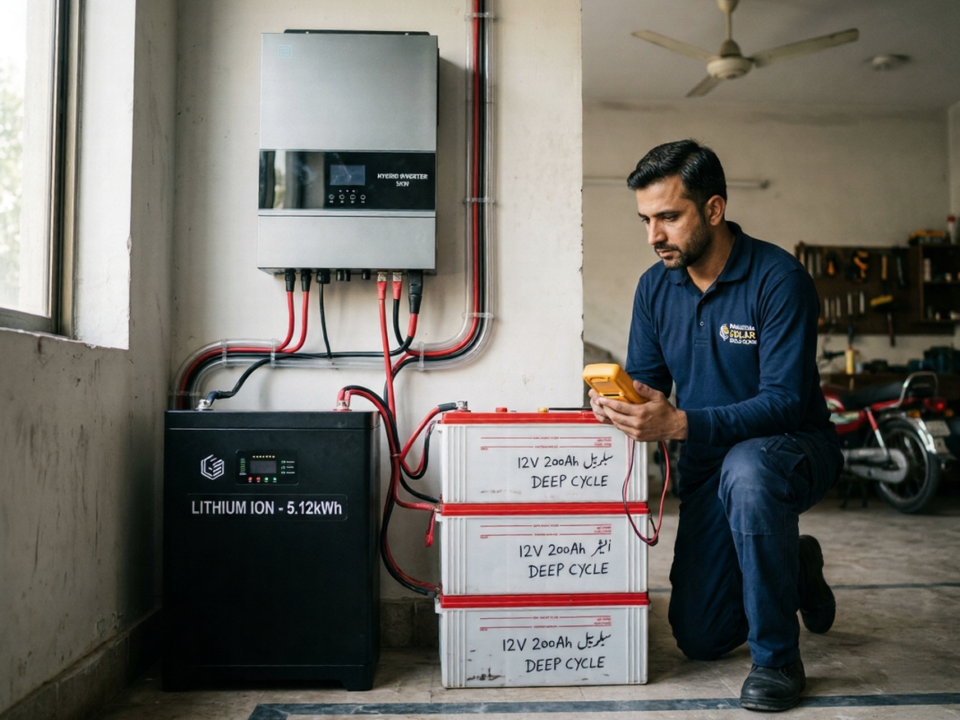
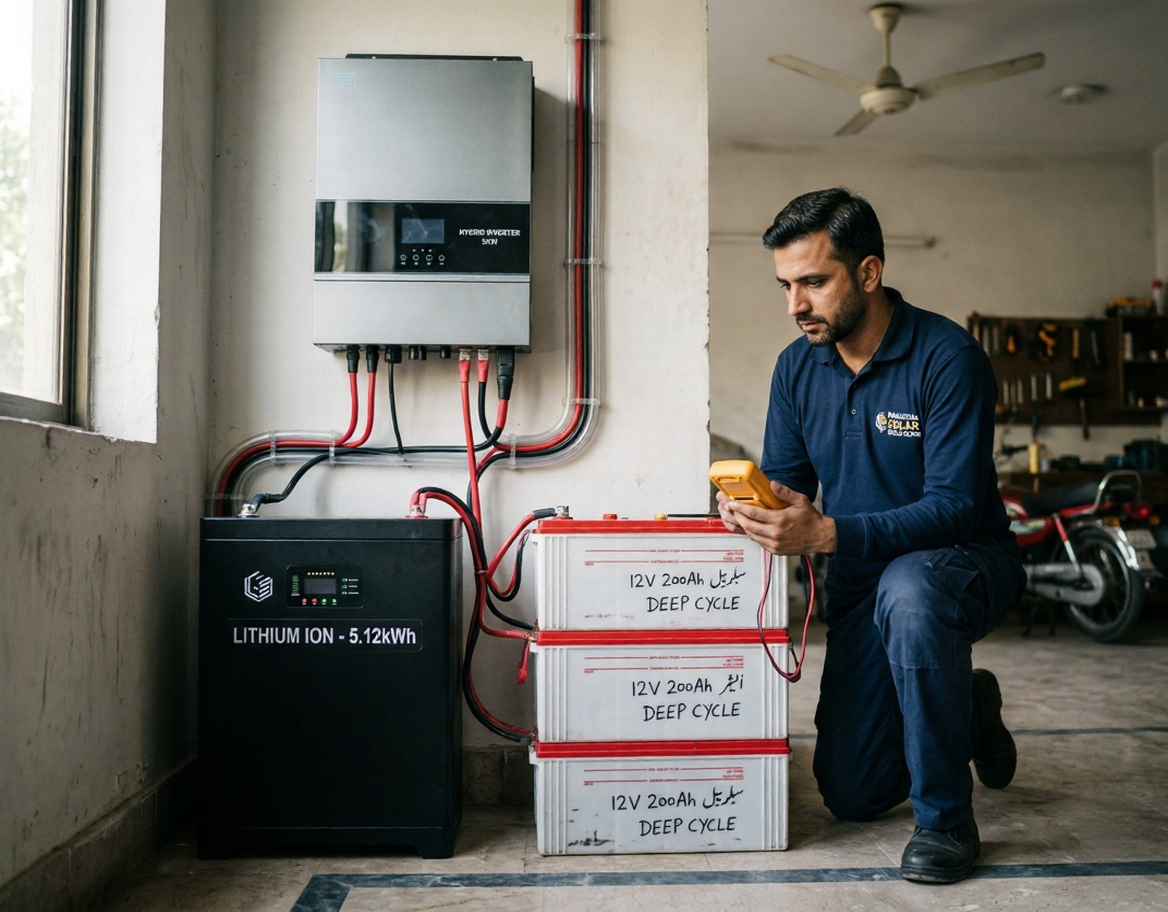
A tubular battery is a type of lead-acid battery and can easily withstand deep discharge in comparison to flat batteries. This battery stores chemical energy, which can only be released over time. One of the main reasons behind the advancement of tubular batteries in Pakistan was their ability to deal better with load shedding in comparison to older batteries.
Such MODs are suited for customers who often expect a shutdown and understand routine maintenance that includes topping up with water and inspecting terminals. Their cost-effectiveness and accessibility have ensured that such mods remain popular with customers for use at home and other small-scale enterprises.
What Is a Lithium Battery?
Lithium batteries store energy using lithium cells managed by an internal battery management system. They deliver stable voltage, recharge quickly, and require little user intervention.
In Pakistan, lithium batteries are increasingly paired with solar systems and hybrid inverters. Users prefer them for cleaner installations, higher efficiency, and predictable performance when configured correctly.
Lithium vs Tubular Battery: Core Differences Explained
Performance During Load Shedding
Load shedding in Pakistan persists for longer periods as opposed to the announced time tables. Tubular batteries can handle deeper discharge, but gradually decrease their voltage as the batteries are depleted.
The lithium battery has a consistent voltage until it is almost discharged. The appliance will operate in a smoother manner; however, the lithium battery will suddenly cut off when it gets low. Uninformed consumers can easily misinterpret the characteristics of lithium batteries for normal battery failure.
Charging Speed and Grid Availability
Grid electricity in many areas appears in short and unpredictable windows. Lithium batteries recharge quickly and recover meaningful capacity even during brief supply periods. Tubular batteries require longer and more consistent charging to fully recover.
This difference becomes critical in areas with irregular grid availability.
Heat and Climate Impact
Heat is one of the biggest battery killers in Pakistan. Tubular batteries suffer faster water loss and internal corrosion in high temperatures. Poor ventilation accelerates this damage.
Lithium batteries tolerate heat better, but low-quality lithium imports without proper protection degrade quickly. Installation location and airflow matter far more than many buyers realize.
Maintenance, Reliability, and Ownership Experience
Maintenance Requirements Compared
Tubular batteries require routine water topping and terminal checks. Neglect shortens lifespan rapidly.
Lithium batteries require daily maintenance, but demand a correct inverter configuration. Incorrect charging parameters silently damage lithium cells over time. Many failures blamed on lithium batteries are actually caused by poor installation practices.
This issue frequently appears in solar installation mistakes.
Failure Risks and Local Issues
Tubular batteries fail gradually. Backup duration shortens over time, giving users a warning.
Lithium batteries fail more abruptly if misconfigured. Inverter incompatibility or poor-quality cells can cause sudden shutdowns. This difference surprises many first-time users.
Lifespan, Degradation, and Long-Term Value
Expected Lifespan in Pakistani Conditions
Advertised lifespans often mislead buyers. Tubular batteries rarely achieve rated life due to heat, inconsistent charging, and maintenance gaps.
Lithium batteries last longer when systems are designed properly. Frequent deep discharge or overloading still shortens lifespan significantly.
Long-term value becomes clearer when storage decisions are evaluated realistically, as explained in Home solar battery storage.
Degradation Over Time
Tubular batteries lose capacity steadily. Users adapt gradually to shorter backup times.
Lithium batteries maintain performance longer but degrade internally. Once capacity drops sharply, replacement becomes unavoidable rather than gradual.
Cost vs Value: Looking Beyond the Price Tag
Upfront Cost vs Lifetime Cost
Tubular batteries have a lower upfront cost, which appeals to budget-conscious users. Shorter lifespan and maintenance increase long-term expense.
Lithium batteries cost more initially but reduce replacement frequency and maintenance effort. Whether they deliver better value depends on usage patterns, not purchase price alone.
Usable Energy Comparison
Tubular batteries cannot safely deliver their full rated capacity. Lithium batteries allow deeper usable discharge without damage.
This explains why systems with similar capacity ratings often perform very differently in daily use.
Compatibility With Solar and Inverter Systems
Inverter Matching Matters
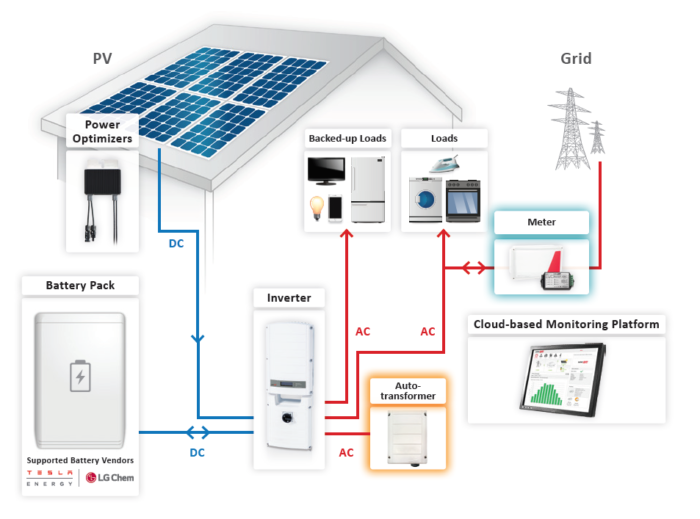
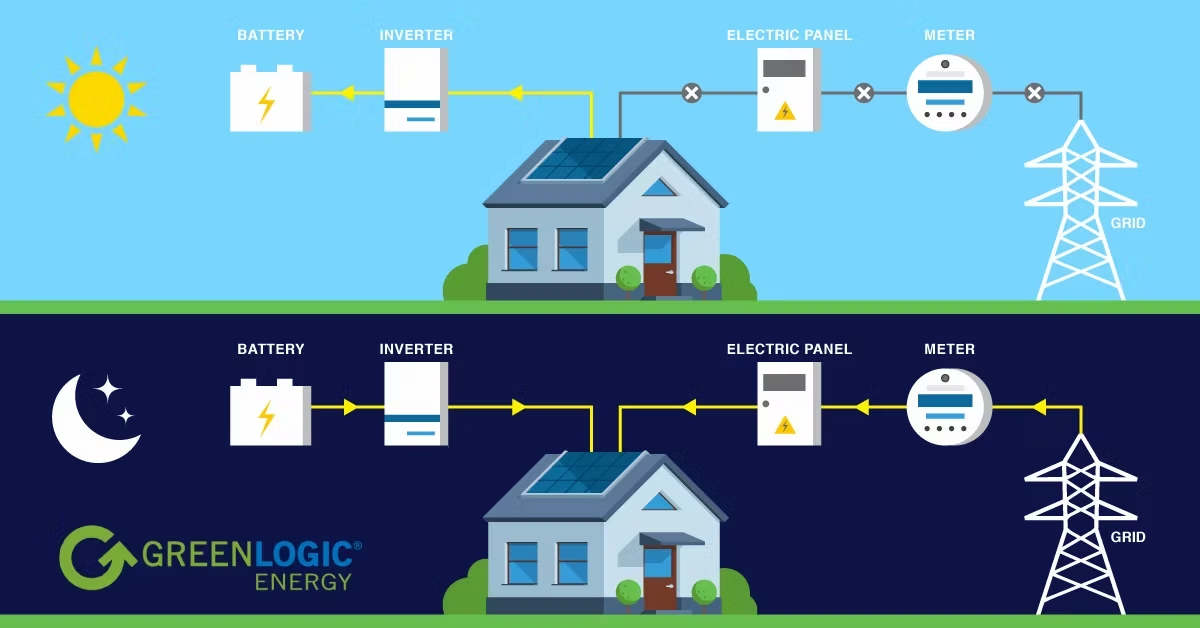
Lithium batteries require compatible hybrid inverters. Tubular batteries work with a wider range of inverters, including older models.
Battery upgrades without inverter checks cause reliability issues. Many users overlook inverter losses, which are explained clearly in inverter efficiency ratings.
Future Expansion and Flexibility
Lithium systems allow modular expansion and cleaner upgrades. Tubular systems become bulky and inefficient when expanded beyond a certain size.
Which Battery Makes Sense for Different Users in Pakistan?
Homes With Frequent Load Shedding
Lithium suits households that value stable power and low maintenance. Tubular suits homes where budget limits outweigh convenience.
Solar Users Focused on Savings
Lithium integrates better with solar systems designed for long-term returns. Storage decisions affect payback timelines, which can be evaluated using how to calculate the payback period for your home solar system in Pakistan.
Short-Term or Rental Use
Tubular batteries remain practical for temporary setups or rental properties where long-term recovery is uncertain.
Common Myths About Lithium and Tubular Batteries
Lithium is not always the better choice. Tubular batteries are not outdated by default. Capacity ratings alone do not reflect real-world performance.
Battery selection must match usage habits, environment, and system design.
Final Comparison Summary
Lithium batteries offer higher efficiency, stable output, and low maintenance. Tubular batteries offer affordability and tolerance for rough usage.
The better battery is the one that fits daily reality rather than marketing promises.
How to Choose the Right Battery for Your Situation?
Consider outage duration, frequency, maintenance willingness, and future solar plans. Storage decisions also connect with policy and grid changes, especially when integrating systems, as discussed in how to integrate battery backup with your solar system in Pakistan.
Long-term planning also benefits from understanding regulatory direction, covered in the Pakistan Solar Policy 2026.
Conclusion: Making the Right Battery Decision in Pakistan
The lithium vs tubular battery Pakistan discussion is not about technological superiority. It is about choosing what works best for your climate, grid conditions, budget, and daily habits.
When batteries are evaluated honestly and realistically, systems become more reliable, last longer, and deliver better value. That confidence matters more than any specification sheet.
Independent Power: Connect with Enon Traders Today!
Start your off-grid journey with Pakistan’s most reliable solar partner.
| Connect With Us | Action Link |
| Chat Instantly on WhatsApp | Get an off-grid system quote: Click to Chat Now! |
| Visit Our Website | View our off-grid inverters: Official Website |
| Call Our Experts | Design your custom micro-grid: Contact Page |