Smart Inverters vs. The Grid: Managing “Curtailment” & Voltage Fluctuations in Lahore
January 27, 2026
Monetizing Your Roof: How to Register for “Mitigation Outcomes” in 2026
January 29, 2026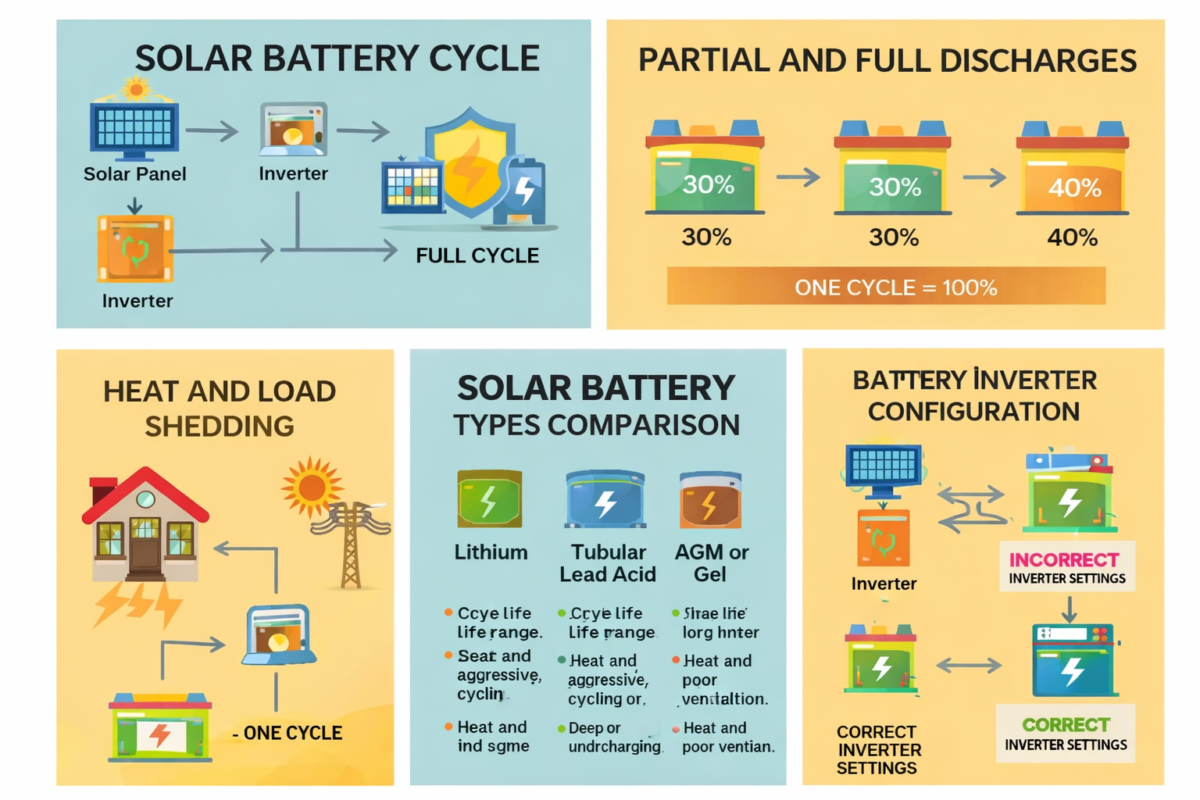
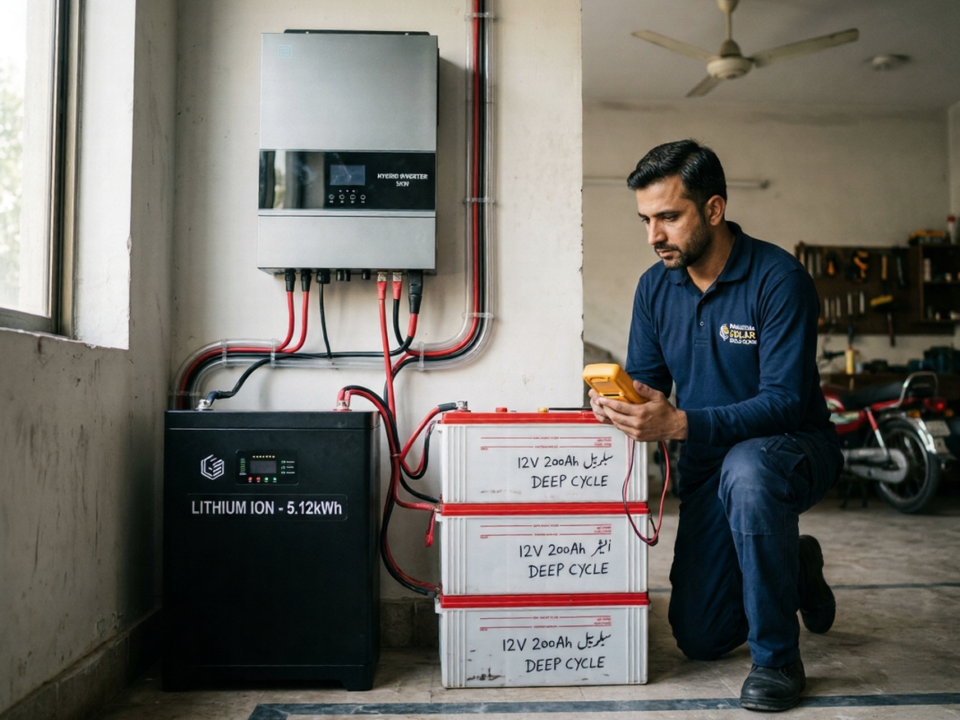
Solar batteries are usually talked about based on their capacity and cost. However, most of these batteries usually do not fail due to low quality. The reason for the failure of most of these batteries in Pakistan is usually due to misunderstandings about their cycles.
What many people believe about a battery’s life is that it will last for just as many years as the manufacturer states. But when it fails before that, there will be frustration. The truth is that the life of solar batteries in Pakistan doesn’t work in the same way as it does in a laboratory setting because of factors such as temperature, load shedding, charging patterns, and configuration.
This tutorial provides a clear explanation of solar battery charge cycles in the context of Pakistan. This tutorial will educate you on the realities of charge cycles, the reasons why the stated number of charge cycles may not be that accurate, and how your daily usage habits influence the battery’s lifespan.
Quick Takeaway: Solar Battery Cycle Life in Pakistan
- Battery cycle life measures how many full charge and discharge cycles a battery can handle, not how many years it will last
- In Pakistan, heat and load shedding often reduce real cycle life far below advertised numbers
- Multiple partial discharges in one day quietly consume full cycles
- Correct sizing, ventilation, and charging habits can double real battery lifespan
Understanding Solar Battery Cycle Life in Pakistan
The battery’s cycle life refers to the number of discharge and recharge cycles a battery goes through before its useful capacity drops greatly. A full discharge and charge every day, or any other period, comprises one cycle whereby the battery has delivered energy equivalent to its full capacity and recharged back to full. This cycle behavior is directly influenced by battery depth of discharge, which determines how much of the stored energy is used in each cycle.
This does not always happen in one clean step. Two half-discharges together count as one full cycle. What counts is the total energy moved in and out of the battery, not how fast it happens. Solar Battery Cycle Life in Pakistan’s Real Conditions
Cycle life vs battery lifespan in years
Battery lifespan is measured in years, while cycle life is measured in charge cycles. These two concepts are related but not the same.
A battery used gently may last many years with fewer cycles. A battery used aggressively can exhaust its cycle life quickly, even if it is only a few years old. Understanding this difference prevents unrealistic expectations.
What Are Charge Cycles and Why Do They Matter in Pakistan?
In most Pakistani households, batteries are unlikely to see a complete cycle. Power may be out for a short time, return for a brief moment, and then fall back after a while.
For instance, in case you consume 30 percent of the battery power three times in a single day, it’s almost an entire rechargeable cycle. Most people unknowingly consume more than an entire rechargeable cycle in a day, thus reducing the battery’s lifespan beyond expectation.
That is why understanding charge cycles is so important.
Why cycle depth matters more than cycle count
Cycle count alone does not destroy batteries. Depth of discharge plays a bigger role. Shallow discharges cause far less stress than deep discharges.
A battery repeatedly discharged to 80 percent depth will lose capacity faster than one discharged only 30 percent each time, even if both complete the same number of cycles.
Solar Battery Cycle Life in Pakistan’s Real Conditions
Heat is one of the most damaging factors for batteries in Pakistan. High temperatures speed up internal chemical reactions, which accelerate aging.
Batteries installed in closed or poorly ventilated rooms often lose cycle life much faster, regardless of technology or brand.
Load shedding and irregular charging patterns
Load shedding creates unpredictable cycling. Batteries discharge during outages and recharge partially when power returns. This stop-and-start pattern increases wear and reduces charging efficiency.
Many early battery failures blamed on quality issues are actually caused by this daily stress.
Dust, maintenance habits, and weak charging
Dust buildup on solar panels reduces charging strength. Weak charging means batteries rarely reach full charge. Chronic undercharging slowly damages batteries over time.
Readers researching solar system maintenance tips often discover this problem only after battery performance has already declined.
Advertised Cycle Life vs Real World Performance in Pakistan
Manufacturers test batteries under ideal laboratory conditions. Temperatures remain stable, charging is perfect, loads are controlled, and discharge depth is limited.
These conditions rarely exist in Pakistani homes.
How do local usage changes real cycle life?
In Pakistan, batteries face heat, voltage fluctuations, dust, and inconsistent charging. As a result, real cycle life is usually lower than advertised.
This does not mean the battery is defective. It means the environment is harsher than the testing environment.
Typical Solar Battery Cycle Life by Battery Type in Pakistan
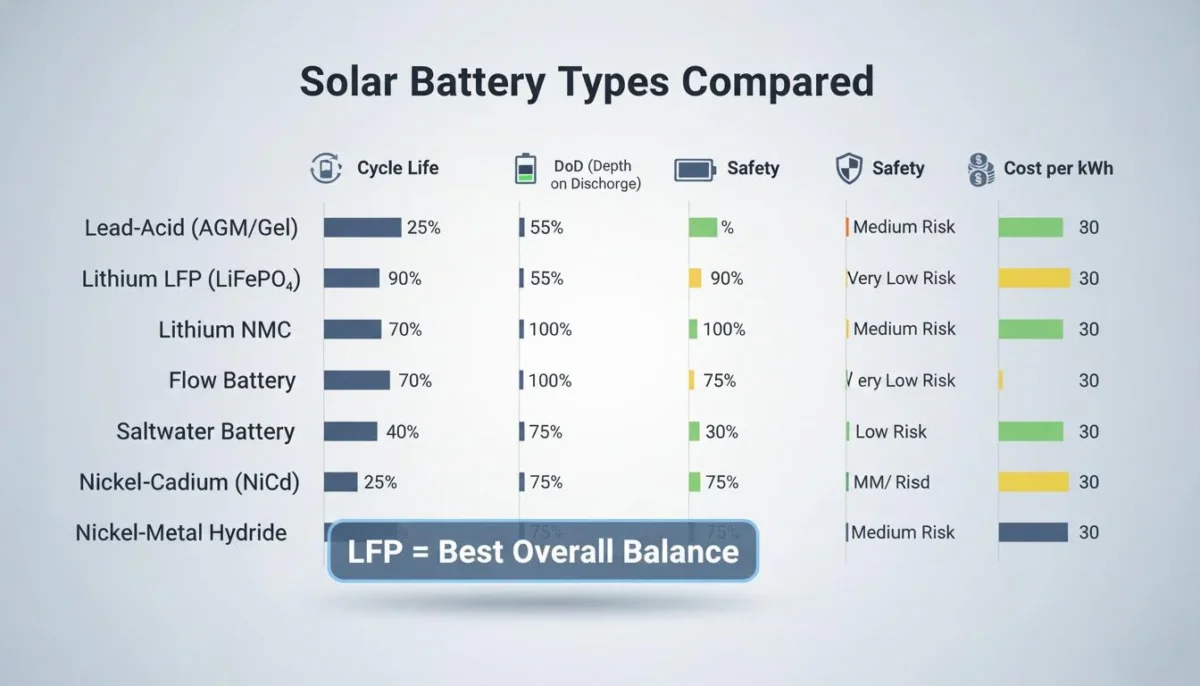
Realistic cycle performance comparison
| Battery Type | Advertised Cycle Life | Realistic Cycles in Pakistan | Common Cause of Early Failure | Expected Lifespan |
| Lithium (LiFePO4) | 3000 to 6000 | 2500 to 4000 | Heat and aggressive cycling | 6 to 10 years |
| Tubular Lead Acid | 1200 to 1800 | 700 to 1200 | Deep discharge and undercharging | 2 to 4 years |
| AGM or Gel | 800 to 1200 | 500 to 900 | Heat and poor ventilation | 1.5 to 3 years |
Which Battery Type Actually Makes Sense in Pakistan?
Battery choice in Pakistan should be based on cycling behavior, not advertised lifespan or chemistry alone.
Lithium batteries (LiFePO₄) perform best in systems that experience daily cycling, including daytime and nighttime outages. They tolerate deeper discharge and frequent partial cycles better, but still require proper ventilation and correct inverter settings to avoid heat stress. A detailed comparison of lithium vs tubular batteries in Pakistan explains where each technology fits best.
Tubular lead-acid batteries are practical for night-only backup or short, predictable outages. They handle heat better than other lead-acid types but suffer rapid cycle loss if deeply discharged or repeatedly undercharged.
AGM and Gel batteries should only be used for light backup in well-ventilated indoor environments. They degrade quickly under heat and irregular charging patterns common in many Pakistani regions.
Choosing the right battery type reduces cycle stress, improves reliability, and prevents premature failure.
Why does inverter compatibility matter?
An inverter that allows deep discharge damages batteries faster. One that charges poorly leaves batteries partially charged. This problem often appears in systems using Inverex Pakistan’s leading solar energy brand, where mismatched settings can quietly reduce battery life if not configured correctly.
How Daily Usage Habits Affect Battery Cycle Life?
A household that uses batteries only at night may complete one cycle per day. Another facing daytime outages may complete several partial cycles daily.
Over a year, this difference dramatically affects battery health.
Over-discharging and long-term damage
Allowing batteries to drain too deeply is one of the fastest ways to reduce cycle life. Many systems lack proper cutoff settings.
This mistake frequently appears in discussions about off-grid solar system design in Pakistan.
Incomplete charging and slow recovery
Interrupted or weak charging prevents batteries from reaching full charge. Over time, this permanently reduces usable capacity.
Estimating Battery Life Using Charge Cycles
If a battery is rated for 3000 cycles and used once per day, it may last around eight years in ideal conditions. In Pakistan, two cycles per day can reduce a lifespan to four years or less, especially in battery storage for home solar systems, where daily charging and discharging are common.
This simple calculation helps set realistic expectations.
Why cycle life never exact?
Usage patterns change. Seasons vary. Load shedding schedules shift. Cycle life should be treated as a range, not a guarantee.
Common Misunderstandings About Solar Battery Cycle Life
Ampere-hour rating measures capacity, not durability. A large battery can still fail early if used incorrectly.
This misunderstanding often overlaps with solar battery sizing mistakes.
Early battery failure is often a system issue
Many batteries fail not because they are low quality, but because the system places constant stress on them. Understanding this reality helps homeowners choose quality solar equipment in Pakistan instead of blaming the battery alone, which often hides the real cause.
How to Protect and Extend Solar Battery Cycle Life in Pakistan?
Avoid deep discharge. Allow full charging whenever possible. Reduce heavy loads during outages.
Small changes significantly improve cycle life.
Basic temperature control and ventilation
Even modest airflow improvements reduce heat stress and slow degradation.
Matching battery size to actual usage
Undersized batteries cycle too deeply. Oversized batteries cost more but experience gentler cycling. Understanding this balance, including how to size your home solar system in Pakistan, helps avoid repeating maintenance tips for solar systems in Pakistan’s climate.
What to Expect Realistically from Solar Batteries in Pakistan?
Why advertised cycle life rarely achieved?
Laboratory ratings assume ideal conditions. Real life introduces stress and variability.
Honest expectations prevent disappointment.
Setting expectations before choosing a battery
Battery selection should follow understanding, not marketing claims. Readers planning their systems on how to integrate battery backup with their solar system in Pakistan make better decisions when expectations are clear first.
Final Thoughts: Understand Cycle Life Before You Decide
The life of solar batteries in Pakistani conditions relies more on their usage patterns, environmental conditions, and system design rather than their brands. The charging cycles in these batteries go on unnoticed, with small daily practices playing their part in determining their overall life.
Independent Power: Connect with Enon Traders Today!
Start your off-grid journey with Pakistan’s most reliable solar partner.
| Connect With Us | Action Link |
| Chat Instantly on WhatsApp | Get an off-grid system quote: Click to Chat Now! |
| Visit Our Website | View our off-grid inverters: Official Website |
| Call Our Experts | Design your custom micro-grid: Contact Page |