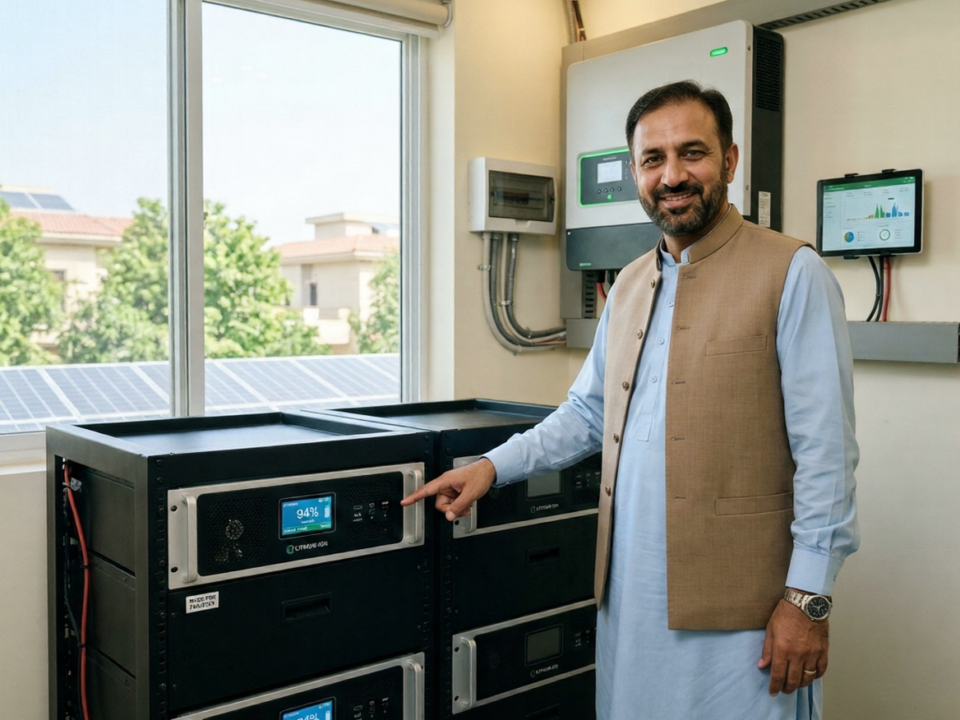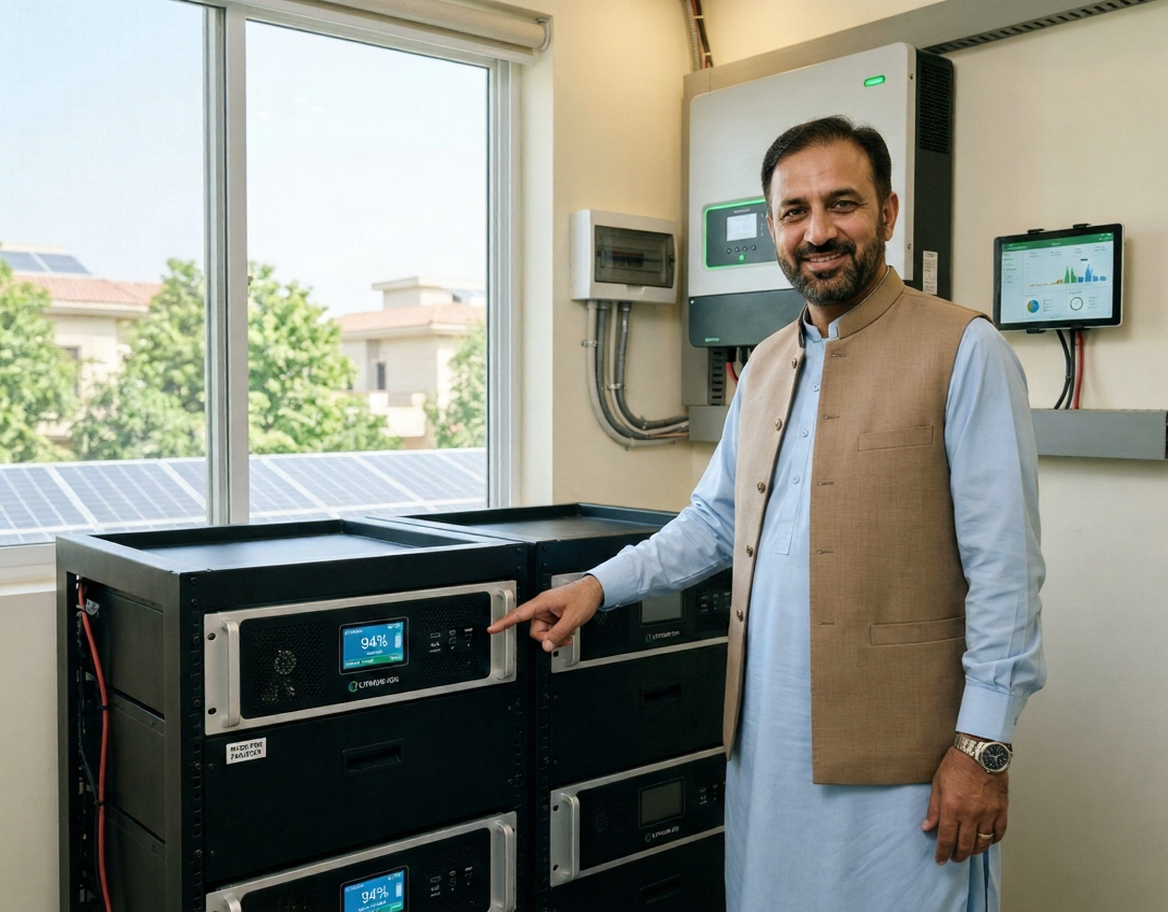
Lithium Battery Advantages in Pakistan: Practical Lithium Benefits for Solar Homes
March 9, 2026
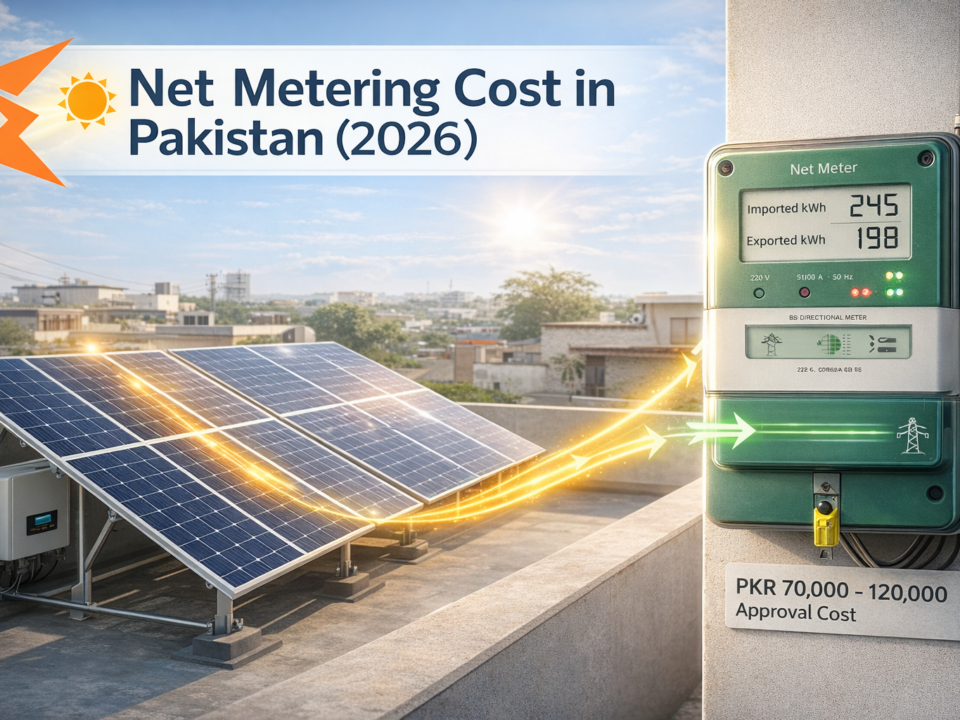
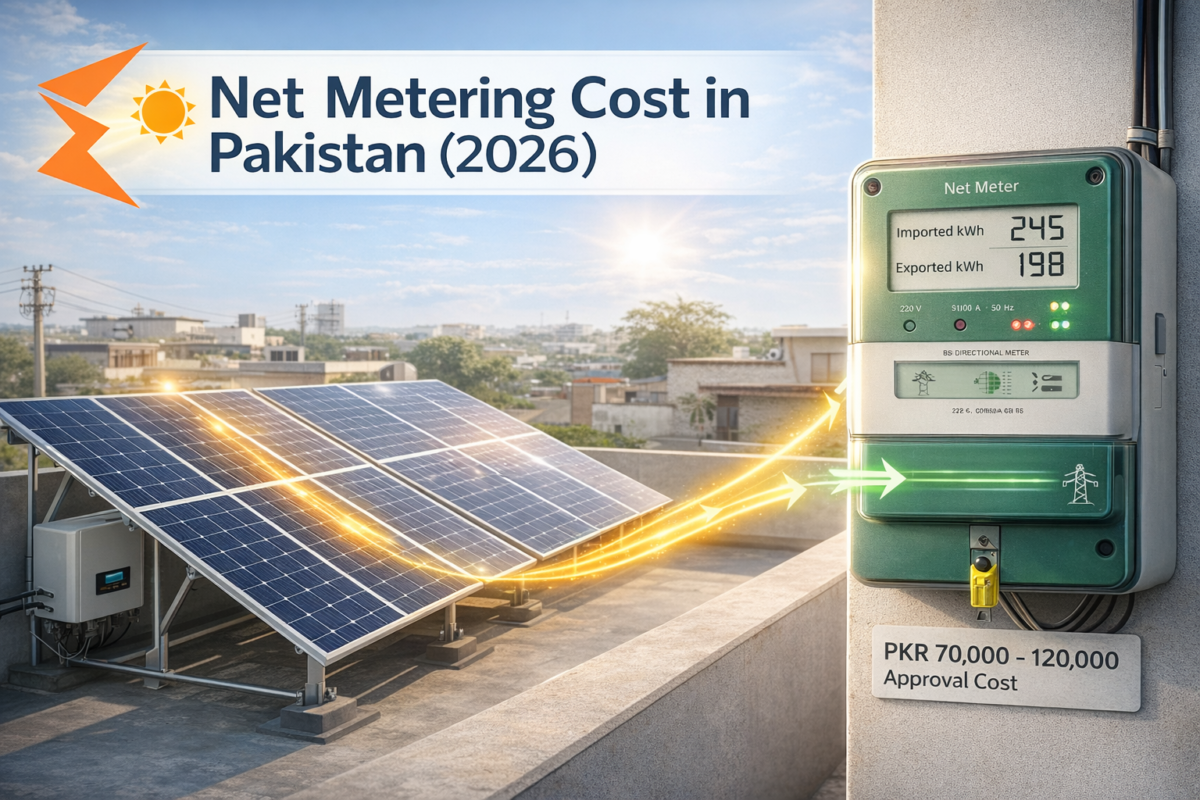
Net Metering Cost in Pakistan 2026 – Green Meter and Approval Fees
March 12, 2026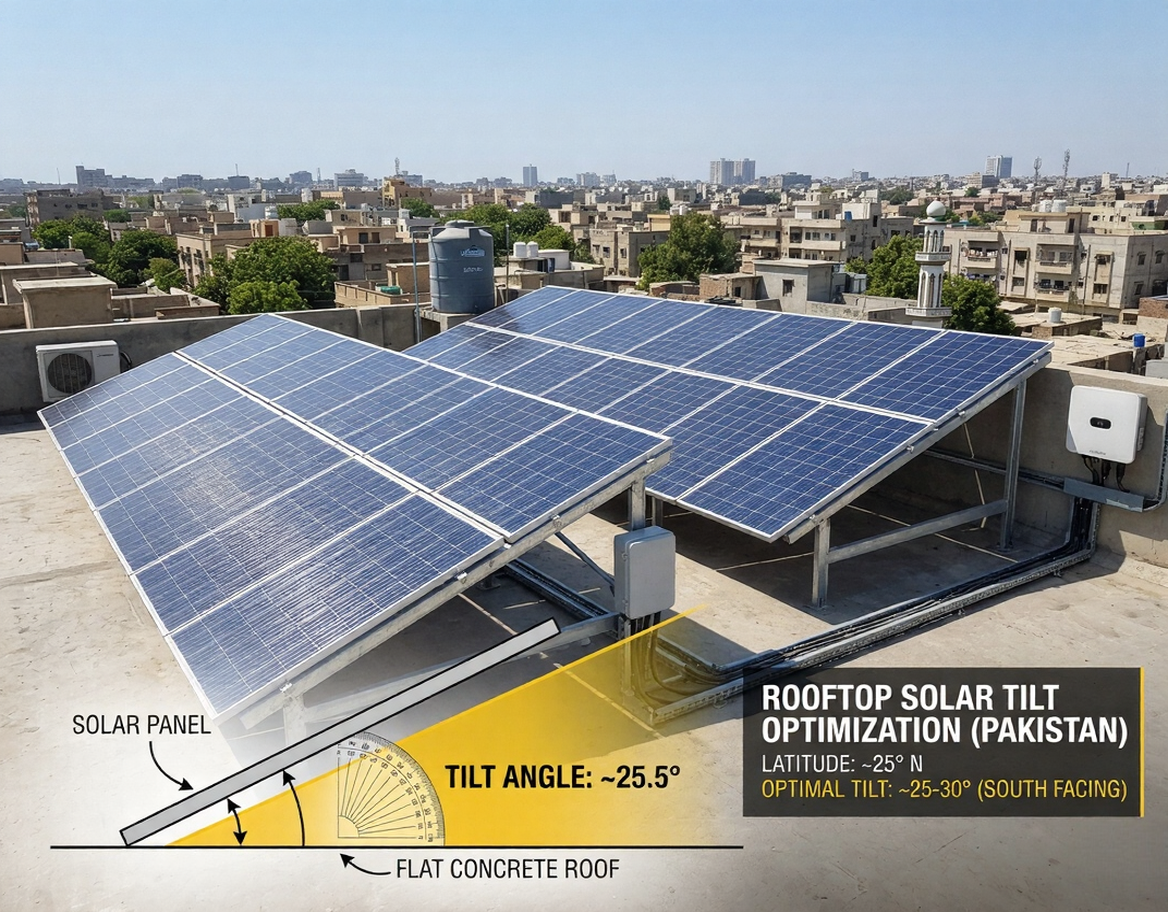
If you are installing solar in Pakistan, you will hear many confident opinions about the “correct” panel tilt angle. Some installers insist on a single fixed number. Others say the roof slope is enough. A few even claim tilt barely matters at all. Tilt does matter. But it does not require perfection.
The correct solar tilt angle in Pakistan is about balanced. It balances seasonal sun movement, roof structure, system design, and real-world constraints such as dust, heat, and shading. Once this balance is understood, tilt stops being a guessing game and becomes a practical design choice.
This article explains solar panel tilt clearly and realistically for Pakistan. It focuses on what works in local conditions, not textbook theory or sales claims.
Solar Tilt Angle in Pakistan
For most fixed rooftop solar systems in Pakistan, a panel tilt between 25° and 33° delivers reliable year-round performance.
Small variations within this range usually cause minor annual differences. Losses from shading, dust buildup, heat, or poor system design are almost always larger than losses from a few degrees of tilt variation.
What Solar Tilt Angle Means and Why It Matters in Pakistan
Solar tilt angle is the angle between the panel surface and the horizontal ground. This angle determines how directly sunlight strikes the panel at different times of the day and across seasons. Panels produce the most energy when sunlight hits closer to perpendicular. When the tilt is too flat or too steep, total energy capture declines over the year.
Pakistan’s geography makes tilt especially relevant. The country lies north of the equator, so the sun’s height changes noticeably between summer and winter. In summer, the sun is high and intense. In winter, it sits lower in the sky, and daylight hours shorten.
A tilt angle that performs well in summer may underperform in winter. That is why tilt affects year-round reliability, not just peak summer output.
Tilt matters most when:
- Roof space is limited
- Winter performance is important
- Net metering is part of the system design
Tilt matters less when:
- The roof slope already falls in a reasonable range
- Extra panels can offset small losses
- Shading is the dominant limitation
How the Sun’s Path Influences Panel Angle
The sun does not follow the same path throughout the year. Its elevation rises in summer and falls in winter, changing how sunlight strikes fixed panels. In Pakistan, summer sunlight is forgiving. Even panels installed at less-than-ideal angles usually perform well because irradiation levels are high.
Winter sunlight is less forgiving. Poor tilt alignment becomes more noticeable when the sun remains lower in the sky. This is why tilt discussions often focus on winter output. Winter production usually determines whether a system feels reliable throughout the year rather than impressive only in summer.
Recommended Solar Tilt Angle in Pakistan
A Practical Rule for Fixed Installations
For the majority of the fixed rooftop solar power setups in Pakistan, the following rule might function: To set the optimal tilt for your solar panels, try using the latitude of your city, but not exactly. Rather, you should try for a number in the vicinity, yet not necessarily too precise. A tilt value between 25° and 33° might work well for your region.
Chasing the exact degrees is not going to result in significant increases. In effect, one or two degrees will result in minimal year-long variance, far less than the loss inflicted by shading, dust, and wiring problems.
Does Panel Angle Change by City or Region?
Yes, but only gradually.
Southern regions tend to benefit from slightly lower tilt angles. Northern regions perform better with a slightly higher tilt. The difference is not dramatic, and using a single rigid number for the entire country is an oversimplification.
The goal is balance, not mathematical perfection. Think in ranges rather than fixed values
Seasonal Adjustment vs Fixed Tilt
When Seasonal Adjustment Helps
Seasonal adjustment means using a lower tilt in summer and a steeper tilt in winter to better align with the sun’s changing height.
Seasonal adjustment helps when:
- Winter reliability is a priority
- The structure allows safe adjustment
- Maintenance access is easy
When Fixed Tilt Makes More Sense
For most homes in Pakistan, fixed tilt is the better option. Rooftop structures rarely allow convenient seasonal adjustment. Adjustable mounts increase maintenance requirements, add mechanical risk, and are often ignored after installation.
A well-chosen fixed angle usually delivers better long-term performance than an adjustable system that is never adjusted.
Common Myths About Solar Panel Angle
Myth 1: Panels Must Match Exact Latitude
Latitude is a guideline rather than a rule; roof structure, shading, and system installation are more important. A slightly imperfect angle with correct sun exposure will perform better than a perfect angle in a shaded location.
Myth 2: Wrong Tilt Makes Solar Ineffective
Solar panels generate power within a wide range of angles. A small tilt error results in a small performance loss, not system failure.
Shading, wrong wiring, and poor sizing are major variables that commonly bring about losses.
Myth 3: Roof Slope Is Always Correct
The roof slope can be useful, but it need not automatically be good. Some roofs may be too flat; some may be too steep. The roof angle must be treated as a constraint, rather than as a rule.
How Much Energy Is Lost If the Angle Is Slightly Off?
Most homeowners overestimate the impact of small tilt errors.
A deviation of a few degrees typically results in a modest annual loss that many people never notice. Real-world factors such as dust accumulation, high temperatures, and shading already influence output more than minor variations in tilt.
Tilt becomes a serious issue only when:
- Panels are installed nearly flat in regions needing steeper winter angles
- Panels face the wrong direction
- Shading is ignored
Think of tilt as fine-tuning. Think of shading as a major performance limiter.
Fixed-Tilt vs Adjustable Structures
Fixed-Tilt Structures
Fixed-tilt systems dominate in Pakistan because they:
- Remain stable in wind and weather
- Reduce mechanical failure points
- Require less maintenance
Most rooftop systems use fixed frames designed for a compromise angle that performs consistently throughout the year.
Adjustable Structures
Adjustable structures are more practical for ground installations where space and access allow flexibility without roof constraints. For example, ground-mounted solar panels allow easier angle optimisation in open areas.
Practical Tips Before Finalising Your Panel Angle
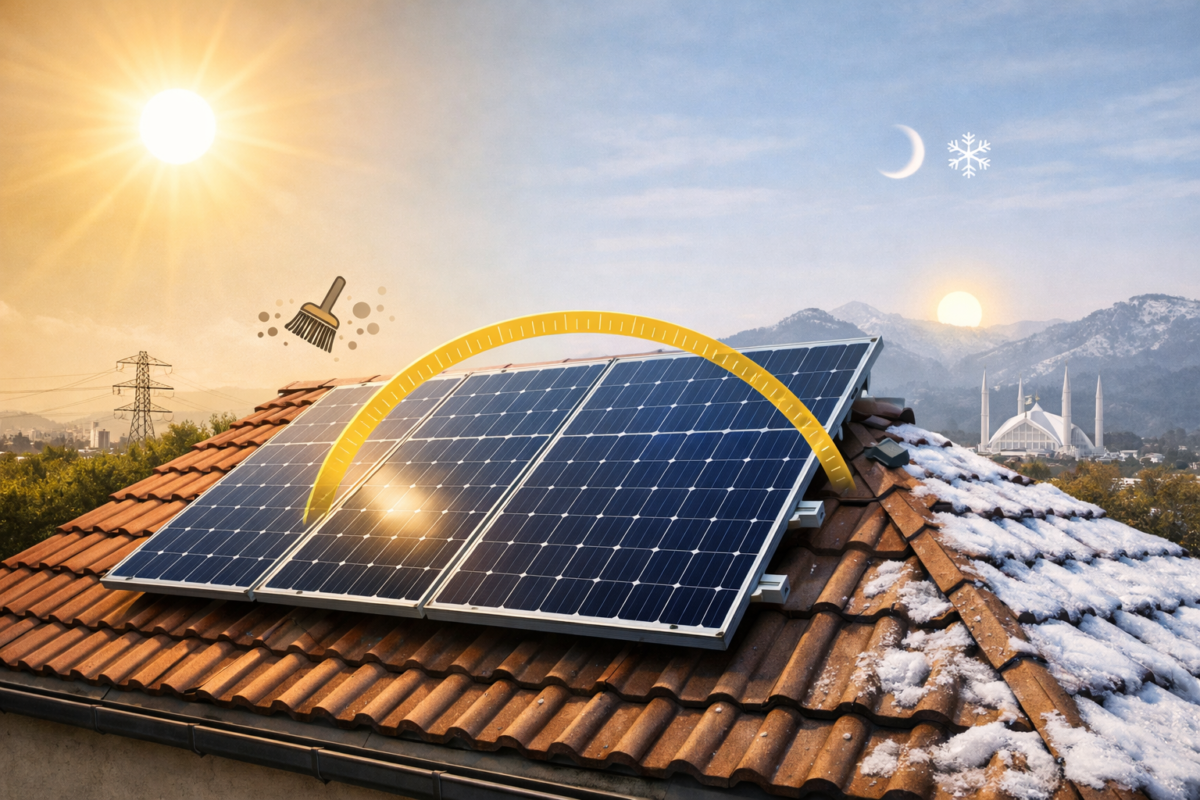
It is essential that before locking the panel angle, you assess the shading at various times of the day. In the mornings, in addition to the late afternoons, the shadows have a way of negatively impacting energy output, particularly during the winter season. Balance tilt with dust and cleaning. Flat panels will collect dust quickly.
Be careful not to confuse tilt with system sizing. If the output is low and the system is undersized, changing the angle will not fix it. Use tools like a solar panel size calculator to size capacity correctly before worrying about degrees. Align tilt with your usage pattern. If winter reliability matters more than summer peaks, lean slightly steeper.
When Panel Angle Matters Less Than You Expect
Shading usually matters more than tilt. Even partial shading on one string can significantly reduce output.
Heat loss is also a major factor in Pakistan. High temperatures reduce panel efficiency regardless of angle. Understanding the solar panel temperature coefficient helps set realistic expectations.
Overall system quality often has a greater impact than tilt adjustments. Panel quality, inverter performance, MPPT configuration, and wiring design frequently outweigh small-angle improvements. Reviewing a solar panel efficiency comparison helps evaluate real-world performance differences.
A Real-World Example
One homeowner installs panels at a very low tilt for aesthetic reasons. Summer output looks strong. Winter arrives, and production drops sharply. The panels are blamed. The inverter is questioned.
The real issue is the winter sun angle. A better tilt would not double output, but it would reduce winter disappointment.
Another homeowner chooses a good tilt but ignores string design and MPPT configuration. Output remains inconsistent. Understanding the mppt technology guide in Pakistan reveals why tilt alone cannot compensate for poor electrical design.
Key Takeaways on Solar Tilt Angle in Pakistan
- Use latitude as a starting point, not a rigid rule
- Aim for a sensible range rather than exact precision
- Prioritise winter output if year-round reliability matters
- Fix shading and system design before adjusting degrees
- Treat tilt as one part of the overall system performance
For deeper technical understanding, reviewing a pv module specification guide and learning how solar panel performance ratio is explained helps align expectations with real-world results.
Conclusion: Make a Confident, Practical Tilt Decision
The correct solar tilt angle in Pakistan is not a single magic number. It is a practical decision shaped by location, roof structure, seasonal needs, and overall system design.
Once this is understood, tilt decisions become simpler and more confident. Instead of chasing exact degrees, focus on clear sun exposure, proper sizing, and good electrical design.
Choose a sensible angle. Eliminate shading. Design the system properly. Do these well, and your solar system will deliver reliable year-round performance without constant adjustment.
Independent Power: Connect with Enon Traders Today!
Start your off-grid journey with Pakistan’s most reliable solar partner.
| Connect With Us | Action Link |
| Chat Instantly on WhatsApp | Get an off-grid system quote: Click to Chat Now! |
| Visit Our Website | View our off-grid inverters: Official Website |
| Call Our Experts | Design your custom micro-grid: Contact Page |