Solar Technology Trends to Watch in Pakistan in 2026 (Battery Storage, Smart Inverters, Hybrid Systems)
December 18, 2025
The Shift from Net-Metering to Net-Billing in Pakistan: Timeline & Impact
December 22, 2025
Introduction: Is Solar Still a Good Investment in 2026?
For years, rooftop solar was a no-brainer in Pakistan. You installed panels, used free power, and sold the extra back to the grid at a high price. The Return on Investment (ROI) was fast—often under 3 years.
But things are changing.
The government is introducing new rules in 2026. There are talks of new taxes and changes to Net Metering.
This guide explains these changes in simple words. We will show you how they affect your wallet and why solar is still a smart choice with Enon Traders.
📜 Policy Change 1: The New 18% Solar Tax
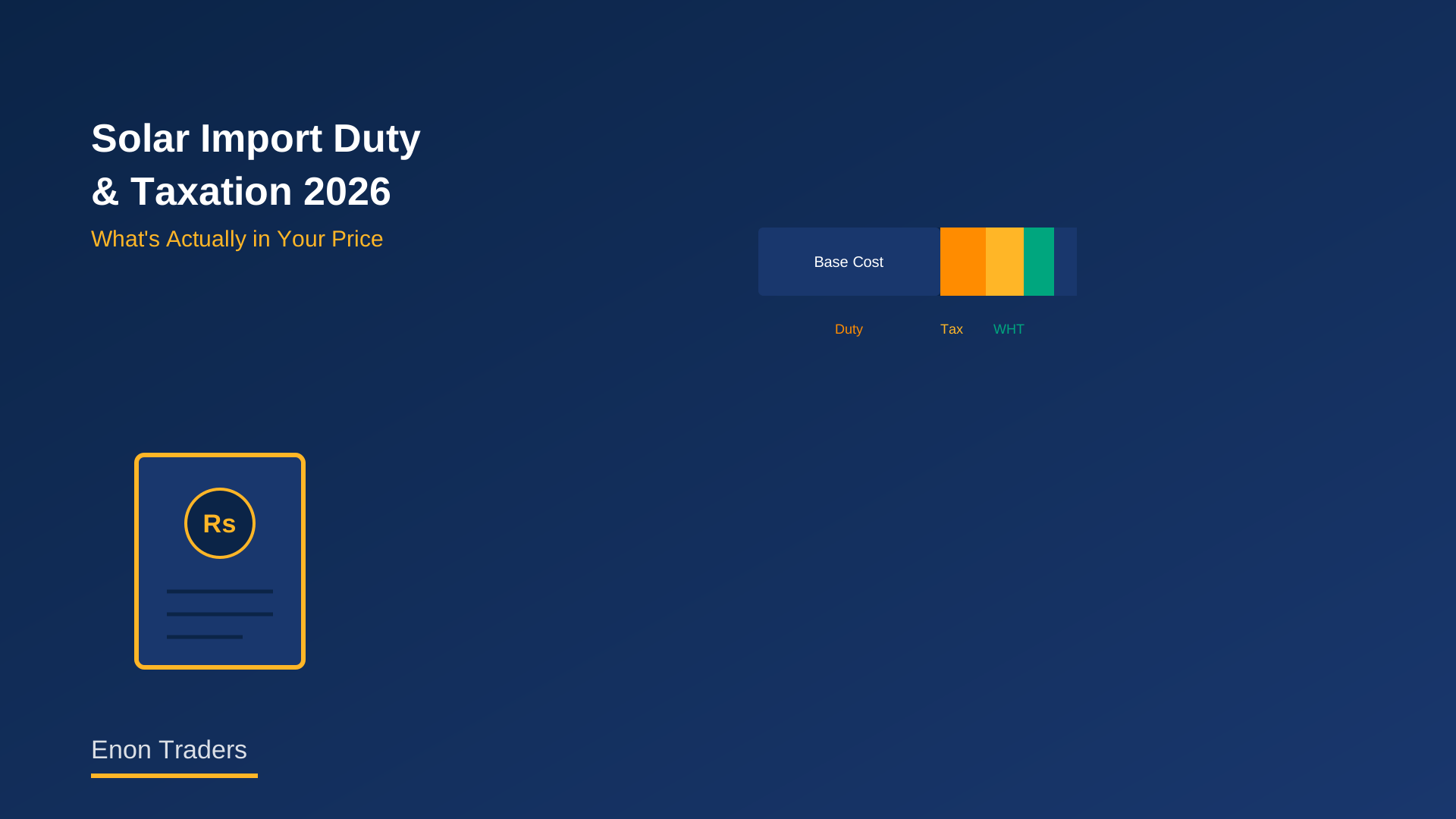
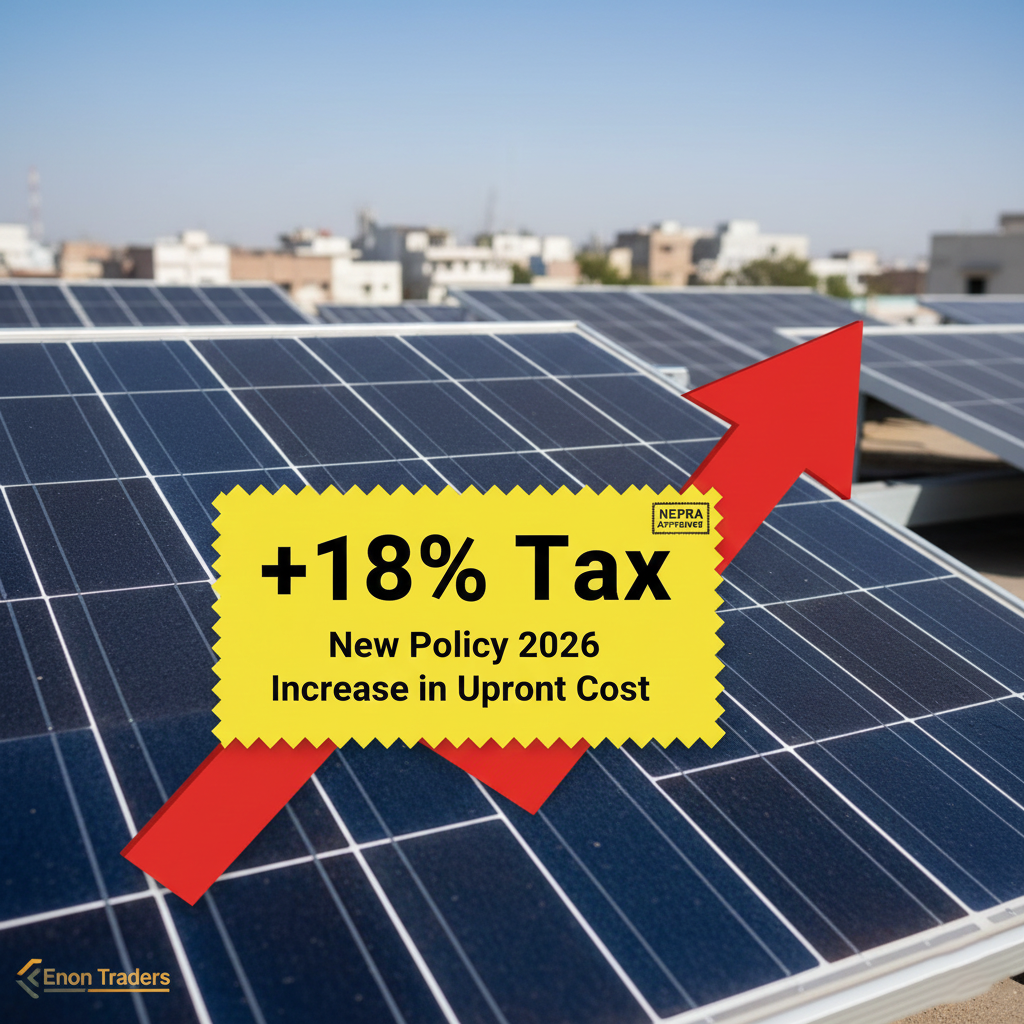
The biggest news in the 2025-2026 budget is a proposal for an 18% General Sales Tax (GST) on imported solar panels.
- The goal is to encourage local manufacturing and generate revenue.
- The Impact: The upfront cost of installing a solar system will go up. A system that cost PKR 1,000,000 might now cost PKR 1,180,000.
What It Means for Your ROI:
Your initial investment is higher, so it will take a bit longer to recoup your money. Instead of a 2.5-year payback, it might take 3 to 3.5 years.
🔄 Policy Change 2: Net Metering vs. Net Billing
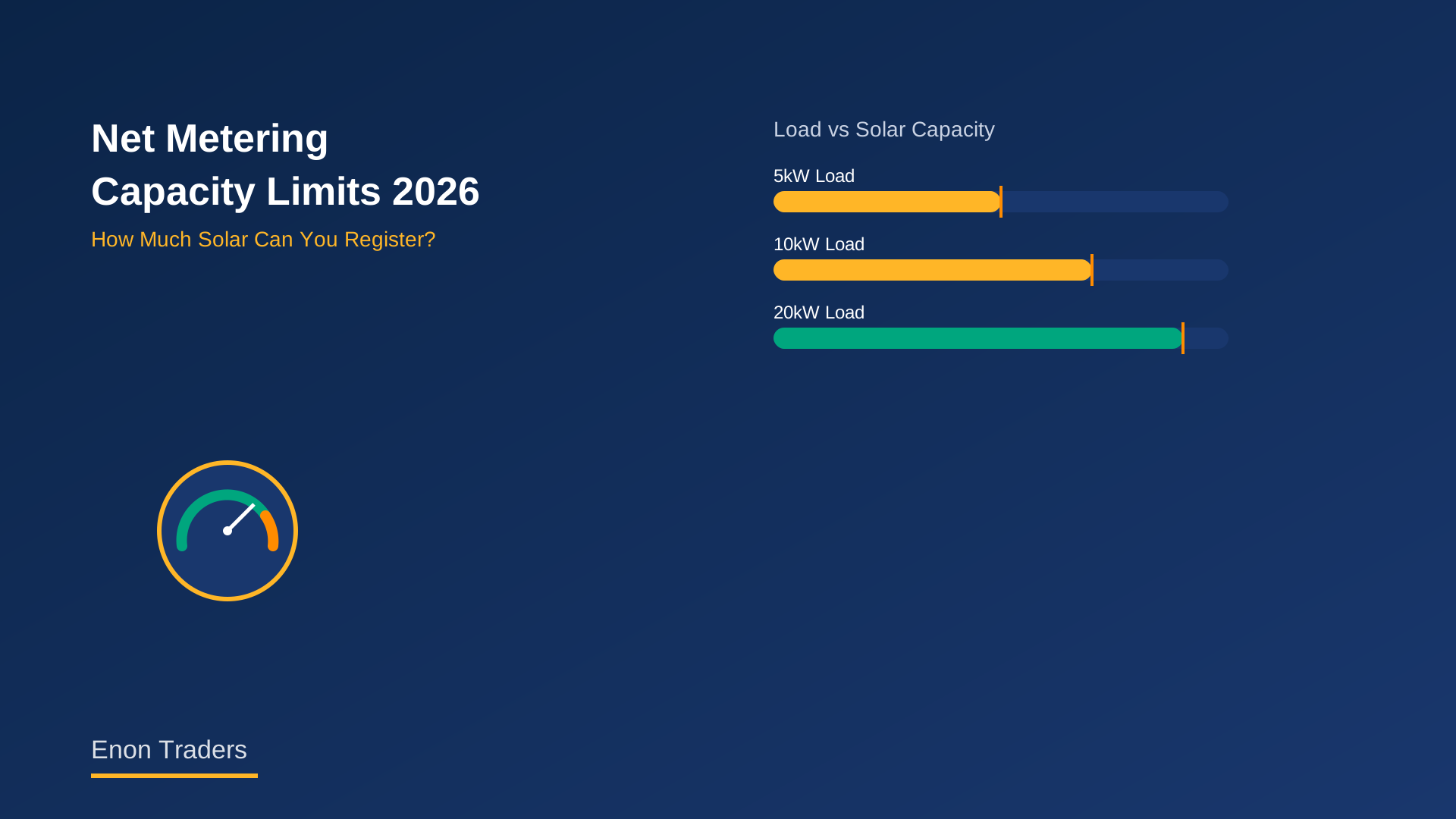
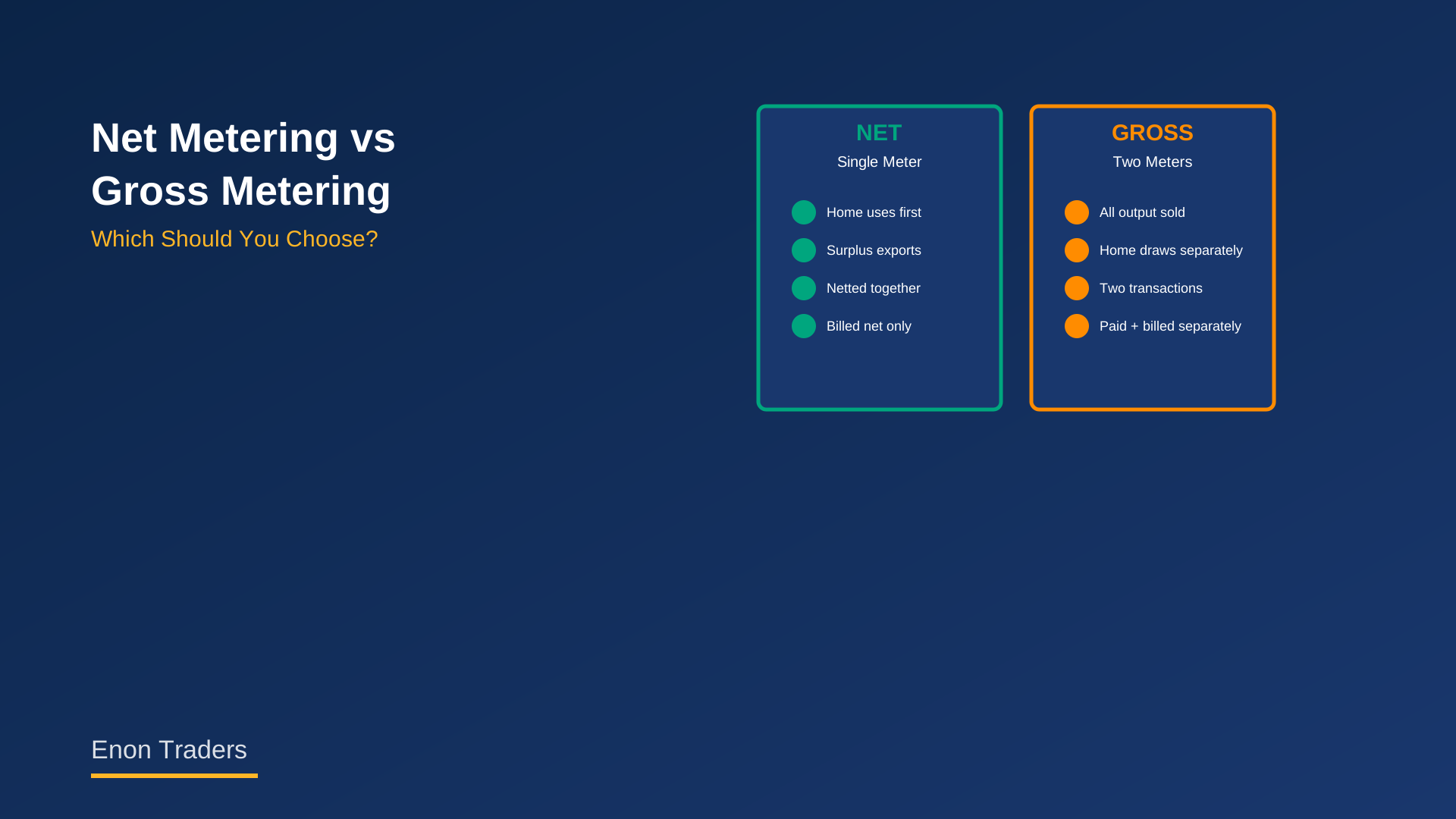
This is the most confusing change. The government is moving from “Net Metering” to “Net Billing” for new users.
- Old Way (Net Metering): You exchanged electricity with the grid unit-for-unit. If you gave 1 unit in the day, you got 1 unit free at night.
- New Way (Net Billing): The grid buys your extra solar power at a lower price (e.g., PKR 11/unit) and sells it back to you at a higher price (e.g., PKR 34/unit).
What It Means for Your ROI:
Your monthly savings will be lower. You won’t get a zero bill just by exporting power. The payback period will extend.
Good News for Existing Users: If you already have a Net Metering license, these changes will not affect you until your contract expires. You are “grandfathered” in.
💡 The New Strategy: Self-Consumption is King
These policy changes mean the old strategy of “export as much as possible” is dead.
In 2026, the key to a high ROI is Self-Consumption.
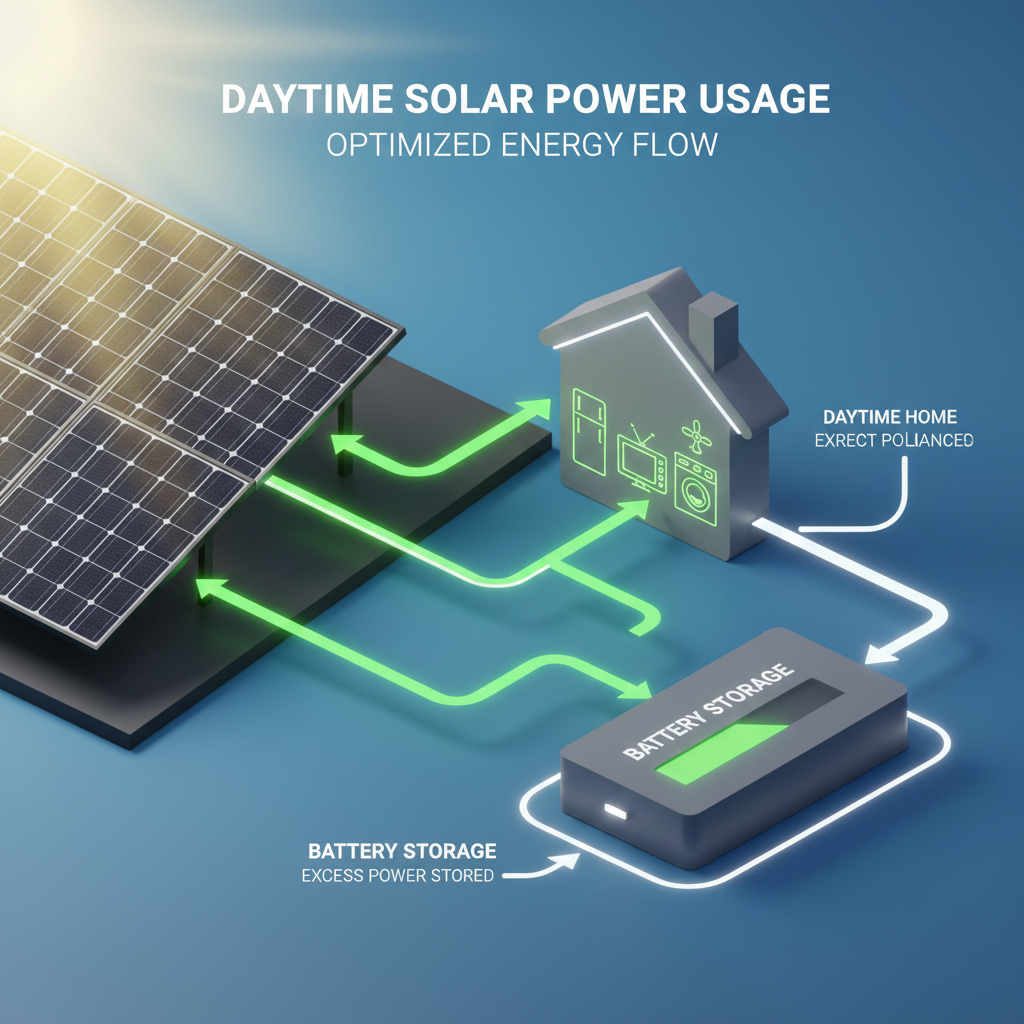
You must use the free solar power while the sun is shining. Don’t send it to the grid for a low price.
How to Maximize ROI in 2026:
- Shift Loads: Run heavy appliances like ACs, washing machines, and water pumps during the day.
- Add Battery Storage: Store cheap daytime power in solar batteries to use at night. This avoids buying expensive grid power.
🛡️ How Enon Traders Protects Your Investment
The rules are tougher, but the math still works. Grid electricity is still shockingly expensive. Solar is still your only defense.
Enon Traders helps you navigate this new landscape:
- Smart System Design: We don’t just sell panels. We design systems optimized for self-consumption. We calculate your daytime load to get the perfect system size.
- Hybrid Solutions: We specialize in hybrid inverters and lithium batteries. This is the best defense against Net Billing and load shedding.
- Policy Experts: Our team stays updated on every NEPRA rule. We handle your licensing quickly before rules become even stricter.
Final Conclusion
The “golden era” of ultra-fast 2-year payback is ending for new users. But don’t panic.
Even with the new taxes and rules, rooftop solar still offers a 3-5 year payback period. After that, you get free electricity for 20+ years. Compare that to paying high electricity bills forever.
Solar is no longer a “get rich quick” scheme. It is a long-term, secure financial investment. The best time to start is now, before policies change again.
💡 Secure Your Future Savings: Connect with Enon Traders Today!
Get a 2026-ready solar plan that maximizes your savings under the new rules.
| Connect With Us | Action Link |
| Chat Instantly on WhatsApp | Get a free ROI calculation for your home: Click to Chat Now! |
| Visit Our Website | Explore our hybrid solar packages: Official Website |
| Call Our Experts | Speak to a consultant about policy changes: Contact Page |