Solar Earthing Standards in Pakistan: Rules and Requirements Explained
April 23, 2026
Solar System Performance Ratio: Meaning, Calculation and Causes of Drop in Pakistan
April 27, 2026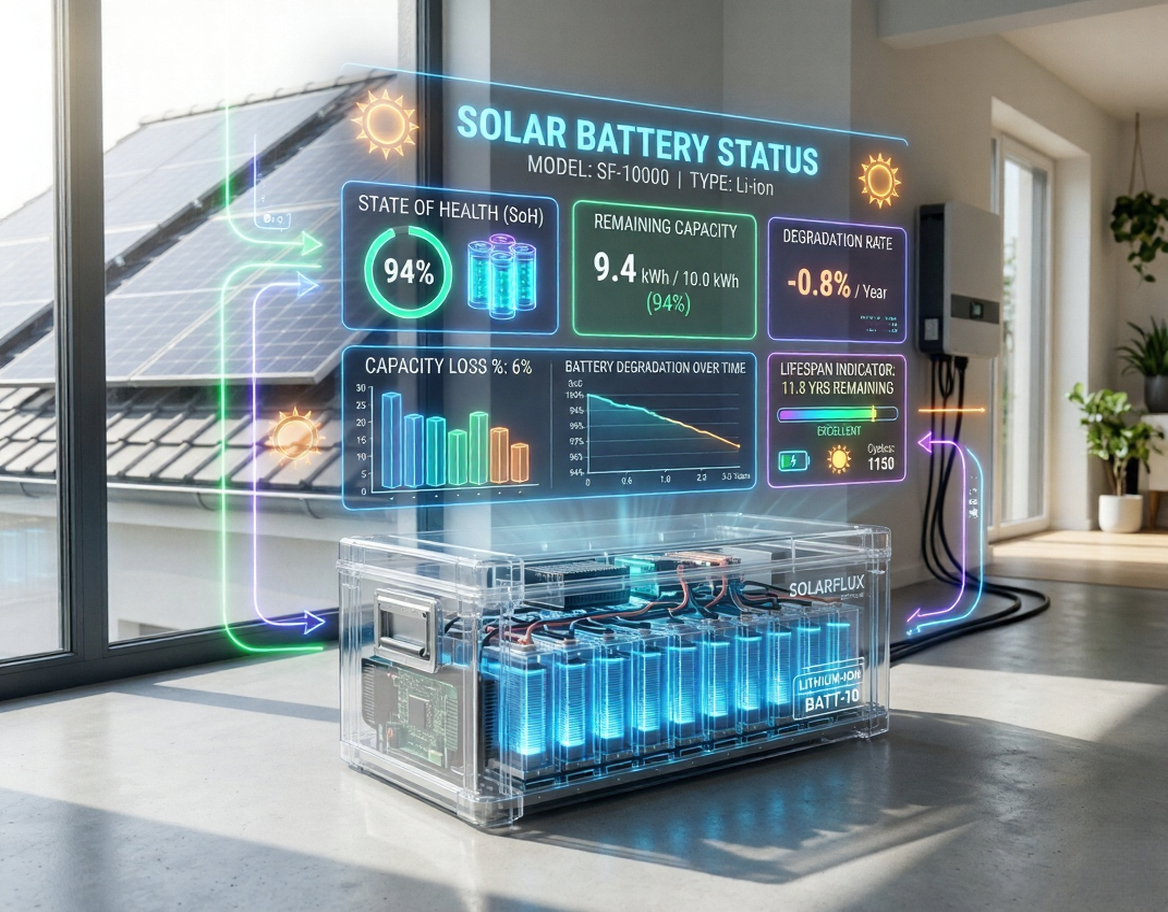
If you are considering a solar system for your home or business in Pakistan, knowing how long your solar battery will last is critical. Every battery gradually loses its ability to hold a full charge over time. This reduction, called solar battery degradation rate, affects the efficiency, reliability, and long-term cost of your solar setup.
This article explains everything you need to know about battery degradation, why it happens, factors influencing it, and practical steps to extend battery life.
What Does Solar Battery Degradation Mean?
Solar battery degradation refers to the gradual reduction in a battery’s usable capacity over time. It is usually expressed as a percentage per year, showing how much energy the battery loses annually.
For example, a 10 kWh battery with a 2% annual degradation will store only 9.8 kWh after one year. This decline happens silently, meaning your battery may still function but deliver less power. Understanding degradation is essential to plan replacements and maintain efficiency.
Factors That Affect Battery Degradation
Several factors impact the rate of solar battery degradation:
- Battery chemistry: Lithium-ion and LiFePO₄ batteries degrade more slowly than lead-acid types.
- Cycle depth (DoD): Frequent deep discharges increase degradation. Learn more about battery depth of discharge.
- Temperature: High heat accelerates chemical wear. See details in battery temperature tolerance.
- Charge and discharge rates: Rapid or high-capacity cycling stresses the battery.
- Maintenance practices: Poor maintenance shortens lifespan. A full guide is available on solar battery maintenance.
Understanding Solar Battery Chemistry
The chemistry of a solar battery determines how it stores energy, how long it lasts, and how quickly it degrades. Different battery types have unique characteristics that affect their efficiency and lifespan:
- Lead-Acid Batteries:
These are the traditional solar batteries commonly used in Pakistan. They are affordable but sensitive to deep discharges, which accelerate degradation. Regular maintenance, such as topping up water levels in tubular batteries, is necessary to prolong life. Typical lifespan: 3–7 years. - Lithium-Ion Batteries:
Lithium-ion batteries are more advanced, offering higher energy density, stable performance, and slower degradation. They tolerate deeper discharges and require minimal maintenance. Their long lifespan and efficiency make them a popular choice for modern solar systems, with a typical lifespan of 10–15 years. - LiFePO₄ (Lithium Iron Phosphate) Batteries:
LiFePO₄ is a premium lithium battery chemistry. It offers excellent cycle life, high thermal stability, and very low degradation rates. Although the initial cost is higher, these batteries retain capacity longer, making them ideal for long-term solar storage investments. Typical lifespan: 12–20 years.
Key Takeaway: Choosing the right battery chemistry is essential. While lead-acid batteries are cheaper upfront, lithium-ion and LiFePO₄ batteries deliver better long-term reliability, efficiency, and lower degradation rates, especially important in hot climates like Pakistan.
Degradation by Battery Type
Battery type plays a major role in capacity loss. Here’s a practical comparison:
|
Battery Type |
Typical Lifespan |
Annual Degradation |
Notes |
|
Lead-Acid Tubular |
3–7 years |
5–10% |
Sensitive to deep discharge; regular maintenance required |
|
Lithium-Ion |
10–15 years |
2–3% |
Stable and durable; tolerates deeper discharge |
|
LiFePO₄ |
12–20 years |
1–2% |
Excellent cycle life; higher upfront cost |
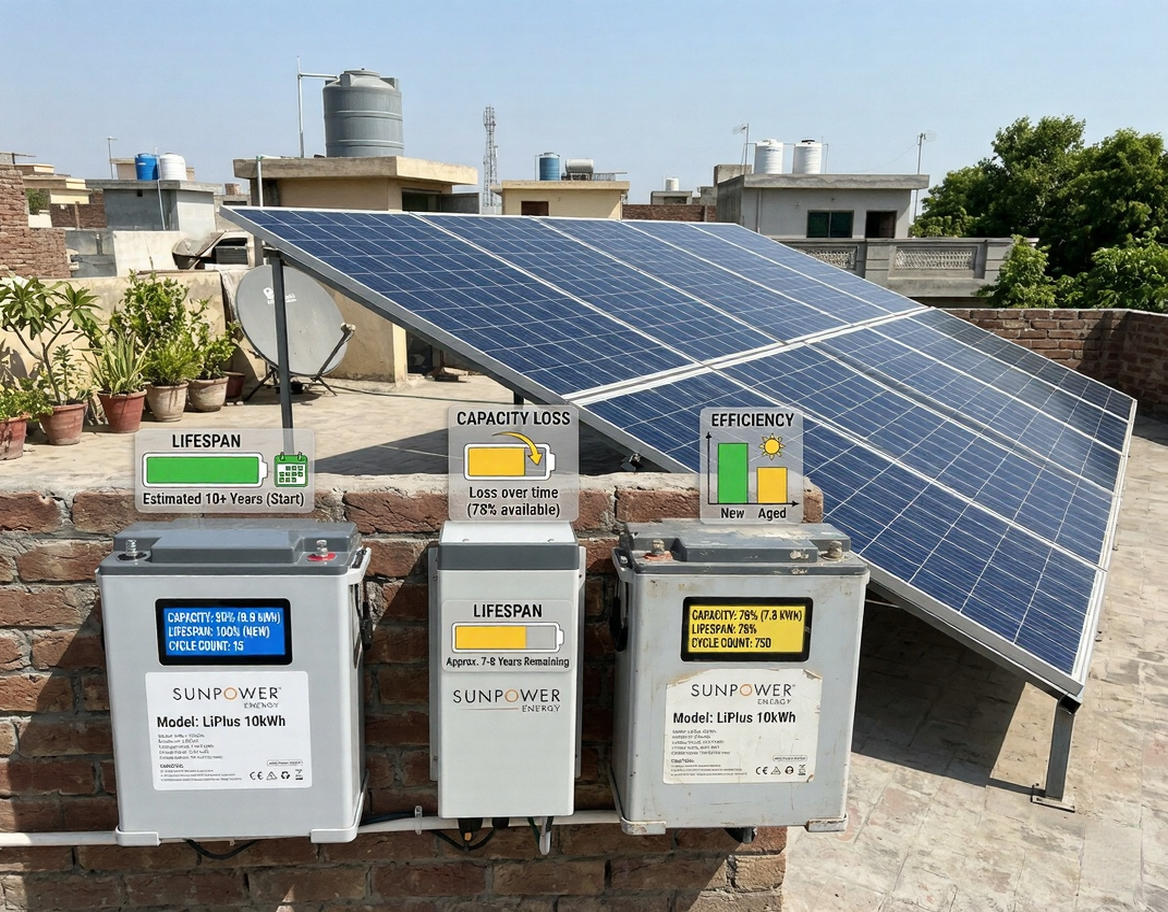
Example: A 12 kWh LiFePO₄ battery with 1.5% annual degradation will retain ~85% of its capacity after 10 years, making it a long-term investment.
Calendar Aging vs Cycle Aging
Battery degradation occurs in two main ways:
- Calendar aging: Capacity loss over time, even if the battery is not used. High temperatures accelerate this.
- Cycle aging: Capacity loss due to repeated charge and discharge cycles. Frequent deep cycles increase degradation.
In Pakistan, both factors are significant due to high temperatures and heavy solar usage. Monitoring and proper maintenance can reduce the effective degradation rate.
Practical Tips to Reduce Solar Battery Degradation
Extending your battery’s life requires practical steps:
- Avoid deep discharges: Keep the depth of discharge below 80%.
- Maintain optimal temperature: Place batteries in shaded or ventilated areas.
- Use compatible inverters: Match your battery with the inverter to prevent overcharging. Check inverter-battery compatibility.
- Monitor battery performance: Track charge cycles and voltage to detect capacity loss early.
- Invest in high-quality batteries: Imported or tier-1 batteries degrade more slowly. Learn about imported solar modules and batteries.
Common Misconceptions About Battery Lifespan
Homeowners often misunderstand battery performance:
- A battery is not “dead” only when it stops working. Reduced capacity can make it inefficient long before total failure.
- Warranties often guarantee 70–80% capacity, not zero degradation. Check your solar panel warranty guide.
- All batteries do not degrade at the same rate; climate, chemistry, and usage patterns make a difference.
How to Estimate Capacity Loss
You can calculate remaining battery capacity with this formula:
Remaining Capacity (%) = 100 – (Annual Degradation × Number of Years)
Example:
A 10 kWh lithium battery with 2% annual degradation after 5 years:
100 – (2 × 5) = 90% capacity → 9 kWh effective storage.
This helps plan replacements or size your system correctly from the start. For more insights, see how to integrate battery backup with your solar system in Pakistan.
When to Replace a Solar Battery
Replacement is not only about age. Consider replacing if:
- Capacity drops below 70–75% of the original.
- Daily loads require frequent deep discharges.
- Maintenance costs for lead-acid batteries outweigh benefits.
Proper timing ensures a reliable energy supply and avoids unexpected downtime. For homeowners evaluating storage options, see battery storage solution.
Local Factors in Pakistan
Pakistani climate affects degradation:
- Summer temperatures can exceed 45 °C, accelerating chemical wear.
- Frequent power outages stress batteries in hybrid systems.
- Dust and humidity require careful installation and monitoring.
Understanding these local factors allows homeowners to make smarter choices and maintain long-term efficiency.
Conclusion
Solar battery degradation is a normal, measurable process that affects all energy storage systems. By understanding capacity loss, homeowners can plan system size, choose the right battery type, and implement practical maintenance strategies.
Lithium-ion and LiFePO₄ batteries are ideal for long-term use due to slower degradation rates. By monitoring performance, maintaining proper temperature, and using compatible inverters, you can extend your battery’s lifespan and get the most from your solar investment.
A realistic understanding of degradation ensures homeowners in Pakistan can make confident decisions, avoid unexpected costs, and enjoy reliable solar power for years.
Independent Power: Connect with Enon Traders Today!
Start your off-grid journey with Pakistan’s most reliable solar partner.
| Connect With Us | Action Link |
| Chat Instantly on WhatsApp | Get an off-grid system quote: Click to Chat Now! |
| Visit Our Website | View our off-grid inverters: Official Website |
| Call Our Experts | Design your custom micro-grid: Contact Page |