The “Home Gas Station”: Integrating Type-2 EV Chargers with Hybrid Solar Inverters
January 23, 2026
Off-Grid Solar System Design in Pakistan
January 26, 2026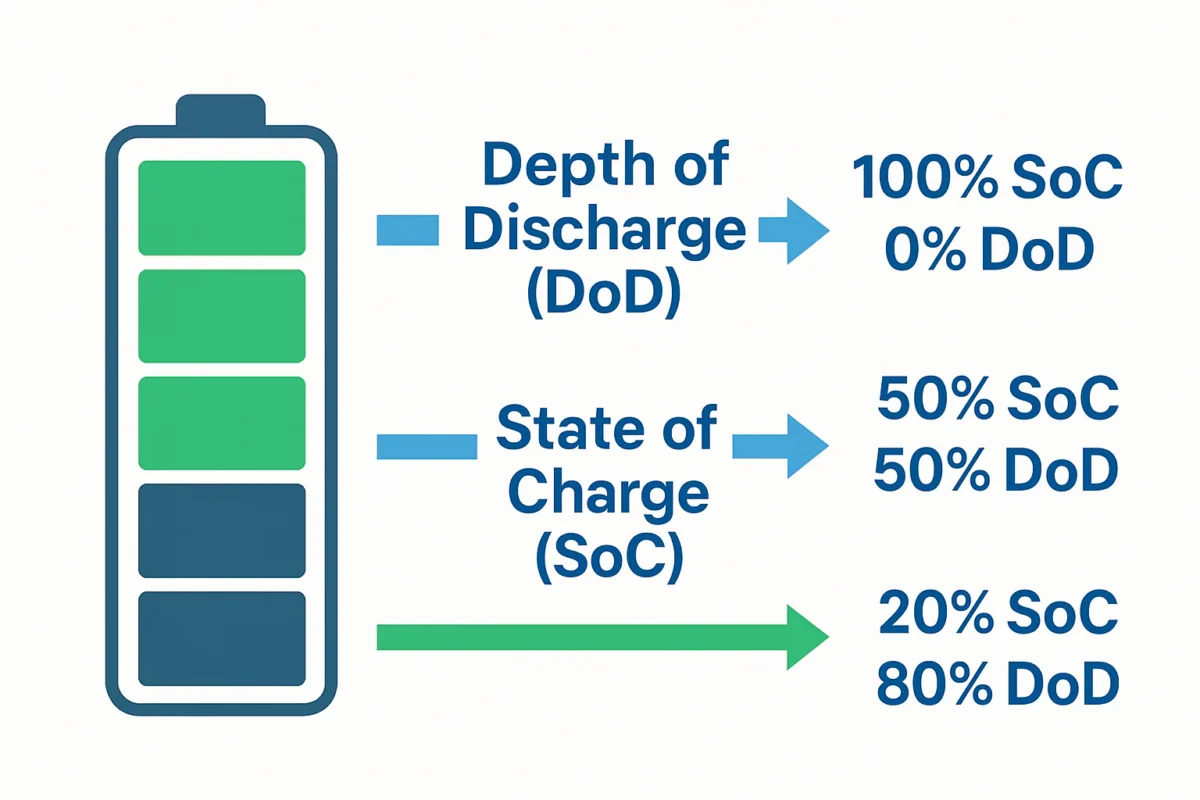
In Pakistan, where load shedding, high temperatures, and daily battery cycling are common, misunderstanding DoD is one of the biggest reasons batteries fail earlier than expected. Most people start with selecting a battery backed by some numbers and then expect it to perform according to those expectations, which, of course, do not align with how the battery actually functions.
Battery depth of discharge can explain this phenomenon. This battery cycling term, which can be shortened to DoD battery, relates to the extent of battery usage every time the battery life cycle occurs. It becomes easy once this understanding clicks in the mind because most battery problems can be explained by this aspect.
This article will demystify battery Depth of Discharge. DoD will be examined with regard to how it functions within a battery as opposed to how it is often promoted by manufacturers. By the end of this article, the reader should have the confidence to use their battery with a working knowledge of safe limits.
What Is Battery Depth of Discharge (DoD)?
A simple definition of the depth of discharge
Battery Depth of Discharge. Refers to the amount of energy depleted from a battery relative to its total energy or capacity. Depth of discharge will be 40 per cent if a battery is drained by 40 per cent of its total energy. If a battery is fully drained, then its depth of discharge will be 100 per cent.
This does not refer to the battery capacity. This refers to how thoroughly the battery is being utilised with every charge and discharge.
Depth of discharge vs state of charge
Most of the time, people refer to a state of charge, often getting the two terms confused with each other despite the fact that they describe opposite conditions. The state of charge lets you know exactly how much energy is left inside a battery, while depth of discharge refers to how much has already been used.
For instance, a battery that is sitting at a state of charge of 75 per cent has a DoD of 25 per cent. It is easier to conceptualise wear, stress, and long-term battery behaviour in terms of DoD.
How does the depth of Discharge Work Inside Real Batteries?
What happens as a battery discharges?
When a battery runs out of power, the processes involved release the stored energy through some sort of chemical reaction. The reaction in the battery can be reversed during the charging process, but within certain limits. The greater the depth of discharge, the more the battery wears out.
Shallow discharge enables easy recovery. Deep discharge forces these components to be on the verge of chemical or physical damage, which is not easily reversible.
Why are batteries not designed to be emptied daily?
Full discharge causes more internal stress, and that will, over time, degrade the capacity and increase the internal resistance and cause unstable charge behaviour. A single deep discharge may not kill the battery immediately, but repeating it will still drastically shorten the battery’s life.
This is why two users with the same model of battery can have completely different experiences. The difference usually lies in how deeply each day the battery is discharged.
Why Depth of Discharge Matters More Than Battery Capacity?
Advertised capacity vs usable energy
A battery rated at 100Ah does not always provide 100Ah of usable energy. If the recommended depth of discharge is 50 per cent, only half of that capacity should be used regularly.
Ignoring this distinction causes many users to assume their battery is weak or defective. In reality, it is operating within safe limits. This becomes clearer when you understand usable battery capacity, which explains why specifications alone can be misleading.
How does deeper discharge reduce battery lifespan?
Battery lifespan is measured in cycles rather than calendar years. A cycle represents one full discharge and recharge. Batteries that operate at a lower depth of discharge complete far more cycles over their lifetime.
A battery discharged to 30 per cent regularly can last several times longer than the same battery drained to 80 per cent every day. This relationship is central to understanding battery lifespan and why usage habits matter more than brand names.
Understanding DoD Battery Ratings Clearly
What does a DoD percentage actually mean?
A DoD rating is the level at which a battery can be cycled on a repeated basis. A 50 per cent level of DoD battery is designed for use at a medium depth of discharge and subsequent charges. A 90 per cent level of DoD battery allows for Very Deep Discharge.
This can be considered, in essence, the minimum level of safety that can be ensured by the BOE in their environment.
Why does higher DoD not mean unlimited use?
Higher DoD ratings are common in lithium batteries, but even these systems have limits. Deep discharge combined with high temperature, heavy loads, or poor charging still accelerates wear.
DoD ratings assume proper charging conditions and reasonable operating environments. They do not protect against misuse.
Depth of Discharge Across Different Battery Types
The table below compares how common battery types used in Pakistan handle daily discharge and what that means for their long-term lifespan.
| Battery Type | Safe Daily DoD | Typical Lifespan Impact |
|---|---|---|
| Tubular Lead-Acid | ~40–50% | Long life if shallow |
| AGM / Gel | ~50–60% | Moderate tolerance |
| Lithium (LiFePO₄) | ~80–90% | Designed for deep cycles |
Lead acid and tubular batteries
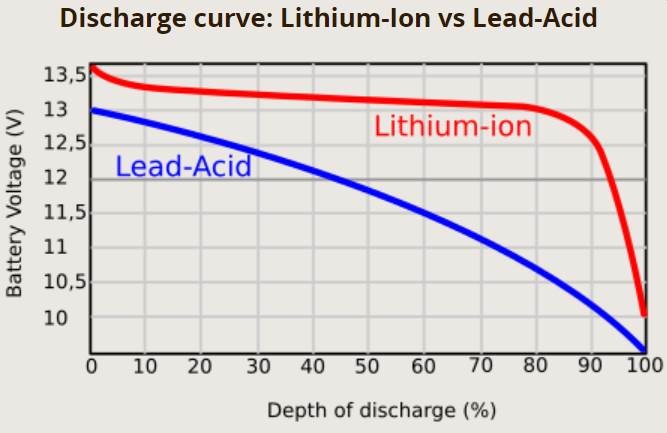
Lead-acid and tubular batteries typically tolerate a lower depth of discharge. Regular discharge beyond 50 per cent encourages sulphation and permanent capacity loss.
This behaviour explains many complaints related to tubular battery performance, where early failure is caused by repeated deep discharge rather than manufacturing defects.
AGM and gel batteries
AGM or gel cell batteries have an advantage in terms of deep discharge capabilities over traditional flooded batteries, although they can still be damaged by misuse. Heat and charging problems can still lead to short lifespans.
In some cases, these batteries are chosen where maintenance access is limited.
Lithium batteries and high DoD capability
Lithium batteries tolerate deeper discharge far better than lead-acid systems. This is why they often advertise 80 to 90 per cent usable capacity.
However, lithium cells still degrade faster when pushed to extremes daily. Their advantage lies in resilience, not immunity. This difference becomes clearer when comparing lithium vs lead-acid batteries in real-world conditions.
How does the depth of Discharge Affect Daily Battery Use?
Shallow vs deep discharge in real homes
Take two different households that use the same battery. The first uses light and fans at night and drains the battery by 30 per cent. The second uses larger appliances and drains it by 80 per cent each day.
Although they use it every day, the life span of the battery for the second household will be much shorter compared to the first household, regardless of it also being used every day.
Why does frequent deep discharge shorten battery life?
Frequent deep discharge accelerates chemical wear. Over time, the battery holds less energy, charges unevenly, and struggles under load. Many users mistake this for sudden battery failure, when the real cause is long-term usage stress.
Understanding battery degradation causes helps separate normal wear from misuse.
Common Misunderstandings About Battery Depth of Discharge
Fully draining a battery occasionally is harmless
Many people believe that occasional full discharge is safe. In reality, even infrequent deep discharge contributes to long-term damage, especially in lead-acid batteries.
While lithium batteries handle deep discharge better, repeated extremes still reduce usable life, a point often overlooked in common rooftop solar installation mistakes.
Higher DoD always means a better battery
Higher DoD does not automatically mean higher quality. Build standards, thermal tolerance, charging accuracy, and protection systems matter just as much.
This is why a well-managed lower DoD battery can outlast a poorly managed high DoD one.
Using Depth of Discharge Knowledge Practically
Choosing the right DoD range for your needs
Backup-only systems benefit from shallow discharge and long service life. Solar systems with daily cycling require batteries designed for higher DoD operation, which is why knowing how to size your home solar system correctly matters.
Matching usage patterns to battery types prevents frustration and premature replacement. This decision connects directly with integrating battery backup with your solar system, where depth of discharge plays a central role.
How do battery management systems protect the DoD?
Modern batteries often include battery management systems that automatically limit discharge. These systems protect cells from excessive stress and help maintain balance, especially in lithium batteries.
They act as a safety layer, but they still rely on sensible system design.
Depth of Discharge in Solar and Backup Systems
Why does DoD matter more in solar setups?
Solar systems cycle batteries every day. Even small differences in depth of discharge add up over time. This is why understanding solar battery charging cycles is essential for long-term performance.
Managing discharge during load shedding
During frequent outages, it is tempting to use every bit of stored energy. Setting reasonable discharge limits preserves battery health and reduces replacement costs over time.
What Depth of Discharge Does Not Tell You?
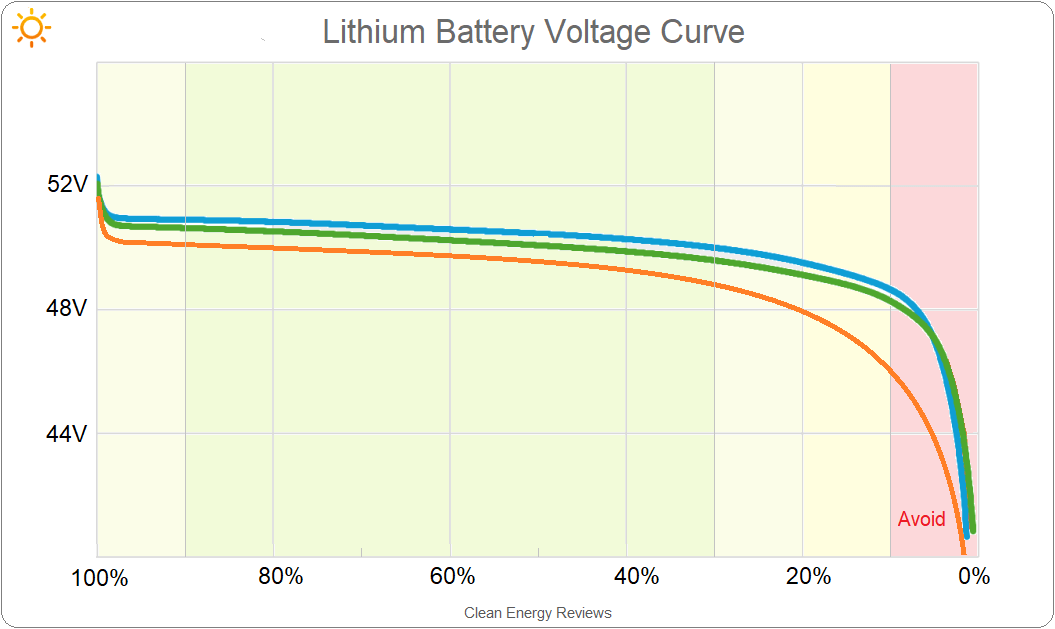
Why does DoD alone not define battery quality?
Depth of discharge does not account for temperature tolerance, internal design quality, or charging precision. A properly managed battery with moderate DoD can outperform a high DoD battery used carelessly.
Other factors that affect battery lifespan
Charging voltage, ambient heat, load size, and maintenance habits all influence battery health. Depth of discharge is one part of a broader picture that includes solar system maintenance in Pakistan’s climate and responsible system use.
Conclusion: Using Battery Depth of Discharge With Confidence
Battery depth of discharge is the way in which depth of discharge is defined, and why it is more important than most people realise. “Battery depth of discharge refers to how deeply a battery is drained and why this is of far greater significance than most people appreciate.”
Pronounced discharge usually corresponds to longer life cycles. Greater levels of DoD enable more usable power, but also define thresholds. Within these thresholds, batteries are usable within expectations.
The knowledge of the depth of discharge eliminates misconceptions. In fact, the entire matter of battery performance becomes a situation you control, as opposed to a circumstance you respond to after the fact. This is because you no longer find fault with the tools and accessories or question the situation, neither of which you can control.
Independent Power: Connect with Enon Traders Today!
Start your off-grid journey with Pakistan’s most reliable solar partner.
| Connect With Us | Action Link |
| Chat Instantly on WhatsApp | Get an off-grid system quote: Click to Chat Now! |
| Visit Our Website | View our off-grid inverters: Official Website |
| Call Our Experts | Design your custom micro-grid: Contact Page |