DC Cable Sizing for Solar in Pakistan: Voltage Drop Guide
April 6, 2026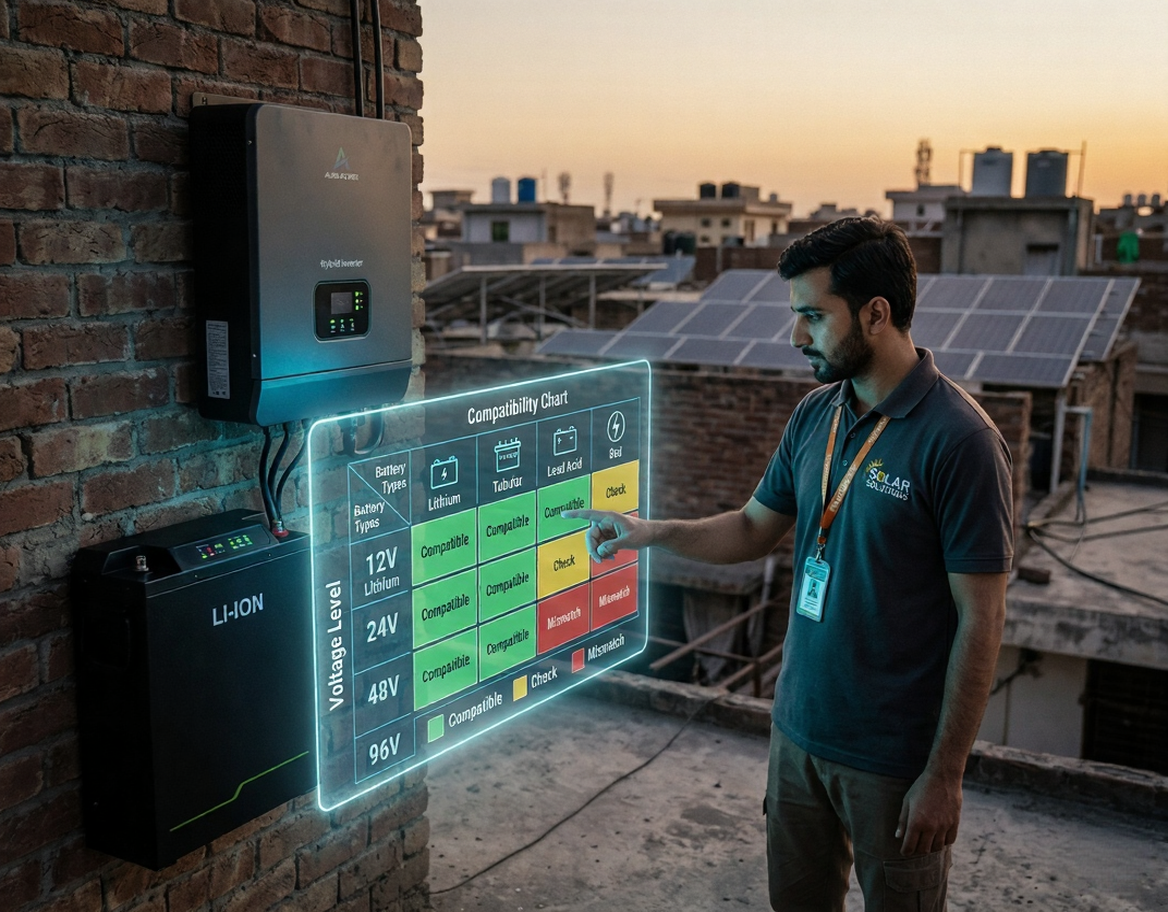
One of the most important decisions in a solar system is to select a compatible battery and inverter combination. It is a common assumption that any battery is compatible with any inverter, but this assumption can lead to costly failures in the future.
In fact, compatibility is not just a matter of connecting both devices, but also of matching voltage, type, and other system requirements. If this is not done, it might lead to an inefficient or unsuccessful system.
In a country like Pakistan, where temperatures, load shedding, and voltage fluctuations are very high, compatibility is a very critical issue.
In this guide, you will learn all about it so that you can make a compatible decision from the very beginning and avoid costly mistakes in the future.
Why Battery Inverter Compatibility Matters in Real Systems
A solar system works as a single unit. If one component is mismatched, the entire system’s performance drops.
For example:
- A 48V inverter connected to a 12V battery will not operate correctly
- A lithium battery on an unsupported inverter may stop charging
These issues lead to:
- Reduced backup time
- Faster battery degradation
- System instability
Most users only realise this after installation, when fixing the issue becomes expensive. That is why understanding compatibility before buying is essential.
Battery Inverter Compatibility Chart (Quick Reference Guide)
Below is a simplified compatibility chart to help you understand what works together.
|
Inverter Type |
Voltage |
Compatible Batteries |
Notes |
|
Small UPS / Off-grid |
12V |
Lead-acid, AGM |
Limited backup |
|
Mid-size system |
24V |
Lead-acid, limited lithium |
Moderate efficiency |
|
Hybrid inverter |
48V |
Lithium, tubular |
Best for solar |
|
On-grid inverter |
No battery |
Not applicable |
Grid only |
How to use this chart properly
- Always match the voltage first
- Then confirm battery type
- Then, verify the inverter support
If these three factors are aligned, your system will operate smoothly and reliably.
Understanding Battery and Inverter Compatibility Basics
Battery inverter compatibility means both components can operate safely and efficiently together.
Three key factors define this:
1. Voltage
Voltage must always match. A mismatch can damage both the battery and the inverter or prevent the system from working at all.
2. Capacity
Battery capacity determines backup time. It must align with the inverter limits to avoid overload or underperformance.
3. Charging Current
The inverter must support the battery’s charging range. Incorrect charging leads to overheating and reduced lifespan.
If even one of these factors is ignored, system performance drops significantly.
Battery Types and Their Compatibility with Inverters
Lead-Acid Batteries
Lead-acid batteries, including tubular and AGM types, are widely used in Pakistan due to affordability and availability.
They work best with:
- Off-grid inverters
- Basic hybrid systems
However, they require regular care. Poor maintenance directly reduces their life.
For long-term performance, follow solar battery maintenance.
Lithium Batteries
Lithium batteries are modern, efficient, and increasingly popular in Pakistan. They charge faster, last longer, and perform better in high temperatures.
They work best with:
- Hybrid inverters
- Systems with lithium communication support
To understand the difference clearly, read lithium vs tubular battery in Pakistan.
Lithium is more advanced, but not every inverter supports it.
Types of Inverters and What They Actually Support
Off-Grid Inverters
These depend entirely on batteries and are mostly used for backup systems. They usually support lead-acid batteries.
Hybrid Inverters
Hybrid inverters are the most common choice in Pakistan. They support solar panels, batteries, and grid interaction.
For example, setups using a single-phase inverter for a home.
These systems are ideal for both lithium and tubular batteries when configured correctly.
On-Grid Inverters
On-grid systems do not support batteries. They only work with solar panels and the grid.
Trying to connect batteries to these systems will not work and can damage equipment.
Voltage Matching Guide for Safe System Pairing
Voltage is the most critical factor in compatibility.
12V Systems
Used for small setups such as lights and fans. Limited performance.
24V Systems
Better than 12V. Suitable for moderate household loads.
48V Systems
Most efficient and widely used in modern solar systems. Offers better performance, lower current loss, and higher scalability.
For most home solar systems in Pakistan, 48V is the preferred choice.
Lithium Battery Compatibility Explained Simply
Lithium batteries require more than just voltage matching. They also need communication with the inverter.
This communication happens through protocols like CAN or RS485.
If communication is missing:
- Charging may stop
- The battery may not perform properly
- System errors may occur
To understand lithium’s advantages in detail, read the LiPo4 battery advantages.
Lithium is powerful, but only when compatibility is correctly configured.
Common Battery and Inverter Compatibility Mistakes
These mistakes are very common and often expensive.
- Voltage mismatch
- Using unsupported battery types
- Ignoring charging limits
- Assuming all systems work together
Avoid these issues by understanding the top mistakes to avoid when installing rooftop solar. Most system failures in Pakistan come from these avoidable errors.
Real-World Compatibility Examples in Pakistan
Small Backup System
- 12V inverter
- Tubular battery
- Suitable for basic loads
Mid-Level Solar System
- 48V hybrid inverter
- Tubular or lithium battery
- Common in homes
Advanced Solar System
- Lithium battery
- Hybrid inverter with communication support
- High efficiency and long lifespan
To understand integration better, read how to integrate battery backup with your solar system in Pakistan.
How to Check Compatibility Before Buying
Follow this simple checklist before purchasing:
- Check inverter voltage
- Match battery voltage
- Confirm battery type support
- Verify charging current range
- Check lithium compatibility if applicable
Before buying, review this checklist to buy a solar panel inverter from the Pakistani market.
This step alone can save you from major losses.
Compatibility vs Performance: What Most People Miss
Many systems are technically compatible but not efficient.
For example:
- The system works, but gives poor backup
- The battery drains faster than expected
- Performance drops in heat
Always focus on both:
- Compatibility
- Performance
A properly matched system not only works but performs consistently over time.
When You May Need a Custom Setup
Some situations require special configuration:
- Expanding an existing system
- Switching from lead-acid to lithium
- Increasing load capacity
In these cases, battery decisions become more important.
To understand this better, read Battery Storage for Home Solar in 2026.
Conclusion: Get Compatibility Right from Day One
Battery inverter compatibility is not complicated, but it requires careful attention.
If you:
- Match the voltage correctly
- Choose the right battery type
- Verify inverter support
You will avoid most system problems.
A well-matched system provides you with a solid performance, improved backup, and increased battery life. When you get compatibility right from the start, your solar investment will be solid, efficient, and future-proof.
Independent Power: Connect with Enon Traders Today!
Start your off-grid journey with Pakistan’s most reliable solar partner.
| Connect With Us | Action Link |
| Chat Instantly on WhatsApp | Get an off-grid system quote: Click to Chat Now! |
| Visit Our Website | View our off-grid inverters: Official Website |
| Call Our Experts | Design your custom micro-grid: Contact Page |