Inverter Overload Capacity in Pakistan (2026): How Much Load Your Inverter Can Handle Safely
March 25, 2026
Net Metering Billing Explained: How Solar Electricity Is Calculated
March 27, 2026
If you searched battery temperature tolerance in Pakistan, you are not browsing casually. You are protecting an expensive investment.
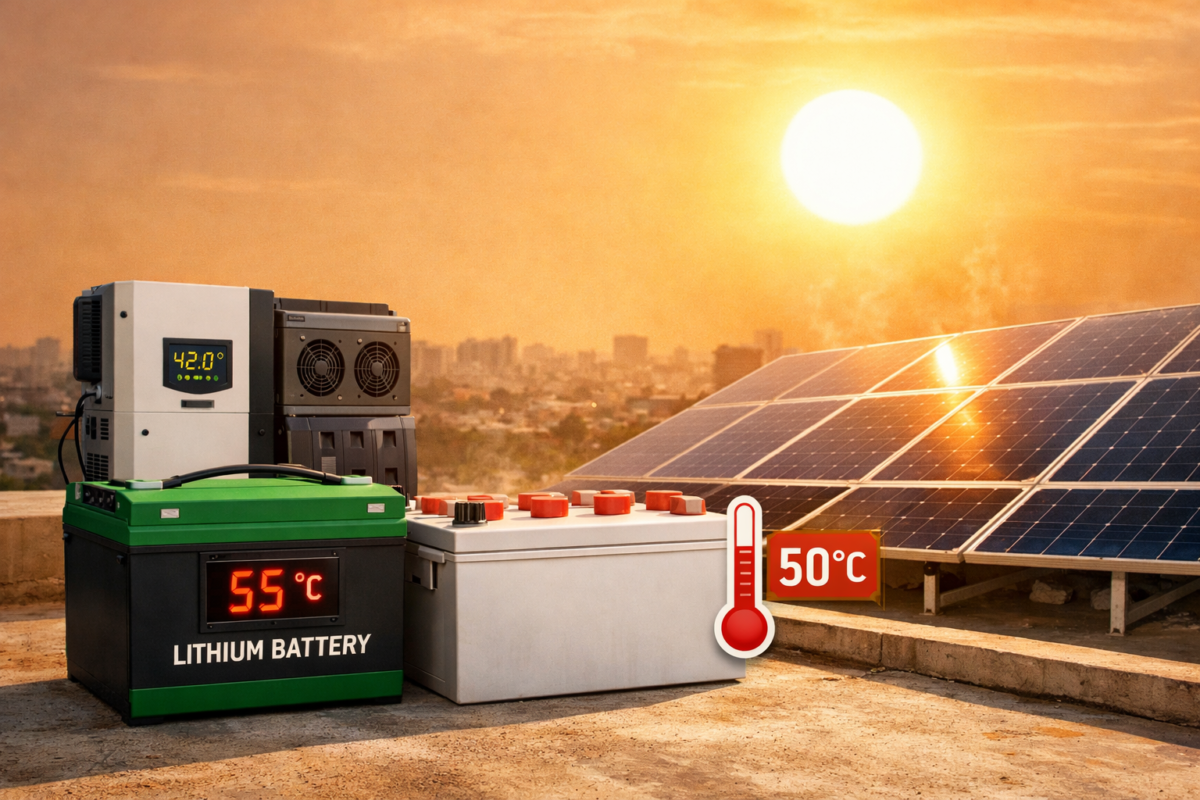
In the summer season of Pakistan, the solar batteries do not work at a mild temperature level. In the cities of Lahore, Multan, Bahawalpur, Sukkur, and Karachi, the temperature level of the environment can rise to more than 40°C.
The answer is quite clear. The normal temperature level of solar batteries varies from 0 to 45°C. The solar batteries, like lithium-ion batteries, can work up to 50°C. However, the suitable temperature level for the proper working of solar batteries and their long life is 20-30°C.
The solar batteries, which work in temperature levels higher than 40°C, can lose their life even though they work correctly.
The problem with the solar batteries is not that they do not work. The problem is that the solar batteries do not show that they are losing their charge.
In the following guide, the concept of solar battery heat resistance in Pakistan will be explained in detail. You will learn how temperature affects lifespan, what installation mistakes cause overheating, and how to design a battery setup that survives extreme summers.
Why Battery Temperature Tolerance Matters in Pakistan
Heat is not a seasonal inconvenience. It is a daily operating condition.
Solar batteries in Pakistan often face this cycle:
- High daytime load
- Afternoon load shedding
- Battery discharge in hot conditions
- Evening grid return
- Aggressive charging in a hot room
Charging generates internal resistance heat. Combine that with 45°C ambient temperature and poor ventilation, and internal cell temperature rises even higher.
Most homeowners ask only one question: Does it work today?
The better question is: how much life is being lost each summer?
Every 10°C increase above optimal operating temperature accelerates chemical aging. The battery may still provide backup, but its usable life shortens quietly.
What Battery Temperature Tolerance Actually Means
Operating Temperature vs Storage Temperature
Operating temperature refers to the safe range for charging and discharging.
Storage temperature refers to idle conditions.
Many buyers confuse the two. A battery may survive storage at higher temperatures, but daily charging at those temperatures reduces life expectancy.
Recommended Range vs Maximum Limit
Manufacturers show:
- Recommended operating range
- Maximum temperature limit
The maximum limit is a survival boundary, not a daily target. Running near maximum temperature every day is like driving a car at redline RPM constantly. It works, but wear increases rapidly.
Ambient Temperature vs Internal Temperature
This is where confusion begins. Ambient temperature is room temperature.
Internal temperature is what the battery cells experience.
A 45°C room can push internal temperature above 50°C if airflow is poor. A sealed rooftop metal cabinet under direct sunlight can exceed that.
This explains why batteries fail early, even when the owner says, The room was not that hot.
Solar Battery Heat Resistance by Battery Type in Pakistan
Different chemistries respond differently to heat, but none are immune.
|
Battery Type |
Typical Operating Range |
Heat Risk Level |
Common Failure in Pakistan |
|
Lead-Acid Tubular |
0°C to 45°C |
High |
Water loss, plate corrosion |
|
AGM / Gel |
0°C to 45°C |
Medium-High |
Swelling, sudden capacity drop |
|
Lithium-ion |
0°C to 50°C |
Medium |
BMS cutoff, cycle life reduction |
|
LiFePO4 |
0°C to 50°C |
Lower |
Thermal protection activation |
Lead-Acid (Tubular) Batteries
Tubular batteries are common in Pakistan. They tolerate rough conditions, but heat accelerates:
- Water evaporation
- Plate corrosion
- Capacity decline
If maintenance is ignored, water levels drop quickly in summer.
A frequent mistake is placing tubular batteries in closed rooms to avoid smell. That traps heat and speeds up degradation. To compare chemistry tradeoffs properly, read the lithium vs tubular battery in Pakistan.
AGM and Gel Batteries
Sealed batteries are often assumed to be safer in heat.
They are not immune.
Because they are sealed, they cannot vent and recover like flooded batteries. In high heat, they may swell, lose capacity faster, and degrade silently.
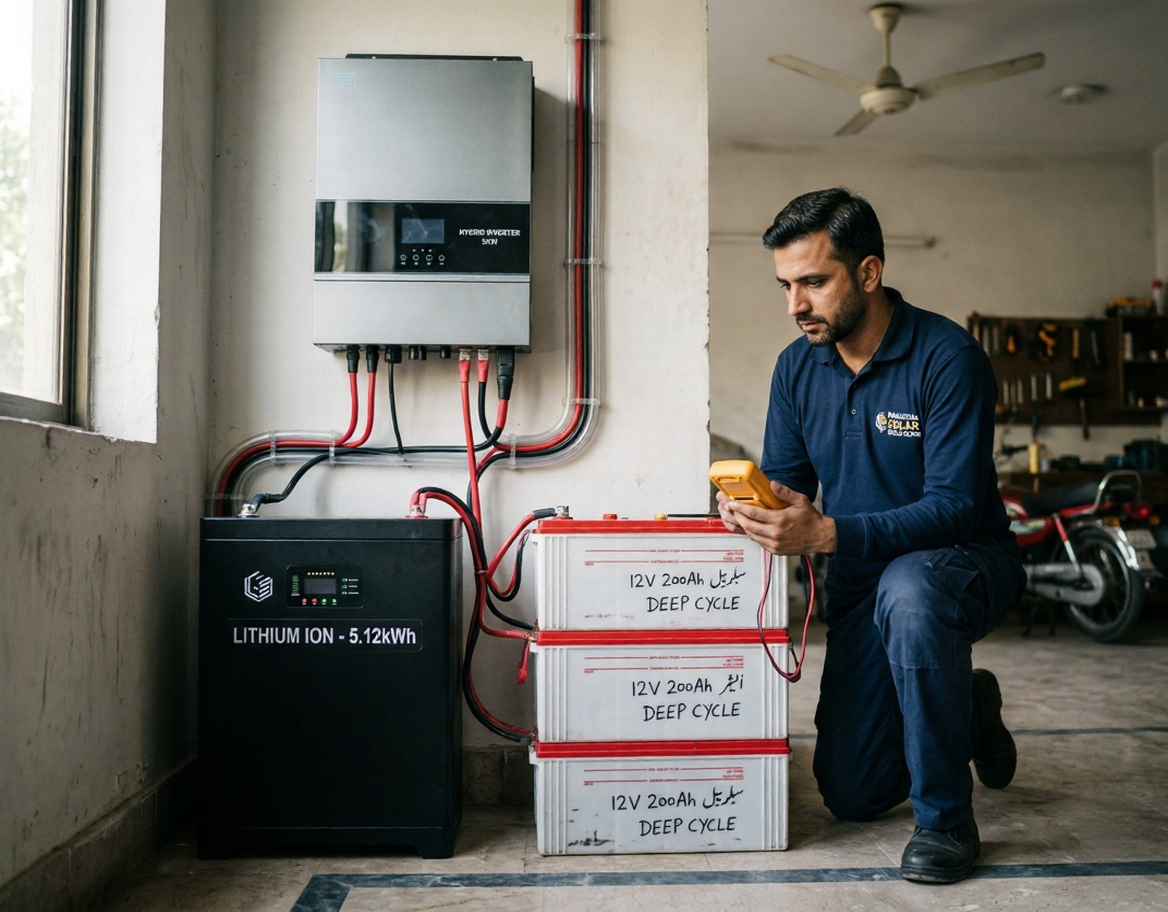
Lithium-Ion Batteries
Lithium systems usually include a Battery Management System.
If the temperature rises excessively, the BMS may:
- Reduce charging speed
- Limit discharge
- Shut down temporarily
If your lithium battery cuts off during peak summer, it may be protecting itself.
LiFePO4 Batteries
LiFePO4 offers stronger thermal stability compared to many lithium chemistries, making it more suitable for Pakistan when installed correctly.
However, even LiFePO4 loses cycle life when exposed to continuous extreme heat. Correct placement matters more than brand name.
How Extreme Heat in Pakistan Affects Solar Battery Performance
1. Heat Reduces Lifespan
A battery that lasts years in moderate climates may degrade much faster in 45°C conditions. You often notice this as shorter backup time after one or two summers.
2. Heat Lowers Charging Efficiency
In high temperatures:
- Lithium BMS may slow charging
- Lead-acid batteries experience higher gassing
- Inverters adjust charging profiles
If charging control is aggressive in hot weather, internal heat increases further. To understand charging behavior properly, read mppt technology guide in Pakistan.
3. Charging Creates More Heat Than Discharging
Most overheating issues occur during charging, not backup use.
Charging generates internal resistance heat. In a sealed cabinet or small room, temperature spikes quickly.
Real Pakistani Installation Mistakes That Cause Overheating
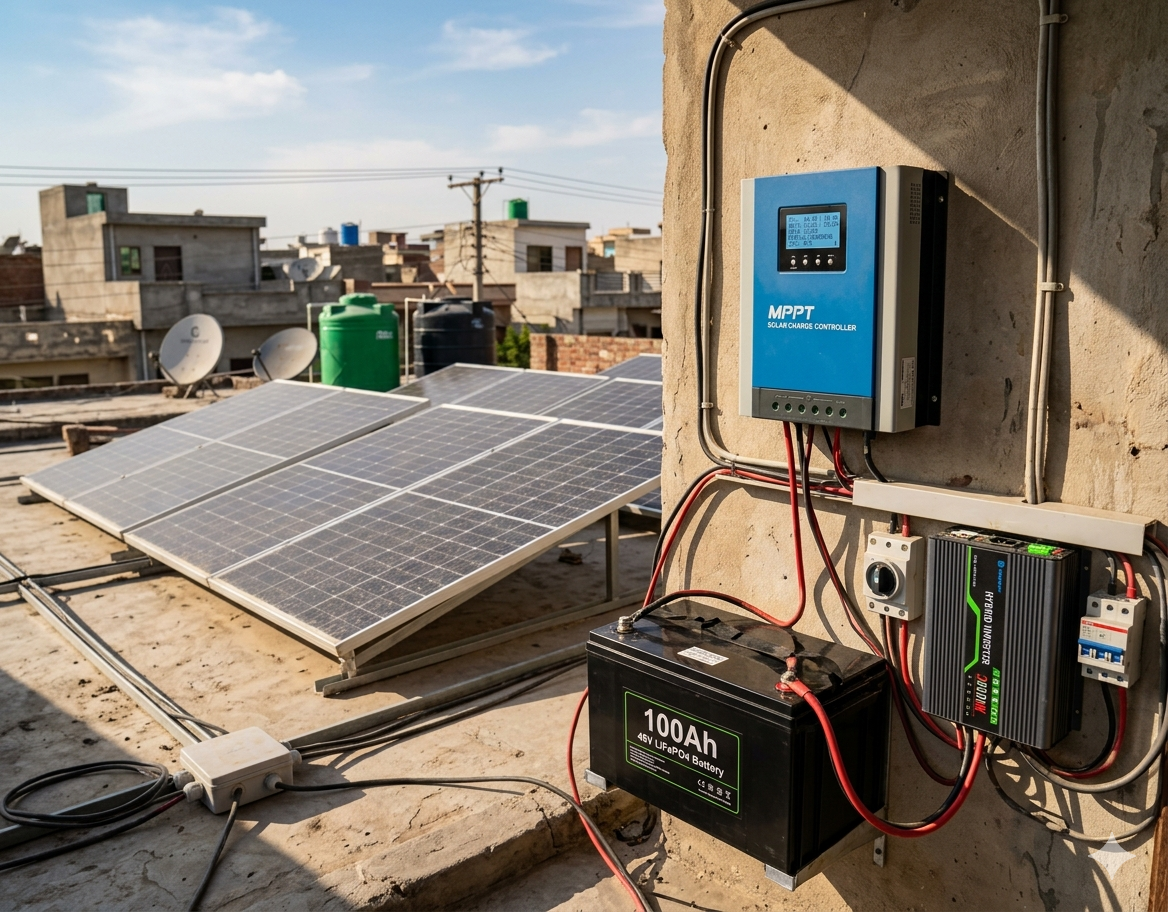
Rooftop Metal Cabinets
Metal cabinets under direct sunlight behave like ovens.
If an enclosure is necessary:
- Ensure ventilation openings
- Avoid direct sun exposure
- Provide airflow clearance
To avoid broader installation errors, read the top mistakes to avoid when installing rooftop solar in Pakistan.
Closed Utility Rooms
Small storage rooms with no airflow trap inverter exhaust heat. Ventilation is not optional. It is part of engineering.
Under-Stair Installations
Under-stair areas trap warm air and collect dust. Dust restricts airflow and increases corrosion risk. For climate-specific care guidance, read maintenance tips for solar systems in Pakistan’s climate.
How to Evaluate Battery Heat Resistance Before Buying
1. Read the Datasheet Properly
Look for:
- Charge temperature range
- Discharge temperature range
- Storage temperature range
- High-temperature cutoff behavior
If a seller cannot provide this, reconsider.
2. Match Tolerance to Usage Pattern
Heavy load shedding means frequent cycling.
Frequent cycles plus high heat accelerate aging. To manage cycle stress correctly, read the battery depth of discharge.
3. Check Warranty Conditions
Some warranties exclude damage caused by improper ventilation or extreme heat.
Installation quality affects warranty validity.
Practical Ways to Improve Solar Battery Heat Resistance in Pakistani Homes
Improve Ventilation
- Add upper and lower vents
- Leave space around the battery case
- Keep batteries away from the inverter exhaust
- Avoid sealed compartments
Even small airflow improvements reduce temperature significantly.
Avoid Direct Sun and Hot Surfaces
Place batteries on stable surfaces away from heated walls.
Shade alone is not enough. Airflow matters more.
Monitor Temperature in Peak Summer
Install a basic temperature sensor.
Check battery area temperature in June and July during peak afternoon heat.
Integrate Battery Backup Properly
Incorrect wiring and charging settings increase heat stress.
For a clean integration strategy, read how to integrate battery backup with your solar system in Pakistan.
Warning Signs of Solar Battery Overheating
- Rapid drop in backup time
- The battery case feels unusually hot
- Lithium temperature alarms
- Frequent charging pauses
- Lead-acid requires excessive water top-ups
- Swelling or bulging
- Terminal discoloration
Before blaming battery quality, fix airflow and charging settings.
Common Myths That Cause Early Battery Failure
Myth 1: Lithium cannot handle Pakistani heat.
Truth: Correct installation determines survival.
Myth 2: Tubular batteries are heat-proof.
Truth: Heat accelerates corrosion and water loss.
Myth 3: If it survived one summer, it will survive all summers.
Truth: Degradation is cumulative.
Myth 4: Maximum temperature rating means safe daily operation.
Truth: Maximum is a short-term limit, not an operating target.
Conclusion: Choose for Climate, Not Just Capacity
Battery temperature tolerance in Pakistan is not a minor technical detail. It directly determines lifespan, reliability, and warranty protection.
Do not choose storage only by amp-hour rating. Evaluate:
- Installation location
- Ventilation
- Charging control
- Summer peak temperature
Heat resistance is not only a battery feature. It is an installation outcome.
If you are still deciding whether storage makes financial sense in your case, read Battery Storage for Home Solar. When you plan for heat instead of ignoring it, your system survives summers, delivers stable backup, and protects your long-term investment.
Independent Power: Connect with Enon Traders Today!
Start your off-grid journey with Pakistan’s most reliable solar partner.
| Connect With Us | Action Link |
| Chat Instantly on WhatsApp | Get an off-grid system quote: Click to Chat Now! |
| Visit Our Website | View our off-grid inverters: Official Website |
| Call Our Experts | Design your custom micro-grid: Contact Page |