Inverter Compatibility with Batteries: A Practical Guide to Safe Battery Matching
March 30, 2026
NEPRA Net Metering Policy Pakistan 2026: Rules, Billing and Export Rates Explained
April 2, 2026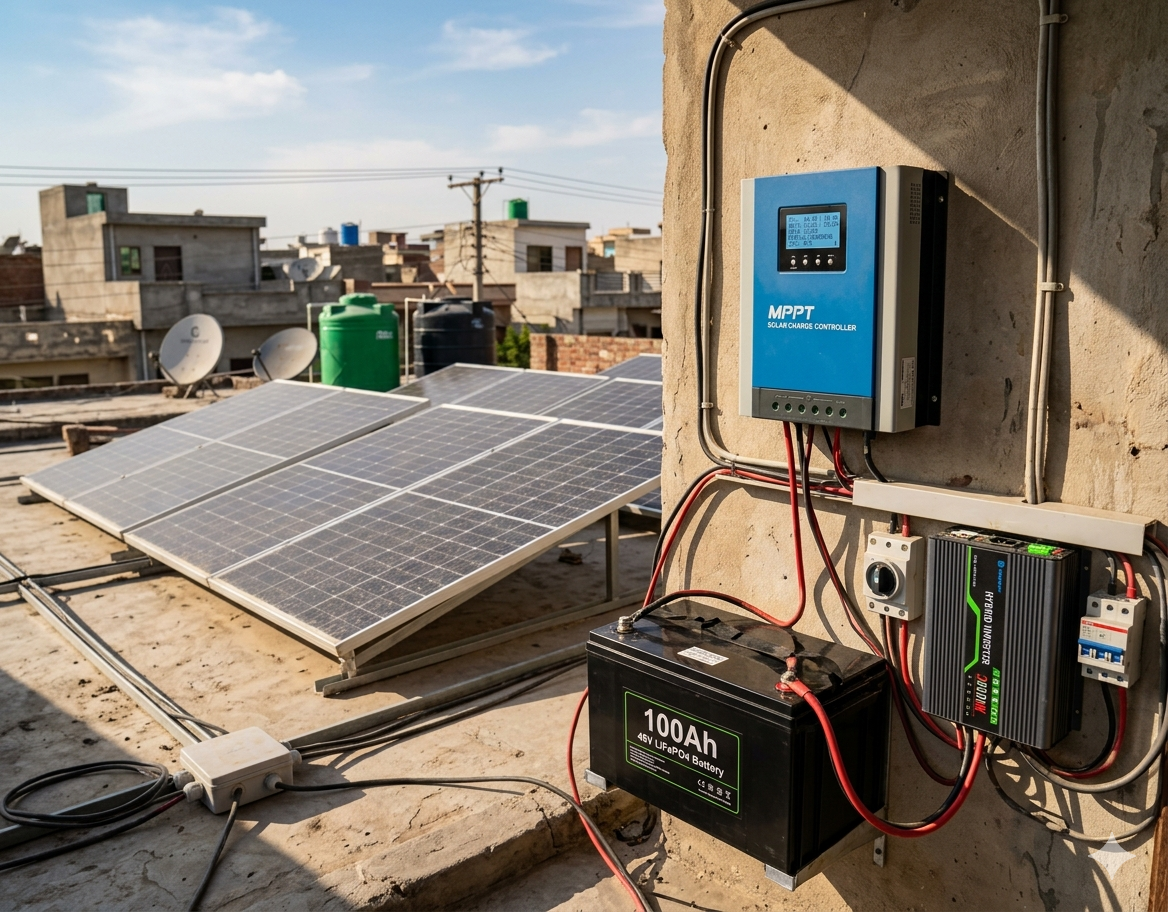
For many solar system owners in Pakistan, the MPPT charge controller is something they learn about only after they have put their solar system in place. Many of them even regret not using it sooner.
The truth is, however, quite simple: an MPPT charge controller is not just an accessory; it is an accessory that has a direct bearing on the electricity that your solar system generates, the efficiency of the batteries, and the lifespan of the solar system.
With the right knowledge of what an MPPT charge controller is, what it does, and what it is used for, however, many of these mistakes can be avoided, and the right solar regulator in Pakistan can be selected with confidence.
Understanding MPPT Charge Controllers in Pakistan
What Is an MPPT Charge Controller?
MPPT charge controller is an intelligent device that comes between your solar panels and battery. It is mainly used to get the maximum power that your solar panels are capable of producing and direct it to the battery efficiently.
It does not send power directly, but it manages the voltage and current levels in an ongoing process.
To put it in simpler terms, it helps your solar power system produce more power without the need to install additional solar panels.
MPPT vs PWM: Key Difference
A standard solar regulator, known as PWM, works in a basic way by connecting panels directly to the battery.
An MPPT controller works differently. It converts excess voltage into usable current, which increases overall efficiency and improves charging performance.
Quick Comparison
|
Feature |
MPPT Controller |
PWM Controller |
|
Efficiency |
High (15 to 30 percent more output) |
Low |
|
Charging Speed |
Fast and controlled |
Basic |
|
Performance in Heat |
Stable |
Drops significantly |
|
Cost |
Higher |
Lower |
|
Best Use |
Medium to large systems |
Small systems |
In Pakistan’s conditions, where heat, dust, and fluctuating sunlight are common, MPPT delivers noticeably better performance over time.
Why MPPT Charge Controllers Are Becoming Popular in Pakistan
Rising Electricity Costs and ROI Awareness
Electricity prices in Pakistan continue to increase. Homeowners now focus on maximizing solar output and reducing payback time.
If you already understand how to calculate the payback period for your home solar system in Pakistan, you know that higher efficiency directly improves return on investment.
Better Performance in Pakistan’s Climate
High temperatures and dust reduce solar panel efficiency. MPPT controllers adapt to these changes and maintain better output compared to basic regulators.
Growing Use of Batteries and Hybrid Systems
Modern solar systems increasingly include lithium batteries and hybrid inverters. These systems require intelligent charging control.
To understand whether storage is worth adding, explore battery storage for home solar. Is it worth it in Pakistan in 2026?
Key Benefits of an MPPT Charge Controller
Higher Energy Output from the Same Panels
MPPT controllers can increase energy production by 15 to 30 percent compared to PWM. This allows you to generate more electricity without expanding your system.
Faster and Controlled Battery Charging
MPPT uses multi-stage charging to safely and efficiently charge batteries. This becomes especially important during load shedding when faster charging is needed.
Better Performance in Low Sunlight
MPPT controllers can utilize low sunlight conditions, such as early morning or cloudy weather, where PWM systems often fail to perform efficiently.
Longer Battery Life and Protection
Battery damage is often caused by overcharging or improper charging cycles. MPPT controllers protect batteries and improve their lifespan.
If you want better battery care, read solar battery maintenance.
Support for Larger and Scalable Systems
MPPT controllers support higher voltage input, making them suitable for expanding systems and future upgrades.
If you are planning system growth, check how to size your home solar system in Pakistan.
MPPT Charge Controller Price in Pakistan
The price of MPPT charge controllers in Pakistan depends on capacity, brand, efficiency, and build quality.
Typical Price Range (2026)
|
Capacity |
Price Range (PKR) |
|
30A |
12,000 – 25,000 |
|
60A |
25,000 – 55,000 |
|
100A+ |
55,000 – 120,000 |
What Affects the Price?
Several factors influence pricing:
- Build quality and internal components
- Efficiency rating
- Protection features
- Brand reliability
Low-cost products often compromise performance. Some controllers are marketed as MPPT but operate like basic PWM devices, which reduces efficiency and damages system performance over time.
Market Trends in Pakistan
Prices of imported solar equipment fluctuate due to currency changes and supply conditions.
To understand market shifts, see imported solar modules and batteries.
How to Choose the Right MPPT Charge Controller in Pakistan
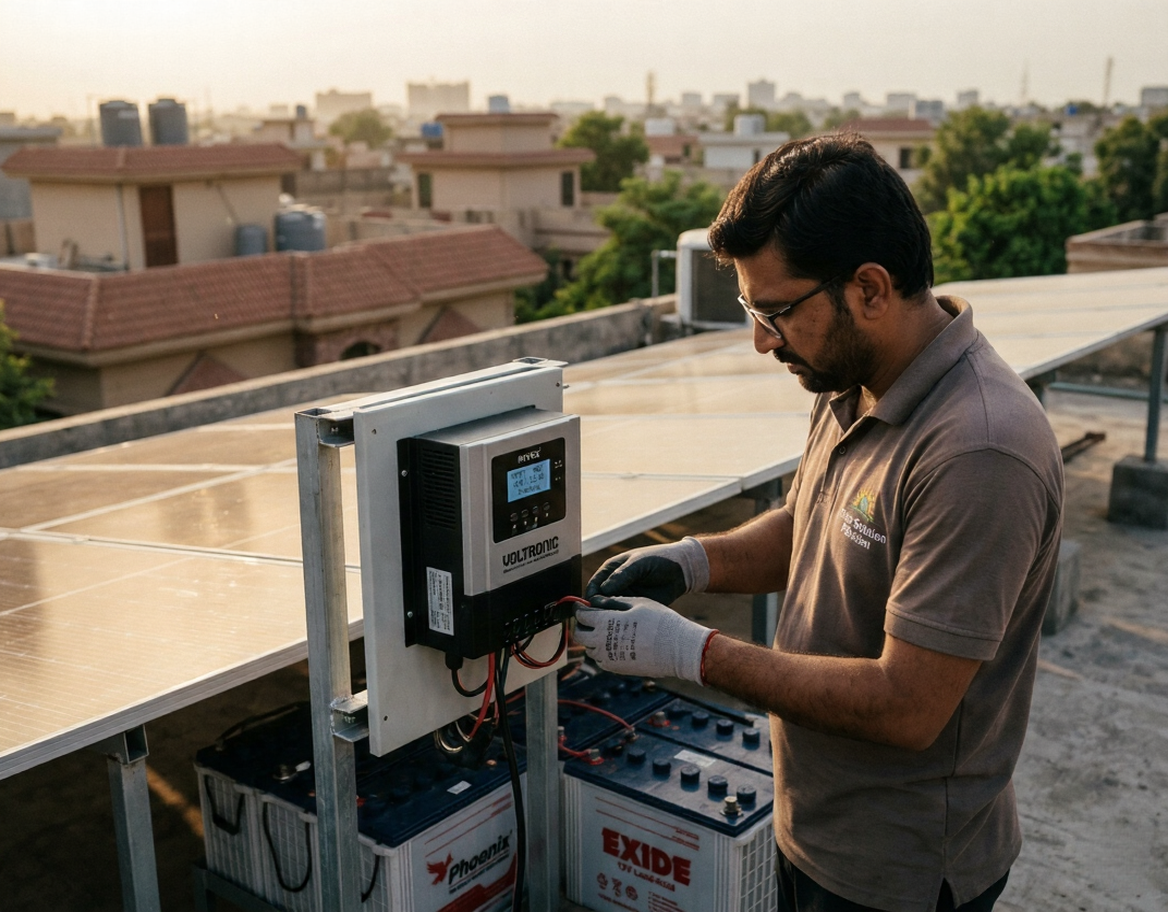
Match Controller Size with Your System
Your controller must match:
- Solar panel wattage
- Battery capacity
- System voltage
Incorrect sizing leads to inefficiency and potential system damage.
Choose According to Battery Type
Different batteries require different charging profiles. Selecting the wrong controller can reduce battery performance.
Understanding lithium vs tubular battery in Pakistan helps in making the right decision.
Select the Correct Voltage
Most systems operate at:
- 12V
- 24V
- 48V
Choosing the wrong voltage can reduce efficiency and affect system stability.
Focus on Practical Features
Choose controllers with:
- Overcharge protection
- Temperature compensation
- Clear display or monitoring system
Avoid unnecessary features that increase cost without adding value.
Common Mistakes to Avoid
Many users in Pakistan make these mistakes:
- Buying fake or low-quality MPPT controllers
- Ignoring system compatibility
- Choosing based only on price
- Not planning for future expansion
To avoid system-level issues, read the top mistakes to avoid when installing rooftop solar in Pakistan.
MPPT vs PWM: Is It Worth It in Pakistan?
Cost vs Long-Term Benefit
MPPT controllers cost more initially, but they deliver higher efficiency, better battery protection, and faster return on investment.
When MPPT Is the Right Choice
MPPT is ideal if:
- Your system is medium or large
- You use lithium batteries
- You want maximum efficiency
- You plan to expand your system
When a Basic Solar Regulator May Work
PWM controllers can still work for:
- Very small systems
- Limited budgets
However, long-term performance and efficiency remain lower.
Real-World Use Cases of MPPT in Pakistan
Residential Solar Systems
Homes benefit from faster charging, better backup, and improved system efficiency.
Off-Grid Installations
In rural areas, where every unit matters, MPPT ensures minimal energy loss and maximum utilization.
Agricultural and Industrial Applications
Tube wells and industrial systems require stable and efficient energy output.
That is why systems like solar-powered tube wells irrigation in Punjab are shifting toward efficient controllers.
Final Thoughts
An MPPT charge controller is one of the best upgrades that you can add to your solar power system in Pakistan. Not only does it increase your energy output, but it also extends the life of your batteries.
If your solar power system is small and basic, then a simple solar regulator might be all that is required. Nevertheless, when it comes to most solar power systems, using an MPPT charge controller is advantageous.
The trick is to ensure that you get a solar charge controller that is appropriate for your solar power system. The long-term benefits are what will yield the best results.
Independent Power: Connect with Enon Traders Today!
Start your off-grid journey with Pakistan’s most reliable solar partner.
| Connect With Us | Action Link |
| Chat Instantly on WhatsApp | Get an off-grid system quote: Click to Chat Now! |
| Visit Our Website | View our off-grid inverters: Official Website |
| Call Our Experts | Design your custom micro-grid: Contact Page |