Half-Cut Solar Panels in Pakistan: Do They Actually Reduce Power Loss Enough to Be Worth It?
April 29, 2026
Solar Combiner Box in Pakistan: What It Does, What to Buy, and Where to Find It
May 1, 2026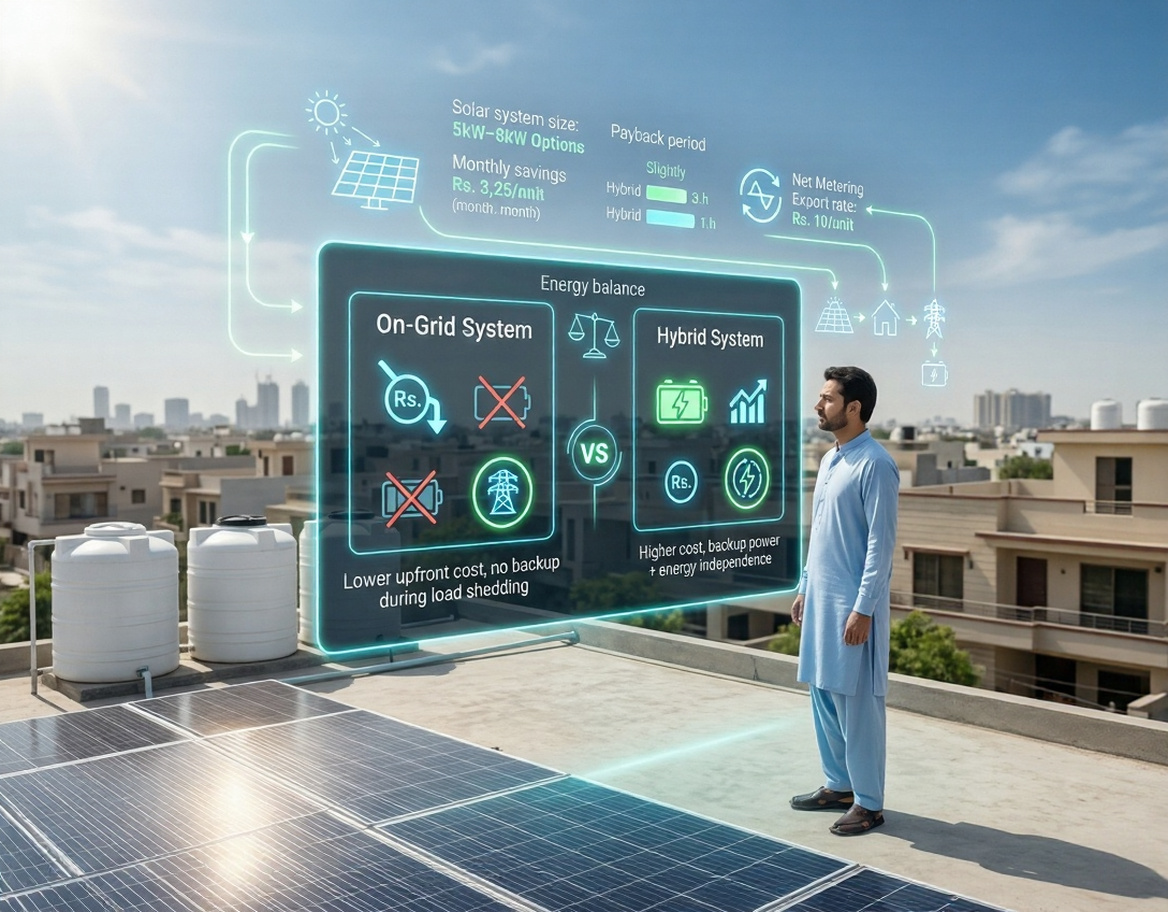
The power bills of Pakistan doubled from 2021 to 2024. Power outages increased to 8-10 hours in most urban areas. Therefore, countless residents took matters into their own hands because the government could not solve the issue.
Rooftop solar panels now cover the roofs in various urban centers of Pakistan, which is now among the top importers of solar panels in the world. If you wish to consider using rooftop solar panels, this guide will provide you with all the information required before investing a penny.
Why Rooftop Solar Has Become the Default Energy Decision in Pakistan
The electricity bill crisis that changed everything
When tariffs jumped 155% in three years, solar stopped being a luxury and became a necessity. High-consumption households were hit hardest because Pakistan uses a slab-based tariff system – the more units you consume, the higher the rate you pay per unit.
For families running two ACs through summer, their bills crossed Rs. 30,000-50,000 monthly. Solar offered a permanent exit from that cycle.
How cheap Chinese panels made the decision easier
In 2023, Chinese panel prices dropped over 40%. In 2024, they dropped further. Pakistan imported 17 gigawatts of solar panels in 2024 alone – more than any other country that year.
This flood of affordable panels brought per-watt prices down from Rs. 140 in 2022 to around Rs. 38-43 today for A-grade Tier-1 panels. The math suddenly worked for middle-class households.
Who is actually installing – homes, businesses, or both?
Everyone. Residential consumers install to escape slab tariffs. Businesses aim to cut operational costs and reduce diesel generator dependency. Textile exporters aim to meet international clean-energy requirements.
According to a 2023 Gallup Pakistan survey, roughly 15% of households – around 4 million homes – had already gone solar by that point. That number has grown significantly since.
How a Roof-Mounted Solar System Actually Works in Pakistan
A roof-mounted solar system converts sunlight into DC electricity through panels, which an inverter then converts to AC power for household use. The key decision is which type of system you install.
On-grid vs hybrid – which setup makes sense here
On-grid systems connect directly to WAPDA/DISCO. They are cheaper because they need no batteries. When your panels generate more than you use, excess electricity feeds back to the grid through net metering.
However, they shut down automatically during load shedding – a major drawback in Pakistan’s current grid environment.
Hybrid systems include battery storage. They keep your home running during outages, which makes them far more practical for most Pakistani households. They cost more upfront, but in a country where 6-8 hours of load shedding is still common in many areas, the backup value is real.
On-Grid vs Hybrid Solar Systems in Pakistan: Quick Comparison (2026)
|
Feature |
On-Grid System |
Hybrid System |
|
Initial Cost |
Lower |
Higher (due to batteries) |
|
Backup During Load Shedding |
No |
Yes |
|
Payback Period (2026) |
5–7 years |
4–5 years |
|
Net Metering Benefit |
High dependency |
Less dependency |
|
Ideal For |
Areas with stable electricity |
Areas with frequent load shedding |
|
Battery Required |
No |
Yes |
|
Long-Term Savings |
Moderate |
Higher (self-consumption) |
What net metering means for your bill – and what changed in the buyback rate
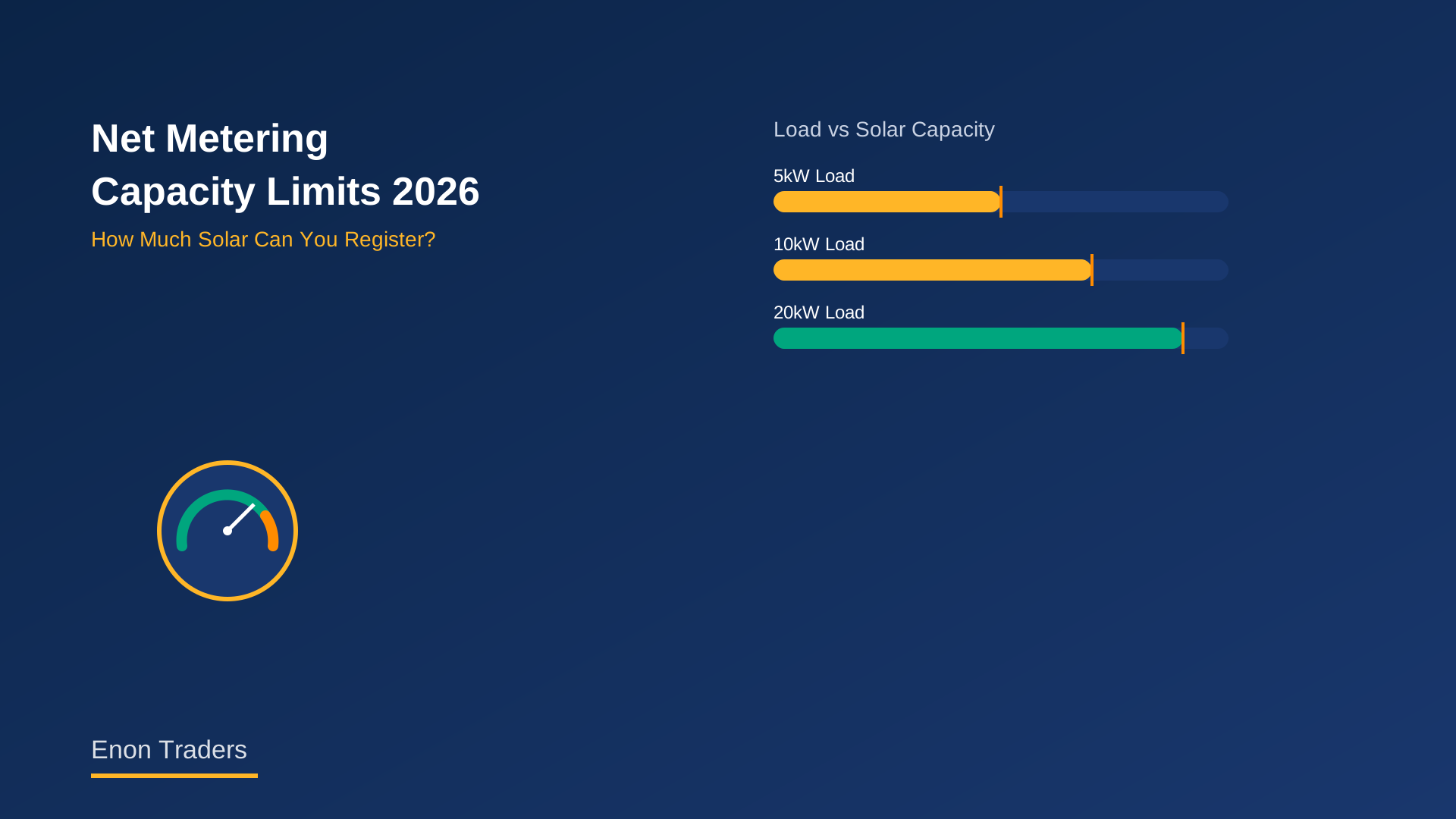
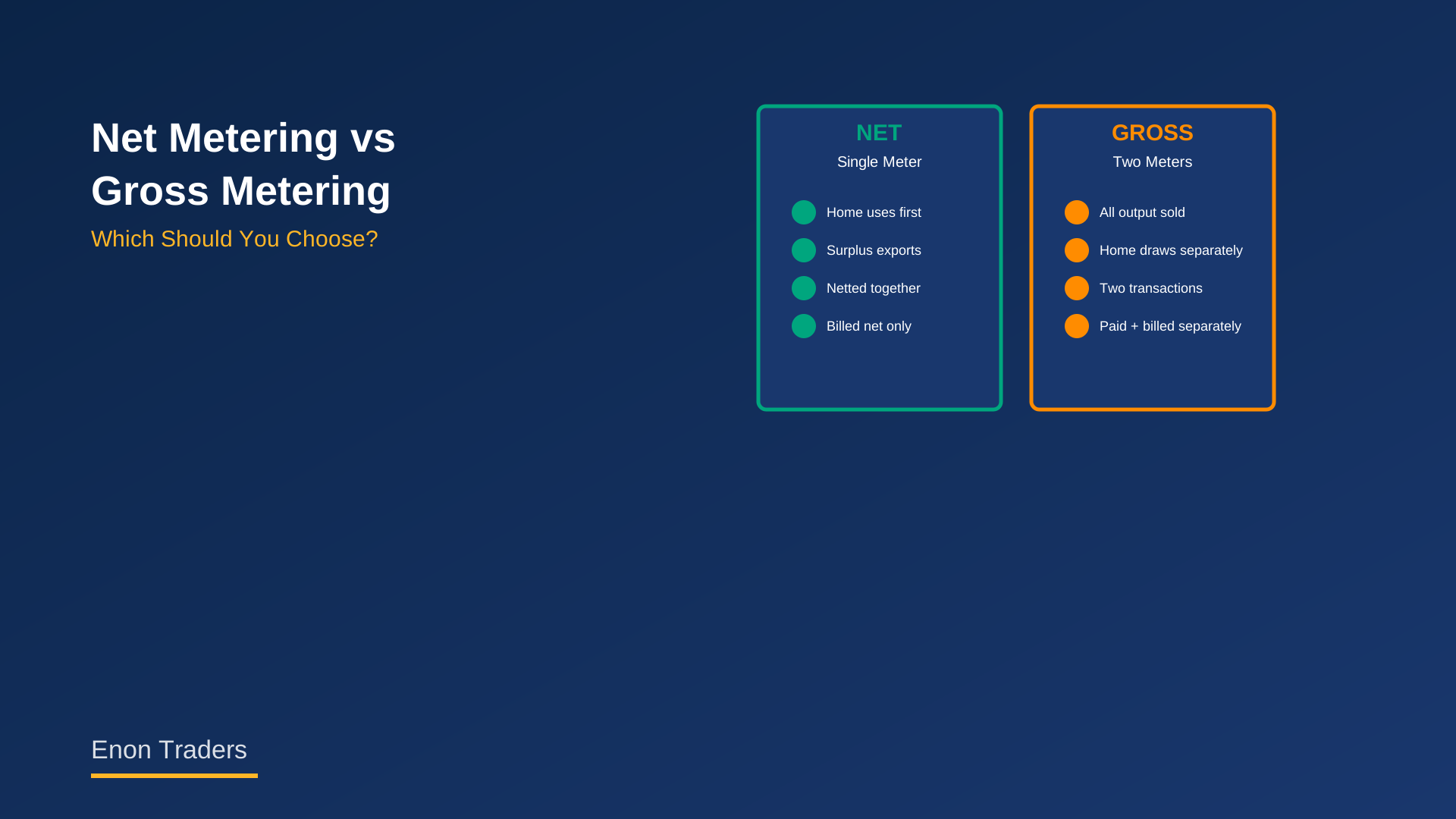
Net metering lets you sell surplus electricity back to the grid. Here is the critical update most competitors are not telling you: the government cut the export buyback rate from approximately Rs. 27/unit to Rs. 10/unit for new net-metering connections. That is a reduction of over 60%.
This single change significantly affects payback calculations for new on-grid installations. Read our detailed breakdown on the impact of changing the buyback export rate for solar in Pakistan before finalizing your system type.
What Size System Do You Actually Need?
Most vendors quote system sizes without explaining how to arrive at the right number yourself. Here is how to do it.
Matching system size to your monthly units consumed
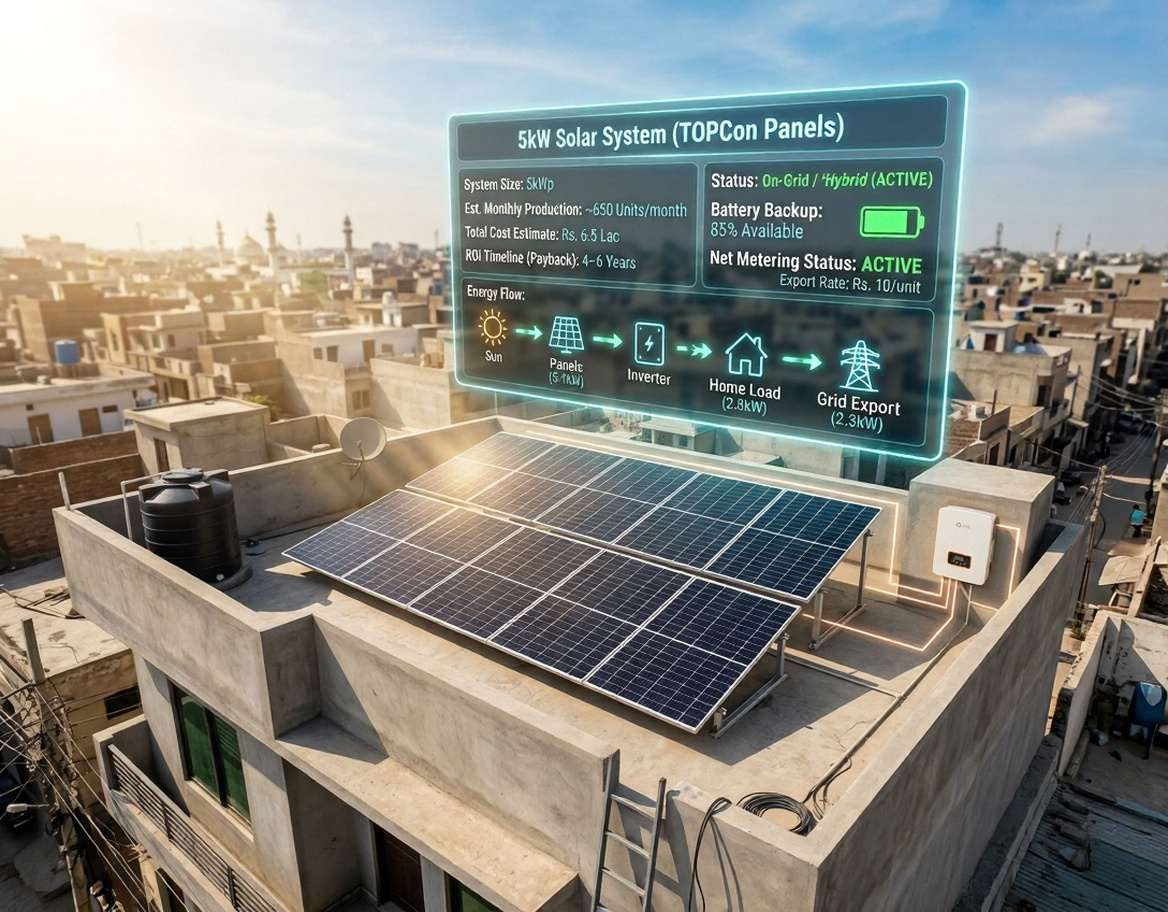
Look at your last three electricity bills. Find your average monthly unit consumption. Divide that number by 130 — that is a reasonable estimate of units a 1kW system produces per month in Pakistan’s average sun conditions (around 5.3 peak sun hours daily).
Example: If your home consumes 650 units/month, you need approximately a 5kW system (650 / 130 = 5).
For a more precise calculation based on your actual appliance load, use our step-by-step home solar system sizing guide.
Quick reference: system sizes explained
|
System Size |
Ideal Monthly Consumption |
Typical Household Profile |
Approx. Total Cost (2026) |
|
3kW |
Up to 300 units |
Small flat, basic load |
Rs. 3.5 – 4.5 lac |
|
5kW |
400–600 units |
Mid-size home, 1 AC |
Rs. 5.5 – 7 lac |
|
8kW |
700–900 units |
Larger home, 2 ACs |
Rs. 8 – 10 lac |
|
10kW |
1000+ units |
Large home or small business |
Rs. 10 – 13 lac |
Note: Hybrid systems with battery storage add 30-50% to these costs.
Rooftop Solar Panel Costs in Pakistan (2026 Prices)
Per-watt pricing and what moves it up or down
A-grade Tier-1 panels from brands like Longi, Jinko, Canadian Solar, and JA Solar are currently priced between Rs. 38-43 per watt. What moves the price:
- Panel technology: N-Type TOPCon panels cost slightly more than older P-Type but offer better efficiency and lower heat degradation
- Dollar rate: Since all panels are imported, PKR/USD fluctuations directly affect prices
- Grade: A-grade documented panels carry a full warranty; B-grade panels are cheaper but riskier
Before purchasing, review our guide on A-grade vs B-grade solar panels to understand exactly what you are paying for.
Full system cost breakdown
A complete rooftop solar installation includes more than just panels:
- Panels: Rs. 38-43/watt (Tier-1, A-grade)
- Inverter: Rs. 60,000-200,000+ depending on type and capacity
- Mounting structure: Rs. 5,000-7,000 per panel for elevated structures
- Wiring, breakers, DB box: Rs. 30,000-60,000
- Installation labour: Rs. 20,000-50,000
- Net metering application: Rs. 15,000-35,000 (via installer)
How long before the system pays for itself
With the old Rs. 27/unit export rate, payback was genuinely 3–4 years for on-grid systems. With the new Rs. 10/unit rate, on-grid payback for new connections stretches to 5–7 years, depending on your consumption pattern and location.
Hybrid systems with a self-consumption focus can still hit 4-5 years because you are saving on purchased units rather than earning on exported ones. Use our solar ROI calculator guide to run your specific numbers.
Choosing the Right Panels for Pakistani Rooftops
Panel technology that holds up in extreme heat
Pakistan’s summers regularly exceed 40°C. Standard panels lose output as temperature rises – this is called the temperature coefficient. N-Type TOPCon panels perform better in high heat than older P-Type panels, making them the smarter long-term choice for Punjab and Sindh climates. Learn more about N-type solar panels in Pakistan and why the technology matters here.
Brands with reliable supply chains and warranty support
The most trusted brands with genuine warranty infrastructure in Pakistan currently include:
- Longi (HiMo 7 series) – widest distribution, strong after-sales presence
- Jinko (Tiger Neo series) – consistent quality, good availability
- Canadian Solar (TOPCon series) – strong for both commercial and residential
- JA Solar (N-Type bifacial) – competitive pricing with solid efficiency
Tier-1 is a marketing term, not an official certification. What actually matters is whether the panel is documented, whether the brand has a local warranty claim process, and whether your installer can verify authenticity. Check our genuine solar panel identification guide before you buy.
What to Sort Out Before Installation Day
Roof condition, orientation, and shade
Your installer should physically assess three things:
- Orientation: South-facing roofs generate the most energy in Pakistan. East or west-facing reduces output by 15–20%.
- Shading: Overhead water tanks (pani ki tanki), parapets, and neighbouring buildings cause partial shading that disproportionately reduces output — not just from the shaded panel, but from the entire string it is connected to.
- Structural load: A standard 585W panel weighs around 28–30kg. Add the mounting structure, and you are looking at 35–45kg per panel. Most Pakistani RCC rooftops handle this comfortably, but older or poorly constructed roofs need a structural check. See our guide on rooftop load-bearing capacity for solar for specifics.
Net metering registration – what it requires
To qualify for net metering in Pakistan, you need:
- Minimum 1kW system (residential)
- A licensed AEDB-registered installer
- An on-grid or hybrid inverter approved by your DISCO
- A bi-directional smart meter installed by DISCO
The application process runs through your DISCO and typically takes 4–12 weeks. Your installer should handle most of this paperwork. See the full net metering application process guide for a step-by-step breakdown.
Questions to ask before signing with any installer
- Are you AEDB-registered?
- Do you provide a written workmanship warranty, and for how long?
- Will you handle the net metering application or charge separately?
- Can you show me completed installations I can visit?
- Are the panels you supply documented with original datasheets?
Is 2026 a Good Time to Install, or Should You Wait?
The short answer is yes – 2026 remains a strong year to install. Panel prices have stabilized in the Rs. 38-43/watt range after years of decline. Import duty exemptions that expired mid-2025 have caused some modest price adjustments, but not a dramatic reversal. The bigger risk is waiting: electricity tariffs continue to rise, and the net metering export rate for new connections is unlikely to improve. Every month you delay is another month of high WAPDA bills.
If load shedding affects your area, go hybrid. If you live in a stable urban grid zone and your primary goal is bill reduction, on-grid works – just recalculate your payback using the current Rs. 10/unit export rate, not the old figures most guides still quote.
The decision is no longer complicated. The technology is proven, the equipment is widely available, and millions of Pakistanis have already made it work. The main thing left is making sure you do it right.
Independent Power: Connect with Enon Traders Today!
Start your off-grid journey with Pakistan’s most reliable solar partner.
| Connect With Us | Action Link |
| Chat Instantly on WhatsApp | Get an off-grid system quote: Click to Chat Now! |
| Visit Our Website | View our off-grid inverters: Official Website |
| Call Our Experts | Design your custom micro-grid: Contact Page |