Solar MC4 Connector Price in Pakistan (2026)
February 18, 2026
Battery Backup Calculation in Pakistan: How to Calculate Backup Hours Accurately
February 20, 2026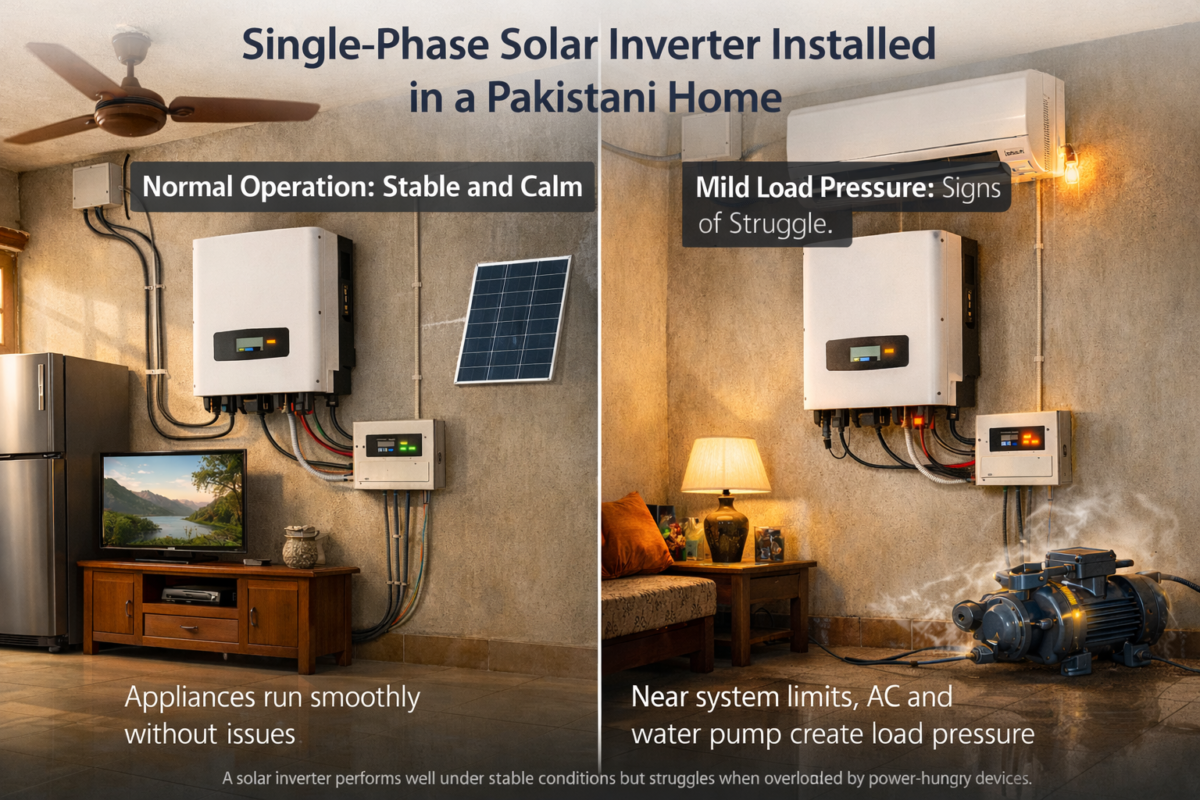
Choosing a single-phase inverter for a home solar system in Pakistan often feels straightforward. Thousands of Pakistani homes install single-phase inverters every year. Many run smoothly. Some start tripping within months. The difference is rarely the brand. It is the design.
A single-phase inverter works very well in many homes. It also fails silently in others. The difference does not depend on branding or inverter size alone. It depends on how electricity behaves inside the home and how Pakistan’s grid reacts to solar export and load changes.
This article explains how a single-phase inverter for home use actually behaves in Pakistan. It covers where it performs well, where it struggles, and how homeowners can decide with confidence before installation.
Understanding Single-Phase Power in Pakistani Homes
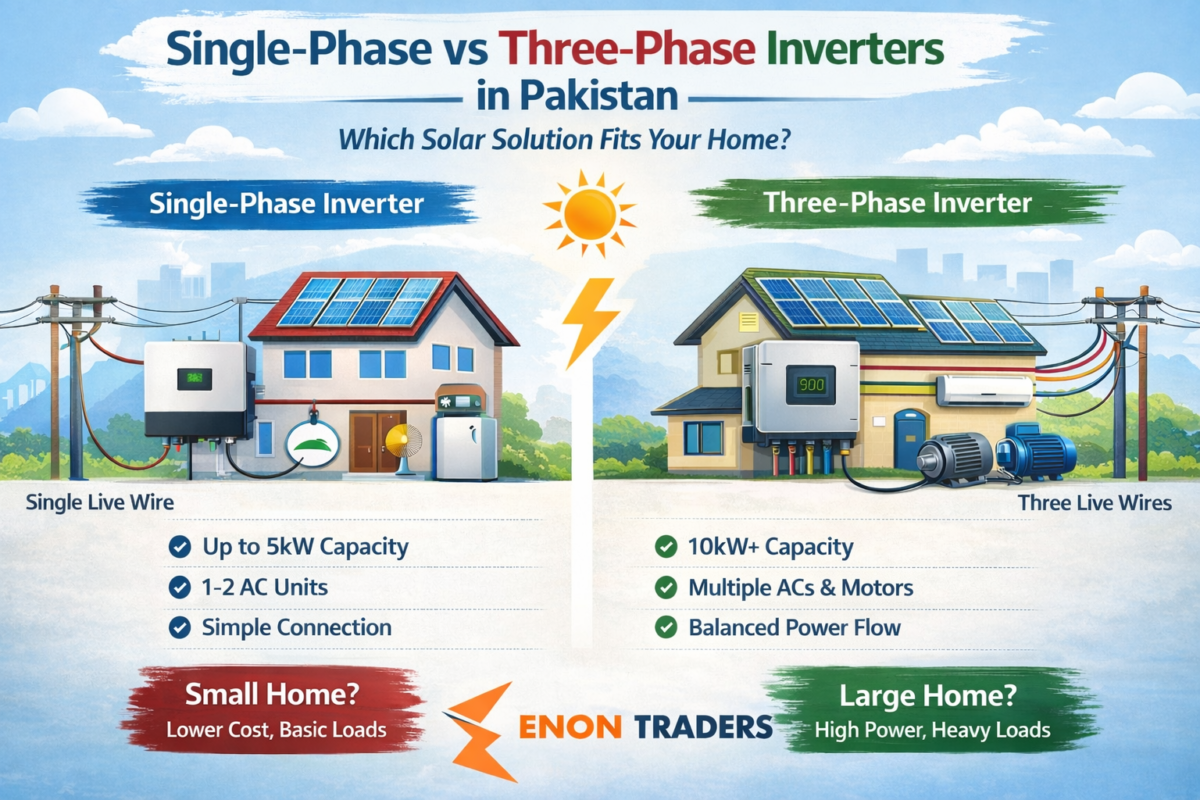
Most homes in Pakistan receive single-phase electricity. Power flows through one live wire and one neutral wire. This setup works well for basic household needs such as lights, fans, televisions, refrigerators, and small appliances.
Problems begin when homeowners confuse phase type with system strength. A large inverter installed on a single-phase connection still faces phase limits. Power capacity and electrical phase are not the same thing.
In areas with unstable voltage or high appliance usage, single-phase systems feel stress faster. Many homes run smoothly for months and then develop inverter tripping, voltage alarms, or performance drops during peak summer.
What Is a Single-Phase Inverter for Home Use
A single-phase inverter converts DC electricity from solar panels into AC electricity that matches a single-phase grid connection. It synchronizes with the grid and supplies power directly to household loads.
Many people refer to it as a residential inverter. This label often creates false confidence. Residential describes usage scale, not electrical behaviour. A home can still demand power patterns that exceed what a single-phase inverter handles comfortably.
The inverter does not fail because it is single-phase. It fails because the system design ignores real load behaviour.
When a Single-Phase Inverter Works Well in Pakistan
Single-phase inverters perform best in small to medium homes with stable and predictable loads. These homes usually consume most of their solar power during the day.
Daytime usage reduces export stress. Less power pushed into the grid means fewer voltage rise issues. Homes with steady daytime activity benefit the most.
Single-phase systems also perform better in areas with relatively stable grid voltage and limited motor loads.
Load Types That Are Usually Safe
Lighting, fans, televisions, laptops, routers, and refrigerators work reliably. Moderate air conditioner use also works if the inverter and wiring match the load properly. Homes that run cooling mainly during daylight hours see better stability.
Trouble starts when load types change or expand without planning.
Common Limitations Homeowners Discover Too Late
Many homeowners report that the system worked fine in the beginning. Problems appear during peak summer heat or after adding new appliances.
One frequent cause is poor installation quality. Weak wiring, improper grounding, and missing protection devices place extra stress on the inverter. These mistakes are common and avoidable. Examples are covered in the rooftop solar installation mistakes.
Voltage fluctuation also plays a major role. Pakistan’s grid experiences regular swings. Single-phase inverters feel these changes more sharply, especially when exporting power.
Motor Loads and Starting Surges
Air conditioners, water pumps, and compressors draw high current when starting. These surges strain single-phase inverters. Repeated stress causes nuisance tripping or gradual component damage.
Homeowners often blame the inverter brand when the real issue is load behaviour.
Real Example: 1.5 Ton AC Startup Load in Pakistan
A standard 1.5 ton inverter air conditioner in Pakistan typically runs at:
• 1.2 kW to 1.6 kW during normal cooling
• But at startup, it can briefly demand 3.5 kW to 4 kW
This means a home run:
• One 1.5 ton AC
• A refrigerator
• Lights and fans
Can momentarily cross 5 kW even if the running load looks safe at 2.5 to 3 kW.
If two AC units start together, the startup surge can exceed 6 to 7 kW for a few seconds.
Most 5 kW single-phase inverters allow a short overload of 120% to 150% for a few seconds. If the surge exceeds that window, the inverter trips to protect itself.
This is why many homeowners say:
“The inverter shuts off when both ACs start.”
The issue is not brand failure. It is a surge behaviour.
Single-Phase Inverter and Net Metering Reality
Net metering approval creates confidence, but approval does not guarantee smooth operation. Single-phase inverters face export limits that many homeowners never consider.
When grid voltage rises during export hours, inverters reduce output or disconnect to protect the grid. This frustrates users who expect a full export. Policy changes have also altered export economics. Understanding the solar export rate impact in Pakistan helps homeowners plan realistically.
Export power does not equal usable power. Homes designed around self-consumption enjoy far better stability.
Signs a Home May Outgrow a Single-Phase Inverter
Homes rarely stay the same. Additional rooms, extra air conditioners, and new appliances change load behaviour over time. The inverter does not adapt automatically.
Battery integration also alters power flow. Charging and discharging patterns increase the inverter workload. Before planning storage, homeowners should review solar battery storage in Pakistan.
Quick Decision Guide: Is a single-phase inverter Right for your Home?
| Feature | Single-Phase Inverter | Three-Phase Inverter |
|---|---|---|
| Grid Connection Type | One live wire + neutral | Three live wires + neutral |
| Typical Home Use | Small to medium homes | Large homes, commercial loads |
| Ideal Load Size | Up to 5–8 kW stable usage | 10 kW+ distributed load |
| Motor Load Handling | Limited surge handling | Better load distribution |
| AC Units | 1–2 AC units are manageable | Multiple ACs stable |
| Net Metering Export | Often capped at around 3–5 kW | Higher export capacity allowed |
| Voltage Stability | More sensitive to voltage rise | More balanced voltage distribution |
| Upgrade Cost | Lower initial cost | Higher installation cost |
Three-phase systems distribute power across three lines. This reduces stress on each line and improves motor startup stability. Homes with multiple air conditioners, heavy pumps, or future expansion plans benefit more from three-phase architecture.
Single-phase systems remain ideal for most average Pakistani households with moderate loads and strong daytime self-consumption.
Choosing the phase type should follow the electrical assessment, not just inverter pricing.
It Works Now Versus It Will Keep Working
Short-term performance often hides long-term risk. Inverters operating near their limits during heat waves experience accelerated wear.
Upgrading later costs more than planning correctly from the start.
How to Decide If a Single-Phase Inverter Is Right for Your Home
Good decisions follow structure, not assumptions.
Step 1: Understand Your Real Electrical Load
Connected load differs from actual usage. Peak load matters more than average consumption. Starting loads often surprise homeowners.
Using a solar panel size calculator helps visualize realistic demand.
Step 2: Plan for Future Growth
Ask simple questions. Will you add another air conditioner? Will battery backup become necessary? Honest answers protect future performance.
Step 3: Match the Inverter to Local Grid Behaviour
Some areas experience frequent voltage problems. Knowing local grid behaviour helps avoid constant tripping. Reading about grid challenges from rooftop solar provides useful context.
Common Myths About Single-Phase Inverters in Pakistan
A common belief says a bigger inverter solves all problems. Phase limitations remain regardless of size. Another myth suggests residential inverters are trouble-free. Real-world performance depends on planning, not labels. Equipment quality also matters. Cheap components magnify performance issues.
Best solar equipment in Pakistan helps homeowners avoid silent failures. Efficient behaviour matters as well. Not all inverters handle heat and voltage stress equally. Reviewing inverter efficiency ratings clarifies performance differences.
Final Thoughts: Choosing Confidence Over Assumptions
Single-phase inverters suit many Pakistani homes. They work best with stable loads, moderate usage, and strong self-consumption. They struggle with heavy motor loads, export heavy designs, and rapid load growth. The best solar systems feel uneventful. They run quietly without constant alerts. Achieving that requires planning rather than guesswork.
A single-phase inverter for home use in Pakistan is neither right nor wrong by default. It fits some homes perfectly and frustrates others. The difference lies in understanding limits early. Pakistan’s grid conditions, policy changes, and climate stress demand informed planning. Decisions based on clarity outperform decisions based on assumptions.
When homeowners design systems with honesty and foresight, reliability follows. That confidence lasts far longer than any marketing promise.
Independent Power: Connect with Enon Traders Today!
Start your off-grid journey with Pakistan’s most reliable solar partner.
| Connect With Us | Action Link |
| Chat Instantly on WhatsApp | Get an off-grid system quote: Click to Chat Now! |
| Visit Our Website | View our off-grid inverters: Official Website |
| Call Our Experts | Design your custom micro-grid: Contact Page |