Solar DC Cables in Pakistan: A Clear, Practical Guide for Real Installations
February 16, 2026
Solar MC4 Connector Price in Pakistan (2026)
February 18, 2026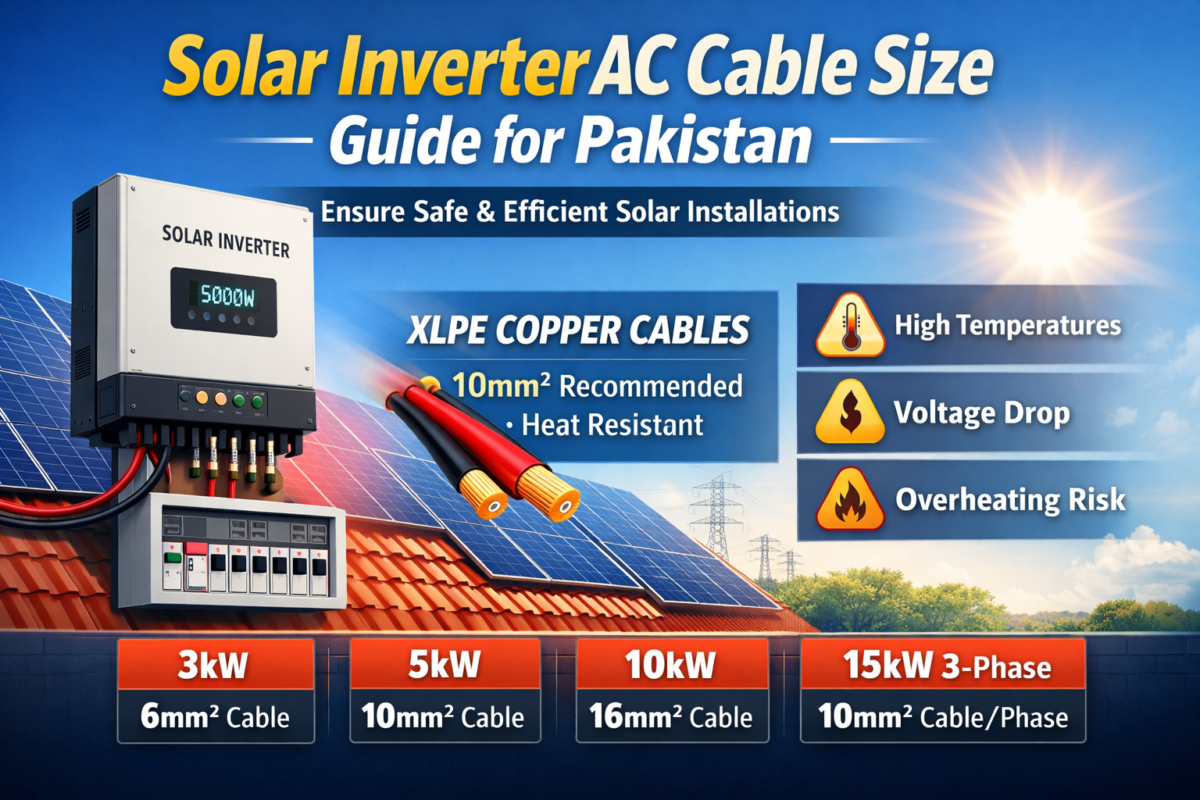
When homeowners install solar panels, most attention goes to the inverter brand and system capacity. Almost nobody seriously evaluates the AC cable connecting the inverter to the distribution board.
That cable carries the full output current of your inverter every single day.
In Pakistan, rooftop temperatures regularly exceed 50°C in summer. Inside conduits, cable temperatures rise even higher. If the inverter AC cable is undersized or incorrectly selected, the system may experience:
- Overheating
• Voltage drop
• Breaker tripping
• Grid voltage errors
• Inverter shutdown
• Long-term insulation damage
• Fire risk
AC cable sizing is not a minor detail. It is a core electrical engineering requirement.
This guide explains how to correctly calculate solar inverter AC cable size in Pakistan, how temperature derating affects selection, how to control voltage drop, and how to choose safe, long-term, reliable wiring.
Quick Answer
For a 5kW inverter in Pakistan, which produces approximately 22 amps at 230V, the minimum recommended AC cable size is 6mm² copper. However, due to high ambient temperatures and voltage drop considerations, 10mm² copper is strongly recommended for long-term safety.
What Is the AC Cable in a Solar Inverter System?
Solar panels generate DC electricity. The inverter converts DC into AC. That AC power must travel safely from the inverter output to the distribution board or changeover panel.
The AC cable:
- Carries continuous inverter output current
• Operates under full load for long hours
• Must withstand high temperature
• Must align with breaker rating
• Must limit voltage drop below 2-3%
Before calculating cable size, always confirm your inverter capacity properly. If system sizing is incorrect, cable calculation will also be wrong.
For a complete sizing walkthrough, review the step-by-step guide to sizing your home solar system in Pakistan. Correct system sizing ensures safe wiring calculations.
Why AC Cable Size Matters More Than Most Installers Admit
In many local installations, standard house wiring such as 7/29 is used for inverter output without proper current calculation.
It may function initially.
Problems appear during peak summer when load and temperature rise together.
Common failure signs:
- Breaker trips under full sunlight
• Inverter grid voltage high errors
• Warm cable insulation
• Burning smell near DB
• Terminal discoloration
Undersized cable increases electrical resistance. Increased resistance raises the voltage drop. The inverter may increase output voltage to compensate, triggering shutdown.
System performance is not determined only by the inverter brand. It is equally determined by proper wiring. To better understand inverter behavior and stability limits, review: Inverter Efficiency Ratings Explained. Electrical stability depends on correct cable sizing.
How to Calculate AC Cable Size for Inverter Output
Step 1: Identify Inverter Power
Common residential sizes in Pakistan:
- 3kW
• 5kW
• 10kW
• 15kW
Step 2: Calculate Output Current
Formula:
Current (Amps) = Power (Watts) ÷ Voltage (230V)
Examples:
3kW to 3000 ÷ 230 ≈ 13A
5kW to 5000 ÷ 230 ≈ 22A
10kW to 10000 ÷ 230 ≈ 43-45A
This is the continuous output current under full sunlight.
Step 3: Apply Temperature Derating
IEC 60364 ampacity tables assume 30°C ambient temperature.
In Pakistan, the practical rooftop ambient temperature can reach 45-50°C.
High temperature reduces current carrying capacity.
Typical derating factor at 45°C: 0.87
Meaning: A cable rated for 50A at 30°C may safely carry only ~43A at 45°C.
This is why professional installers oversize one level.
Step 4: Select Cable Based on Ampacity + Derating + Distance
Recommended Copper Cable Sizes (Pakistan Climate Conditions)
|
Inverter |
Output Current |
Minimum |
Recommended |
|
3kW |
13-15A |
4mm² |
6mm² |
|
5kW |
21-23A |
6mm² |
10mm² |
|
10kW |
43-45A |
10mm² |
16mm² |
|
15kW 3-Phase |
22A per phase |
6mm² |
10mm² |
Oversizing improves stability and reduces voltage drop.
Voltage Drop: The Most Ignored Factor in Pakistan
Voltage drop increases with distance.
Longer cable = higher resistance
Higher resistance = energy loss
Acceptable inverter AC voltage drop should remain below 2–3%.
Voltage drop formula:
Voltage Drop = (2 × Length × Current × Resistance) ÷ 1000
If the inverter is more than 15-20 meters away, increase the cable size by one level.
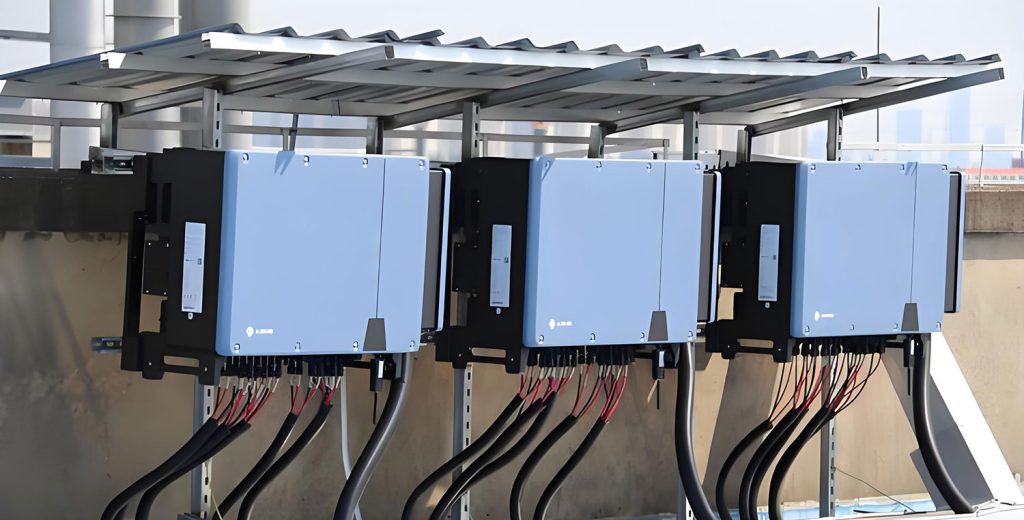
For longer multi-phase runs, heavy copper multi-core cable is required, such as 4 Core 16mm Copper Full Gauge Heavy Duty Cable. Ignoring distance is one of the most common reasons for summer inverter trips.
Copper vs Aluminum AC Cable for Solar Inverter
Copper is strongly recommended for residential systems in Pakistan.
Advantages:
- Lower electrical resistance
• Better thermal performance
• Stronger terminations
• Reduced voltage drop
• Better corrosion resistance
Aluminum requires a larger cross-section and careful lug termination. Poor terminations increase heating risk.
Insulation Type: PVC vs XLPE
This is rarely discussed but critical.
PVC insulation:
• Lower temperature rating (70°C typical)
• Suitable for light duty
XLPE insulation:
• Higher temperature rating (90°C typical)
• Better thermal endurance
• Lower aging rate
In high-temperature Pakistani installations, XLPE-insulated copper cable is preferred for inverter output lines.
Three-Phase Inverter Cable Considerations
For systems like: Inverex Nitrox 15kW 3-Phase On-Grid Solar Inverter.
Three-phase output must:
- Balance load across phases
• Use equal conductor sizing
• Include properly sized neutral
• Include an earth conductor
Never downsize neutral conductors in inverter systems.
Grounding and Protection
Proper earthing protects inverter electronics and appliances.
Recommended grounding conductor: Bare Copper 10mm² Pure Copper Earth Conductor. Breaker rating must match cable ampacity.
For three-phase systems: Tomzn 4 Pole 63A Circuit Breaker. Protection alignment prevents overload damage.
Common Cable Sizing Mistakes in Pakistan
- Using 7/29 house wire for a 5kW inverter
• Ignoring temperature derating
• Not accounting for cable length
• Loose termination screws
• No post-installation tightening
• Using aluminum lugs on copper cable
Heat causes expansion. Loose terminals increase resistance and spark risk.
Routine inspection is essential. For maintenance guidance, review: maintenance tips for solar systems in Pakistan’s climate. Preventive maintenance extends system life.
When Should You Upsize AC Cable?
Upsizing is recommended if:
- The inverter is more than 20 meters from the DB
• You plan to upgrade the inverter later
• You are installing a hybrid inverter
• You will add battery backup
Battery integration changes load behavior and surge patterns. Learn more here: guide to integrating battery backup with your solar system in Pakistan. Planning avoids rewiring costs.
Final Engineering Recommendation
Solar AC cable selection must consider:
- Continuous inverter output current
• Ambient temperature derating
• Cable length and voltage drop
• Insulation type
• Breaker compatibility
• Grounding system
• Future expansion
Panels and inverters attract attention. Wiring determines long-term stability. Correct cable sizing prevents voltage instability, nuisance trips, overheating, and long-term insulation failure.
A properly engineered solar system is built not only on quality components but on correct electrical calculations aligned with international standards and Pakistani climate realities. Choose cable size based on engineering logic, not guesswork.
Independent Power: Connect with Enon Traders Today!
Start your off-grid journey with Pakistan’s most reliable solar partner.
| Connect With Us | Action Link |
| Chat Instantly on WhatsApp | Get an off-grid system quote: Click to Chat Now! |
| Visit Our Website | View our off-grid inverters: Official Website |
| Call Our Experts | Design your custom micro-grid: Contact Page |