Imported Solar Equipment Prices in Pakistan: Why China Imports Affect Pricing
March 1, 2026
Rooftop Solar Mounting Systems (2026 Guide): Types, Prices, and Installation Standards
March 3, 2026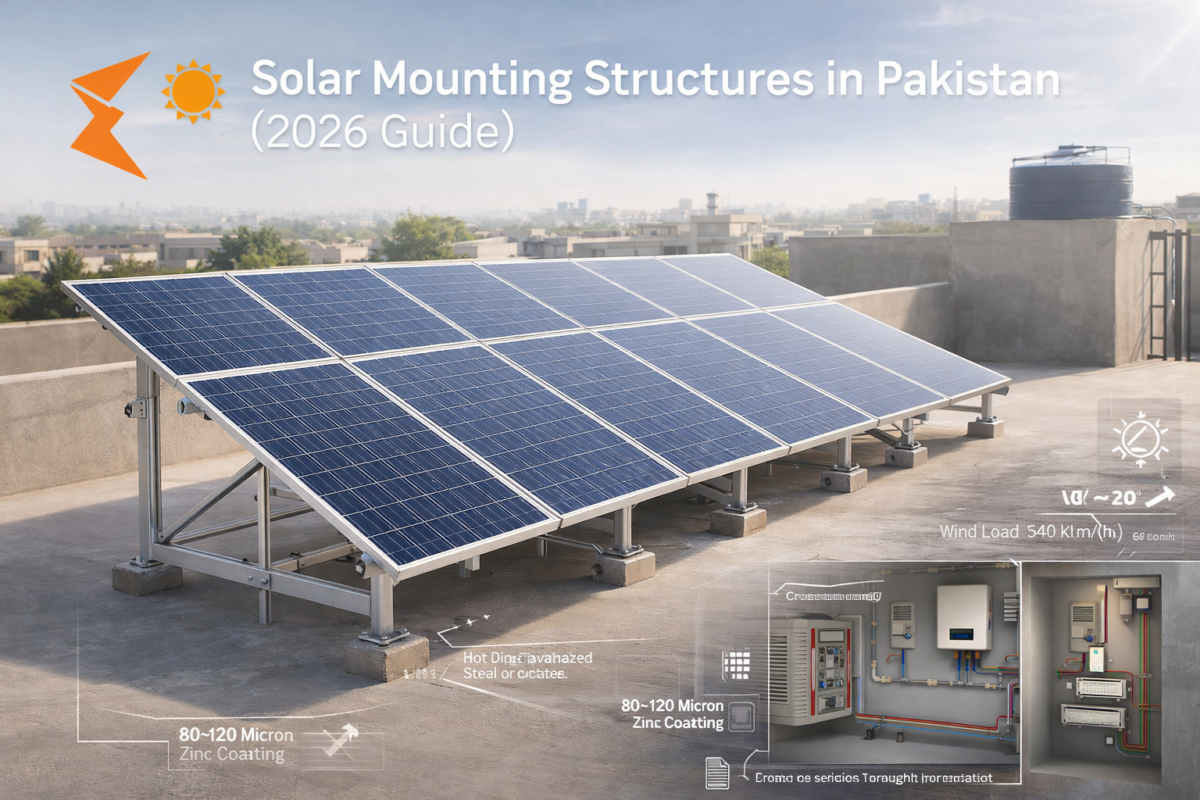
When planning a solar system in Pakistan, the conversation is mostly about the wattage of the panels and the inverter brand. Rarely does anyone ask questions related to the structure that supports the panels over the next 20 to 25 years.
This is not a trivial matter; the structure is not made of metals only. It is the backbone of your entire system. A weak structure could compromise even the highest-quality panels, and no matter what claims the suppliers make, Tier-1 panels cannot save you from a weak structure.
Pakistan’s climate is harsh; summer temperatures often reach over 50°C, dust storms are common, and the winds during the monsoon season test the waterproofing capabilities of the system. Moreover, the wind speeds in our urban centers are increasing.
This guide is designed to provide you with an understanding of the solar mounting structures in Pakistan from an engineering perspective. By the time you finish reading it, you will be able to assess the cost and the quote received from the solar panel suppliers with confidence.
Quick Answer: Which Solar Mounting Structure Is Best in Pakistan?
For most residential flat roofs in Punjab and major cities:
- Hot-dip galvanized steel structure
- Minimum 3-4 inch anchor embedment into RCC
- Cross bracing for wind stability
- 6mm or thicker base plates
- 80-120 micron zinc coating
- Grade 8.8 bolts
In coastal or humid areas like Karachi, aluminum or high-quality hot-dip galvanized steel performs better due to corrosion resistance.
Structure quality should never be compromised to reduce overall system cost.
What Are Solar Mounting Structures and Why Do They Matter?
Solar mounting structures are engineered frames that support solar panels and transfer their load safely to the roof or ground foundation.
They are responsible for:
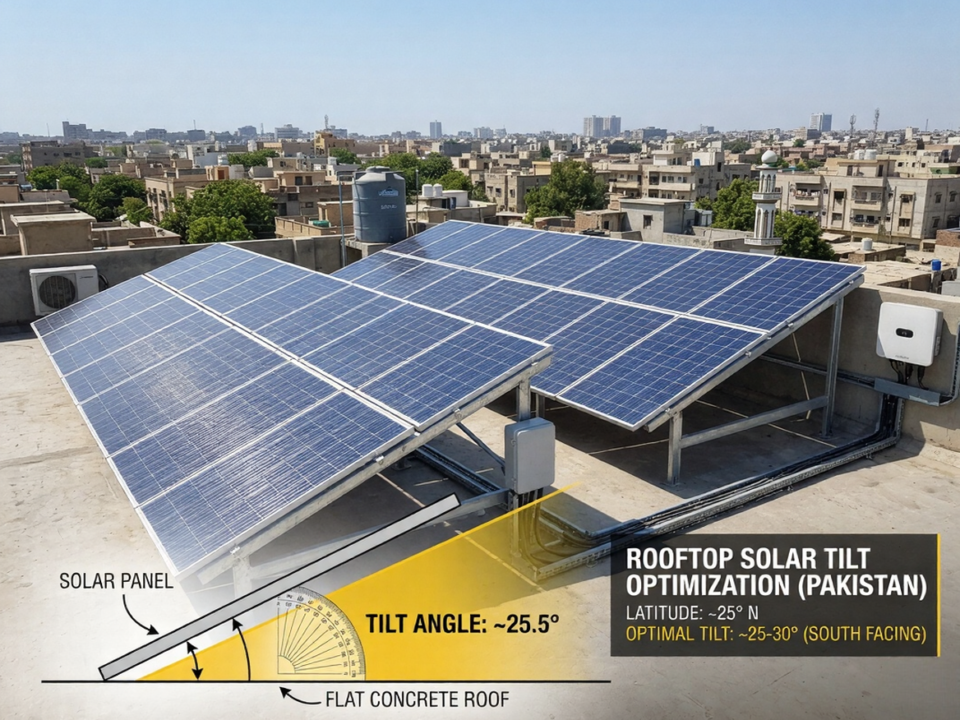
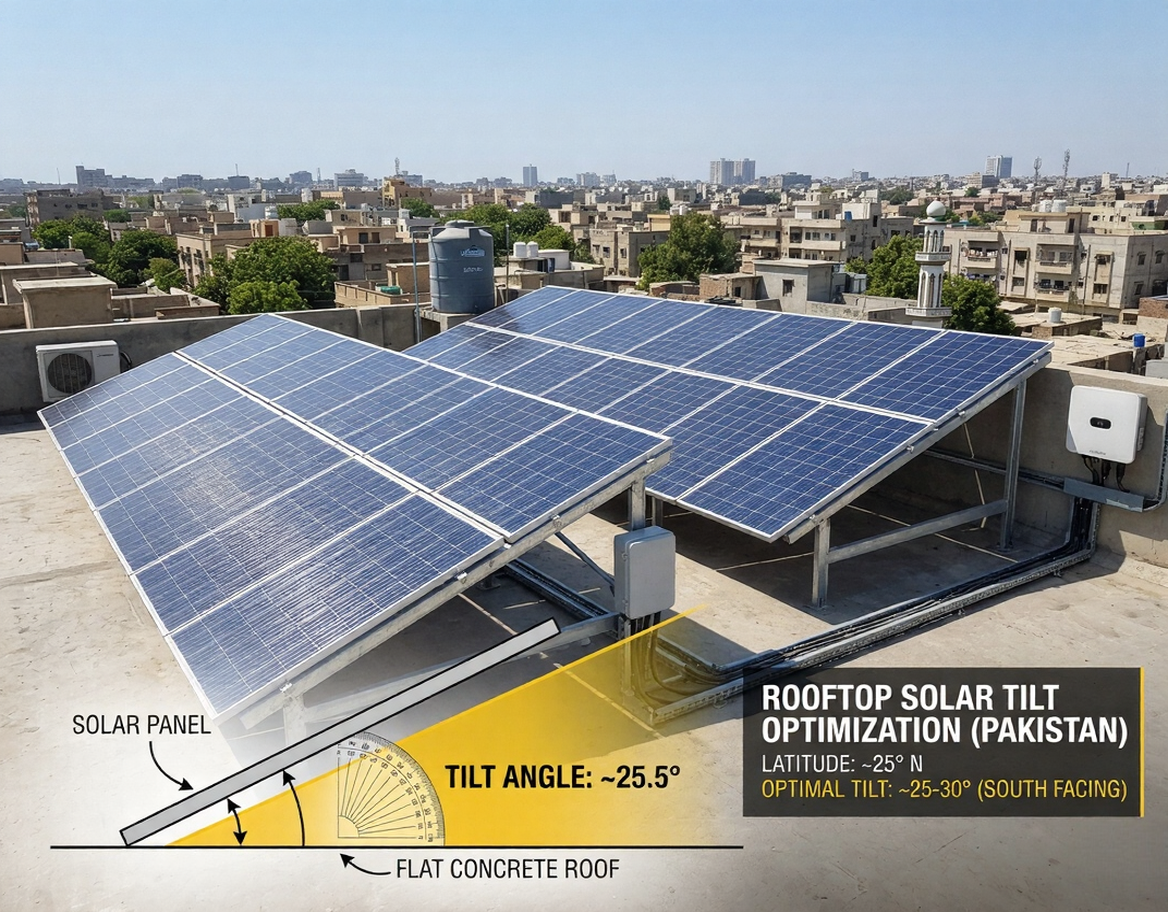
- Maintaining the correct tilt angle (25° to 30° in most Pakistani cities)
- Resisting wind uplift forces (110 to 150 km/h in urban zones)
- Preventing slab stress cracks
- Protecting waterproofing layers
- Maintaining long-term alignment
Many homeowners think clamps are the structure. In reality, a complete mounting system includes:
- Main steel or aluminum members
- Base plates
- Cross bracing
- Chemical or mechanical anchors
- Grade 8.8 bolts and fasteners
- Rails and panel clamps
If even one of these components is low quality, the entire system becomes vulnerable.
Panels generate electricity. The structure protects your investment.
Types of Solar Mounting Structures in Pakistan
Rooftop Solar Mounting Structures for RCC Flat Roofs
Most homes in Lahore, Islamabad, Faisalabad, and Multan use flat RCC slabs. Installers fix tilt frames directly into the concrete roof.
A proper flat roof structure should include:
- Minimum 6mm base plate thickness
- Anchor embedment depth of 3 to 4 inches
- Cross bracing for wind stability
- Waterproof sealing around drill points
- Even load distribution across the slab
Thin 2mm angle structures are sometimes used to reduce cost. They may look acceptable initially, but can vibrate during storms and weaken over time.
Many structural issues arise from installation shortcuts. You can understand common failures in detail here: top mistakes to avoid when installing rooftop solar in Pakistan.
Solar Mounting Structures for Sloped or Sheet Roofs
Sheet and tiled roofs require specialized L-feet brackets or hook systems.
Improper mounting can cause:
- Water leakage
- Ceiling stains
- Structural weakening
- Sheet vibration noise
Proper flashing and rubber gaskets must be installed to protect the waterproofing.
Ground-Mounted Solar Structures
Ground-mounted systems are common for farmhouses, tube wells, factories, and commercial projects.
Advantages include:
- Strong reinforced concrete foundations
- Easier maintenance access
- Better wind resistance
- Higher structural stability
If roof space is limited or slab load is uncertain, this is often a safer option. Learn more here:
ground-mounted solar panels.
Fixed Tilt vs Adjustable Solar Structures
Fixed tilt systems are standard in residential installations. They are cost-effective and require minimal maintenance.
The Punjab region typically uses a 25° to 30° tilt for optimal annual output.
Adjustable tilt structures allow seasonal optimization and are used mainly in agricultural or large commercial projects where additional output justifies a higher cost.
Materials Used in Solar Mounting Structures in Pakistan
Material selection directly impacts lifespan, corrosion resistance, and long-term maintenance.
Galvanized Iron (GI)
GI is widely used due to its affordability.
However, zinc coating thickness matters. GI below 60 microns may start rusting within two monsoon seasons. Paint alone is not corrosion protection.
Hot Dip Galvanized Steel
Hot dip galvanizing provides deeper zinc bonding, typically 80 to 120 microns.
Benefits:
- Strong corrosion resistance
- Longer service life
- Better performance in humid conditions
- Reduced maintenance
For long-term installations, this is usually the safest option.
Aluminum Structures
Aluminum naturally resists corrosion and is lightweight.
It performs well in coastal areas like Karachi, where salt exposure accelerates rust.
However:
- 20 to 30 percent more expensive
- Requires proper anchoring
If you want to avoid low-grade materials across the entire system, read: How to choose quality solar equipment in pakistan avoiding substandard imports.
Wind Load and Structural Safety in Pakistan
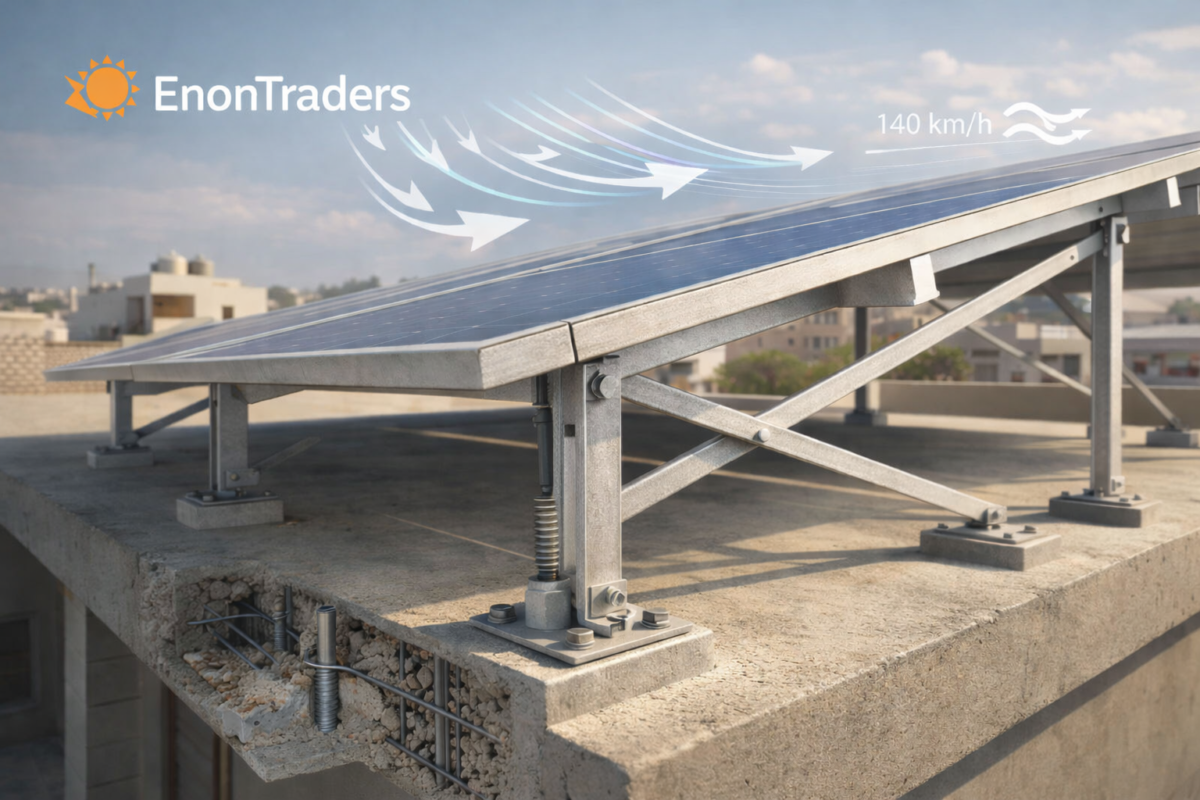
Wind uplift is one of the most critical engineering factors in solar mounting structures in Pakistan. Solar panels act like flat wings. Wind flowing beneath them creates an upward suction force.
Example calculation:
A typical 550W panel has around 2.5 square meters of surface area.
At wind speeds of 140 km/h, the uplift force can exceed 400 to 600 Newtons per panel, depending on exposure conditions.
Multiply this by 20 panels, and the total uplift load becomes significant.
Safe structural design requires:
- Correct anchor spacing
- Adequate embedment depth
- Strong base plates
- Cross bracing
- Even load transfer
High-rise buildings in DHA and Bahria Town experience higher wind exposure.
Before installation, slab strength should be evaluated. For detailed load considerations, see:
rooftop load-bearing solar. Ignoring load calculations can lead to slab cracks or anchor pull-out over time.
Solar Panel Mounting Systems Explained
Most residential systems use rail-based mounting.
Panels sit on aluminum rails and are secured using mid and end clamps.
Common technical mistakes:
- Incorrect rail spacing
- Uneven clamp pressure
- No allowance for thermal expansion
- Loose bolt tightening
- Poor cable routing
Metal expands in summer heat. Without an expansion allowance, rails may bend or clamps loosen.
If you are planning layout and sizing, start here: How to Size Your Home Solar System in pakistan step by step guide.
Solar Mounting Structure Cost in Pakistan (2026)
Structure cost usually represents:
- 8 to 12 percent of the total rooftop system cost
- 12 to 18 percent for ground-mounted systems
- Higher in high wind zones
Cost depends on:
- Steel thickness
- Zinc coating level
- Roof complexity
- Height and access
- Wind exposure
For complete pricing context, see: How much does a rooftop solar system cost in lahore pakistan in 2025-26. Two 10kW systems may differ in price purely due to structural quality.
Practical Checklist Before Approving a Solar Structure
Ask your installer:
- What is steel thickness?
- What is the zinc coating micron level?
- What anchor type and embedment depth will be used?
- How will waterproof sealing be handled?
- Is cross-bracing included?
Inspect:
- Weld quality
- Bolt grade
- Frame alignment
- Rust signs
- Cable routing
For long-term care guidance, review: Maintenance Tips for Solar Systems in Pakistan’s Climate.
How Structure Quality Affects Long-Term Solar Performance
A strong mounting structure:
- Maintains optimal tilt
- Reduces vibration stress
- Prevents misalignment shading
- Protects slab integrity
- Supports inverter longevity
Before finalizing your system, also check: Checklist before buying a solar panel inverter from pakistan market. A weak structure affects everything above it.
Final Thoughts
Solar mounting structures are not decorative frames. They are load-bearing engineered systems.
They:
- Transfer weight safely
- Resist wind uplift
- Protect waterproofing
- Maintain alignment
- Preserve long-term performance
In Pakistan’s climate, structural quality determines whether your system runs smoothly for 20 years or develops problems within 5. When you evaluate structural specifications carefully instead of focusing only on total system price, you move from marketing claims to engineering logic.
Independent Power: Connect with Enon Traders Today!
Start your off-grid journey with Pakistan’s most reliable solar partner.
| Connect With Us | Action Link |
| Chat Instantly on WhatsApp | Get an off-grid system quote: Click to Chat Now! |
| Visit Our Website | View our off-grid inverters: Official Website |
| Call Our Experts | Design your custom micro-grid: Contact Page |