Solar Panel Efficiency Comparison in Pakistan
January 2, 2026
A-Grade Solar Panels in Pakistan: Meaning, Quality and B-Grade Differences
January 6, 2026
When people type in the solar panel degradation rate in Pakistan, they’re not necessarily asking how well solar panels work. They’re asking something a bit more specific:
What amounts of power can really be expected to be lost by solar panels on a typical Pakistani rooftop, and what significance does that have to the end value?
Most online articles repeat manufacturer figures without explaining how those numbers translate to Pakistan’s heat, dust, pollution, and real rooftop installation conditions. This guide explains solar panel degradation clearly, honestly, and in a local context, so expectations are set correctly from the start. In most cases, solar panels in Pakistan lose output gradually, not suddenly, and remain productive for decades when installed correctly.
What Is Solar Panel Degradation Rate?
The degradation rate of solar panels refers to the gradual reduction in the output of electricity during the aging of a panel. This does not mean the panel stops working, nor does it imply a sudden failure.
Degradation, in simple terms, can be said to answer only one question:
If a panel is rated to produce a certain amount of power, how much power will it produce after being operational for several years?
This reduction happens slowly and predictably. It is a normal characteristic of all photovoltaic technology and should be considered during home solar system planning in Pakistan.
How Manufacturers Define Degradation Under Laboratory Conditions
The degradation is measured by the manufacturers in laboratory conditions. The temperature is constant; dust is absent, and electrical conditions are optimal.
In this scenario, a rate of annual loss between 0.3 and 0.5 percent is displayed in most modern panels, resulting in a performance level down to 80-85 percent in 25 years.
These figures are not misleading. They are simply incomplete without real-world rooftop exposure similar to what panels face in Pakistan.
Why Solar Panel Degradation Matters More in Pakistan?
Pakistan’s climate places additional stress on solar panels compared to the environments used in standard testing.
Understanding long-term solar performance locally requires understanding how stress accumulates over time across the entire solar system, not just the panel.
High temperatures and long-term thermal stress
Heat harms solar efficiency in the short run and accelerates material aging in the long term. In cities such as Lahore, Karachi, Multan, and Faisalabad, there are periods with continuously high rooftop temperatures; this increases thermal fatigue inside the panel. Poor airflow beneath rooftop panels can significantly accelerate thermal aging, even when high-quality panels are used.
This does not make solar unreliable, but it does influence how quickly efficiency declines compared to mild climates, especially when airflow is poorly managed during rooftop solar installation.
Dust, pollution, and soiling exposure
The dusting effect is mainly linked to temporary production loss. On the other hand, the buildup of dust together with high temperatures and pollution can result in microscale wear if the panels are not cleaned regularly.
This explains variations in degradation rate between the rooftop of a dense urban area and a relatively clean semi-rural site using the same panel models.
Grid instability and indirect electrical stress
While voltage fluctuations don’t damage panels directly, they could pose indirect stress to the system. The quality of the inverters, wiring, and grounding is thus material to system stability, apparently.
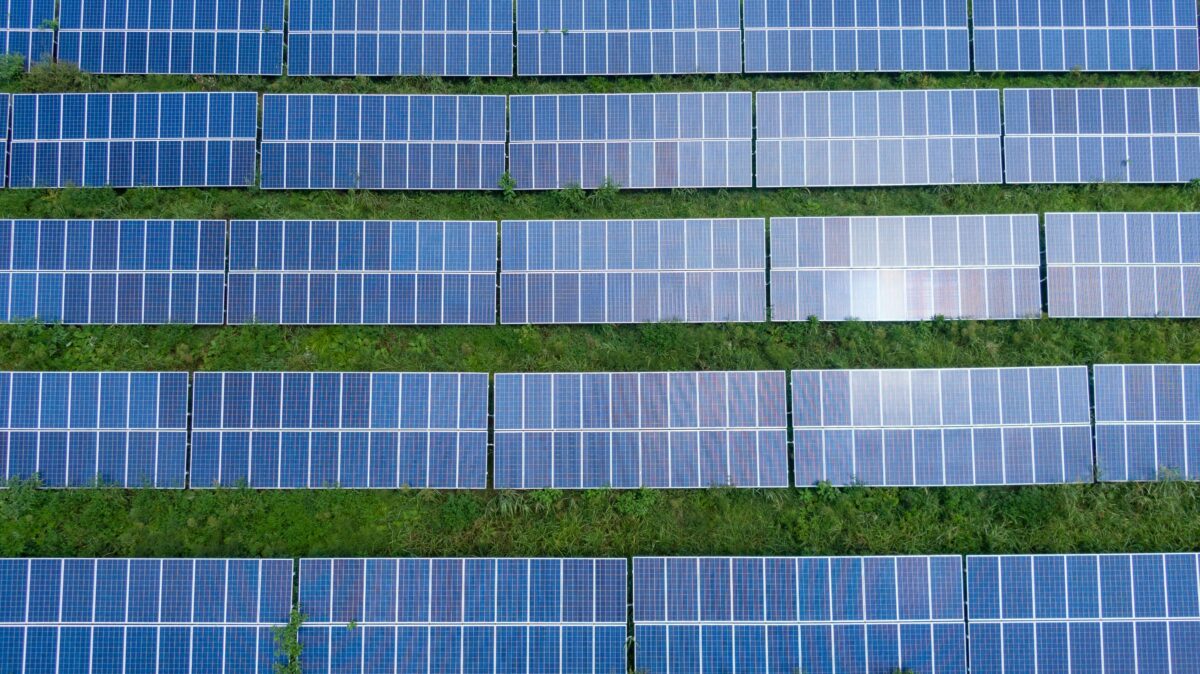
Average Solar Panel Degradation Rate: Global Benchmarks vs Pakistan Reality
Globally, most solar panels degrade at 0.3 to 0.8 percent per year under average conditions.
In Pakistan, real-world degradation often falls toward the upper end of this range in poorly ventilated or poorly maintained systems, while well-installed systems remain closer to global averages.
This difference does not negate solar’s value. It simply highlights the importance of realistic expectations.
How Much Efficiency Loss Can You Expect Over Time?
Typical degradation timeline on Pakistani rooftops
| Time period | Expected remaining output (well-installed systems) |
| Year 1 | ~98.5% to 99% (initial stabilisation) |
| 5 years | ~95% to 97% |
| 10 years | ~90% to 93% |
| 15 years | ~87% to 90% |
| 25 years | ~80% to 85% |
These ranges reflect realistic rooftop conditions, not laboratory assumptions.
What happens in the first year?
Most panels experience a slightly higher efficiency drop during the first year of operation. This is known as initial stabilisation and does not indicate a defect.
Performance after five years
In general Pakistani rooftop conditions, many of these systems can sustain 95 to 97 percent of their initial performance after the fifth year of reasonable maintenance, with special attention given to cleanliness and inverter health.
Long-term output after 10 to 15 years
After a decade, a well-installed system can still operate near 90 percent capacity. Panels do not expire at a fixed age; they continue producing energy with gradually reduced output.
This distinction is often lost on price-only comparison pages, which serve a different search intent entirely.
Lab Claims vs Rooftop Reality in Pakistan
Laboratory testing answers what a panel can achieve under ideal conditions. Rooftop performance answers what it will achieve on a specific roof.
Real-world degradation depends on:
• Ventilation beneath panels
• Roof material and heat retention
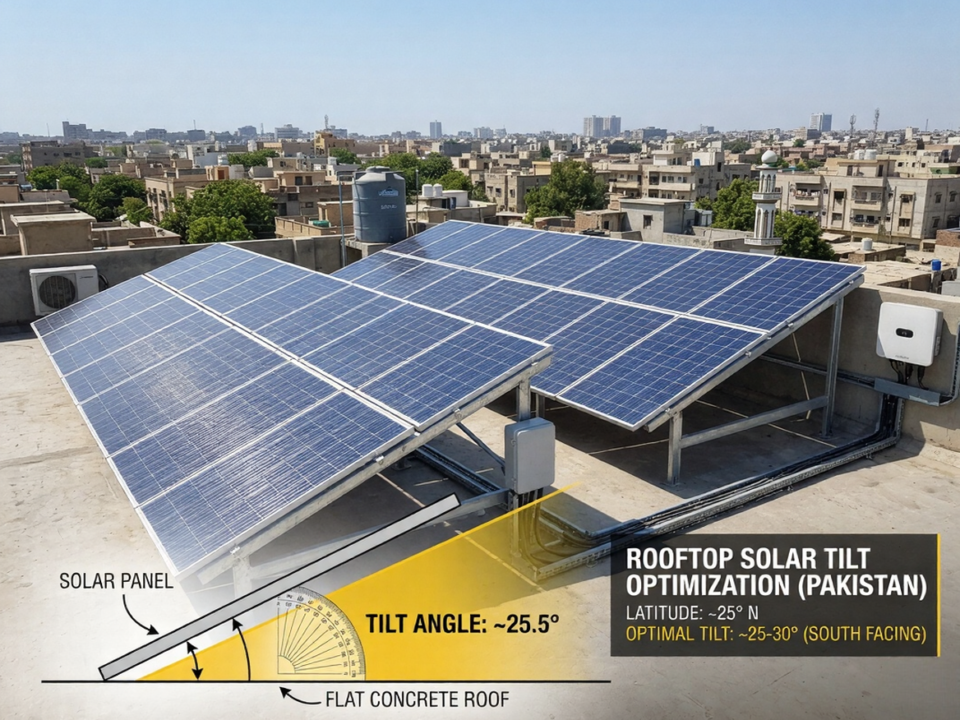
• Installation spacing and tilt angle
• Cleaning frequency
These factors explain why identical panels can age differently in different homes.
Do Different Solar Technologies Degrade at Different Rates?
Conventional monocrystalline panels
Standard monocrystalline panels exhibit stable and predictable degradation and form the reference point for most warranties.
Newer cell designs
More recent technologies seek to lower the losses in the longer term by better resistance to heat and improved cell design. While lab performance appears to be good, actual roof performance remains very much driven by the installation conditions.
Why does installation quality matter more than panel type?
In many instances, lack of airflow, shading, and improper racking can contribute more to degradation than panel performance.Degradation is influenced more by system design and installation quality than by panel type alone.
Common Myths About Solar Panel Degradation in Pakistan
“Panels stop working after a few years.”
Panels continue operating for decades. Degradation reflects gradual output reduction, not failure.
“Higher efficiency panels degrade less.”
Efficiency and degradation are related but not interchangeable.
“Degradation means panels must be replaced.”
In most cases, replacement is unnecessary. Systems remain economically productive long after warranties end.
Factors That Influence Degradation on Pakistani Rooftops
Installation angle and airflow
Panels mounted too close to the roof trap heat. Adequate spacing improves cooling and longevity.
Cleaning frequency and maintenance habits
Periodic cleaning helps reduce long-term soiling effects, particularly in dusty regions.
Regional environmental exposure
Urban pollution and rural dust behave differently. There is no single national degradation figure that applies universally.
How to Read Solar Panel Degradation Warranties Correctly?
What performance warranties actually guarantee?
Warranties guarantee minimum output thresholds under defined assumptions.
Why should warranty numbers be interpreted cautiously?
Warranty figures reflect controlled testing, not Pakistan’s climate.
Practical Takeaways for Solar Users in Pakistan
What degradation rate is reasonable?
A slow, predictable decline of around 0.5 to 0.8 percent annually is normal under local conditions.
Setting realistic expectations before installation
Solar is a long-term energy solution, not a fixed-output device.
To reduce system-level performance risks from day one, checklist before buying a solar panel.
Solar panels in Pakistani conditions do not quietly fade away after some years. They have a predictable life, generally staying functional even after their warranties are over.
Final Perspective
By understanding the rate of degradation of solar panels in a Pakistani environment, homeowners can assess solar power objectively. When degradation is understood realistically, solar remains one of the most stable long-term energy investments available in Pakistan.
This clarity promotes confidence. Confidence is what makes solar power such a successful investment in the long term.
Independent Power: Connect with Enon Traders Today!
Start your off-grid journey with Pakistan’s most reliable solar partner.
| Connect With Us | Action Link |
| Chat Instantly on WhatsApp | Get an off-grid system quote: Click to Chat Now! |
| Visit Our Website | View our off-grid inverters: Official Website |
| Call Our Experts | Design your custom micro-grid: Contact Page |