Solar Panel Installation: A Step-by-Step Guide
February 13, 2025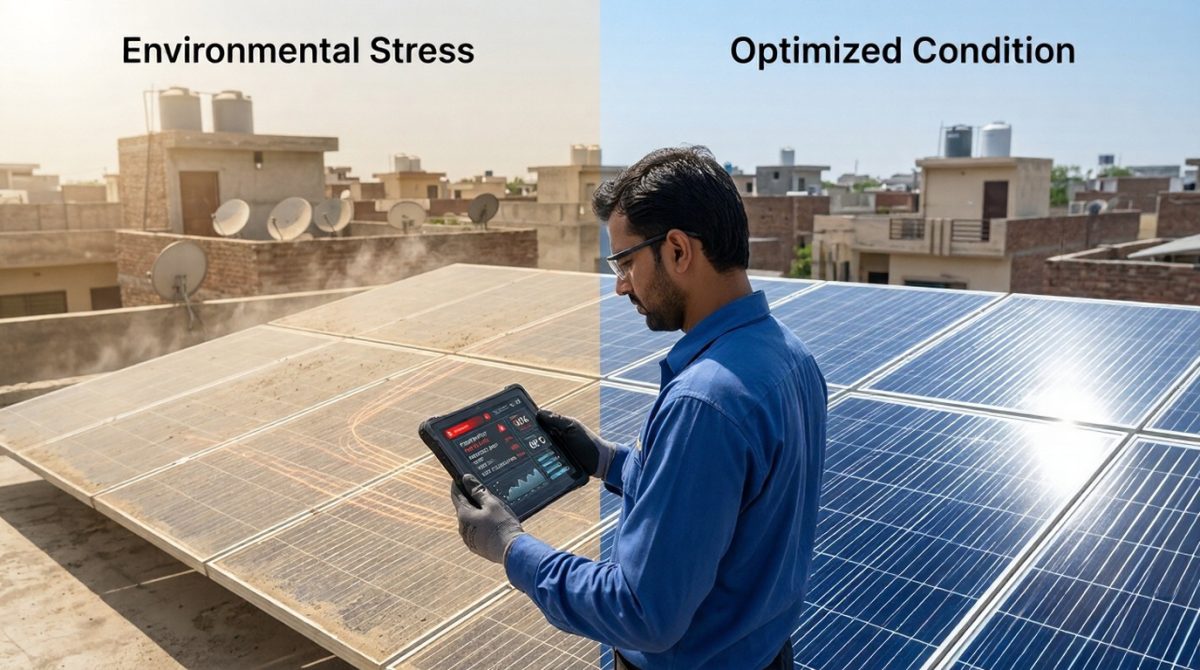
Solar systems in Pakistan are designed to handle tough conditions, but many homeowners still notice something confusing: the system that once performed well is now generating less electricity.
In most cases, the problem is not a system failure. It is a gradual performance loss caused by the environment, installation quality, and maintenance gaps.
The good news is that most of these issues are fixable if you understand what is actually happening behind the drop in output.
What “Low Solar Performance” Really Means
A solar system does not suddenly stop working. Instead, output drops slowly over time.
In Pakistan, a 5kW system that should produce 600–750 units monthly may start producing 450–550 units without any obvious fault.
This is usually called underperformance.
Common signs include:
- Higher electricity bills despite solar installation
- Inverter showing normal, but lower generation
- Faster drop in battery backup time
- Uneven daily output patterns
Not every drop is a fault. Some loss is normal due to aging. But when the drop is sudden or large, it usually points to maintenance issues.
To understand expected performance levels, it helps to know how system efficiency is measured in local conditions, as explained in this guide on solar system performance ratio in Pakistan.
Why Solar Systems Underperform in Pakistan
Pakistan has one of the most challenging environments for rooftop solar systems. Heat, dust, and voltage instability all play a role.
Let’s break down the main causes.
1. Dust and Pollution Blocking Sunlight
Dust is the most common reason for power loss.
In cities like Lahore, Multan, and Faisalabad, fine dust builds a layer on panels within days. This layer blocks sunlight and reduces efficiency.
Even a thin layer can reduce output by 10 to 25 percent.
What makes it worse:
- Long dry seasons
- Construction dust
- Agricultural pollution
- Bird droppings in rural setups
Regular cleaning is essential, especially in dusty regions. Proper cleaning methods are explained in solar panel maintenance tips for Pakistan’s climate.
2. Heat-Reducing Panel Efficiency
Solar panels generate electricity from sunlight, but they do not perform well in extreme heat.
In Pakistan, rooftop temperatures often exceed 60°C in summer. This causes:
- Lower voltage output
- Reduced inverter efficiency
- Faster component stress
This is why two identical systems can produce different results depending on location and roof ventilation.
Over time, heat also affects system durability and long-term degradation rates.
3. Installation Mistakes That Reduce Output
A poorly installed system can underperform from day one.
Common issues include:
- Wrong tilt angle of panels
- Poor orientation (not facing optimal sunlight direction)
- Weak mounting structure causing movement
- Improper string design
These mistakes are very common in low-cost installations.
Many of these problems are preventable if proper installation standards are followed, as highlighted in the top mistakes to avoid when installing rooftop solar in Pakistan.
4. Electrical Losses in Wiring and Connectors
Even if panels are working properly, electricity can still be lost before it reaches the inverter.
Main causes:
- Loose MC4 connectors
- Poor-quality DC cables
- Undersized wiring
- Corrosion in outdoor joints
These issues lead to voltage drops and heat buildup, which slowly reduce performance.
Proper cable selection plays a key role in preventing this, as explained in the Solar DC Cables Guide.
5. Inverter Efficiency and Aging
The inverter is the brain of the system. If it is not working efficiently, the entire system suffers.
Over time, inverters may:
- Reduce conversion efficiency
- Overheat under load
- Show false readings
- Fail to track the maximum power point correctly
This becomes more noticeable in older systems or low-quality brands.
To understand how inverter performance affects output, see inverter efficiency ratings explained.
6. Grid Instability and Net Metering Behavior
In Pakistan, voltage fluctuations and grid instability also affect solar performance.
When the grid voltage is unstable:
- Inverters reduce output for safety
- Export is limited
- The system may temporarily shut down
Policy and grid conditions also influence long-term returns, as explained in the net metering cost and impact in Pakistan.
How Maintenance Prevents Performance Loss
Most performance issues are not permanent. They build up due to a lack of maintenance.
Proper maintenance restores efficiency and prevents long-term damage.
Regular Cleaning Makes a Big Difference
Cleaning is not just cosmetic. It directly affects output.
A clean system:
- Produces 10–20% more electricity
- Reduces hotspot risk
- Improves panel lifespan
Hard water or rough cleaning tools can damage the panel coating.
Electrical Inspection Prevents Hidden Failures
Many losses happen inside wiring and connectors, not on the surface.
A proper inspection includes:
- Checking MC4 tightness
- Inspecting DC cables for heat damage
- Ensuring earthing is intact
For safety standards, refer to solar earthing standards in Pakistan.
Monitoring Helps Detect Problems Early
Modern inverters provide real-time data.
By checking daily performance, you can detect:
- Sudden drops in generation
- Abnormal voltage readings
- String imbalance issues
Early detection prevents long-term loss.
Real-World Example from Pakistan
A 10kW system in Multan was producing around 1,300 units monthly instead of the expected 1,600–1,700.
After inspection:
- Panels were covered in dust buildup
- Two MC4 connectors were loose
- Inverter settings were not optimized
After cleaning and fixing connections, output improved by nearly 22% within a week.
This shows how small issues can create large performance gaps.
Common Maintenance Mistakes
Many users unintentionally reduce performance through bad practices:
- Cleaning panels with harsh chemicals
- Ignoring the inverter warning lights
- Not checking wiring for years
- Assuming solar systems are maintenance-free
Avoiding these mistakes helps maintain long-term efficiency.
Maintenance Checklist for Homeowners
A simple routine can prevent most issues:
Monthly:
- Visual inspection of panels
- Check the inverter display
Quarterly:
- Full cleaning
- Wiring inspection
Yearly:
- Professional system audit
- Structural check of mounting
When Maintenance Is Not Enough
Sometimes, performance loss is not maintenance-related.
You may need upgrades if:
- Panels are over 10–12 years old
- The inverter is outdated
- System size no longer matches consumption
- Battery capacity is degraded
In such cases, system redesign may be necessary.
Final Insight
Solar underperformance in Pakistan is usually not a failure of technology. It is a result of environmental stress combined with missed maintenance.
Dust, heat, wiring issues, and inverter inefficiencies slowly reduce output over time. But with proper monitoring and routine maintenance, most of these losses can be recovered or prevented.
A well-maintained system does not just produce more electricity. It also lasts longer, performs more consistently, and delivers better long-term savings for homeowners in Pakistan.