Rooftop Solar Mounting Systems (2026 Guide): Types, Prices, and Installation Standards
March 3, 2026
Solar System Expansion in Pakistan (2026): Panels, Inverter, or Battery Upgrade Guide
March 6, 2026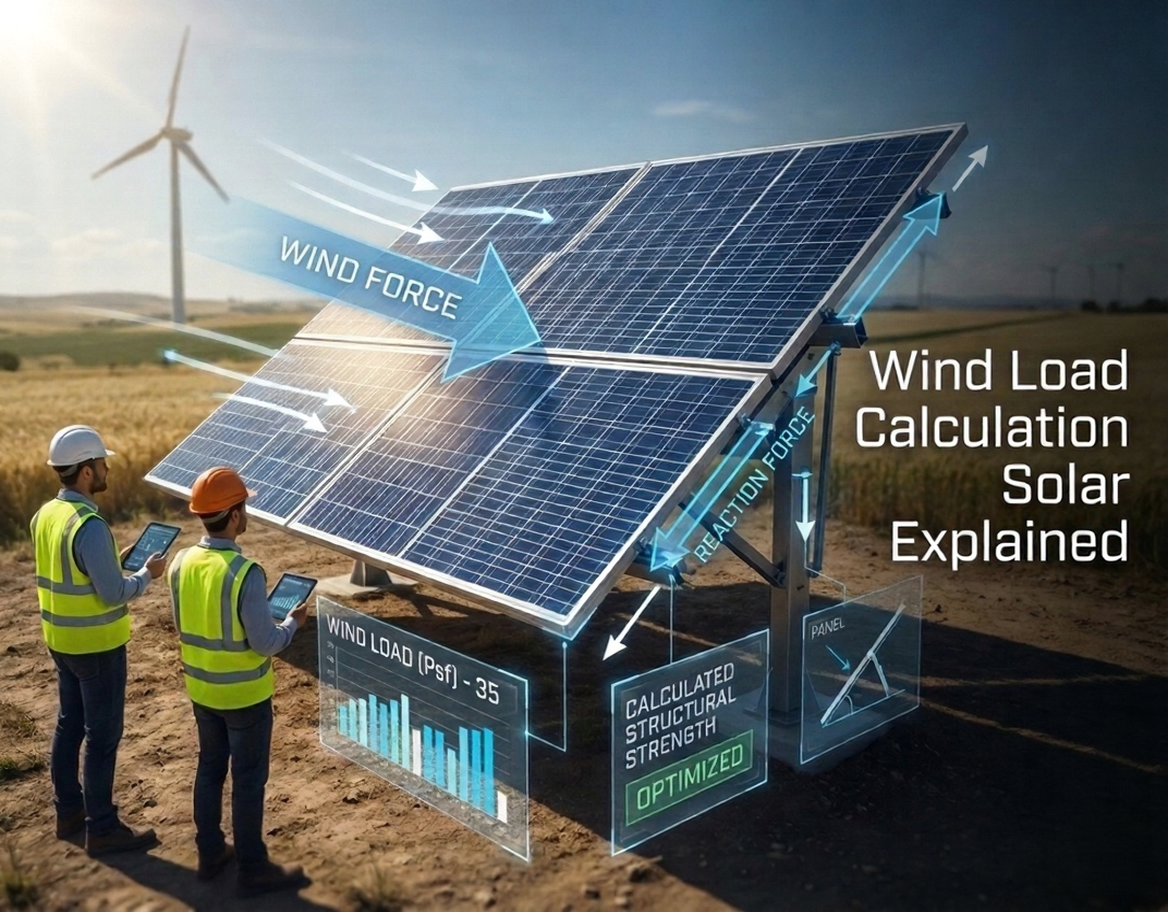
Solar systems in Pakistan operate under constant stress. Extreme heat, heavy dust, voltage instability, and strong seasonal winds all act on a system every single day. While most discussions focus on solar panels and inverters, one factor quietly determines whether a system survives for decades or starts failing within a few years: wind safety.
Wind load calculation is not a paperwork exercise. It defines whether a solar structure can resist uplift, vibration, and long-term fatigue caused by moving air. Many installations look solid on day one. Months later, after repeated gusts and monsoon winds, bolts loosen, frames flex, and anchor points weaken. These failures rarely happen in one storm; they develop gradually due to underestimated wind forces.
This article explains solar structure wind load calculation in a clear and practical way. Without complex formulas, it breaks down how wind actually behaves around solar panels, why many structures fail in Pakistan, and how proper design decisions significantly improve wind safety and long-term system reliability.
Why Wind Load Matters for Solar Structures
Wind behaves in a different manner on solar structures compared to buildings. A solar panel is mounted on top of a roof. Wind moves underneath and over inclined solar panels. This generates a lifting force that attempts to lift solar panels while pushing frames laterally.
In most Pakistani solar installations, the weight alone is used by installers. The rationale is straightforward. This is very risky. The force of wind suction may be greater than the dead weight of solar panels, particularly at steeper tilt angles.
Most structural failures do not occur during intense storms. They occur over time. Bolts begin to loosen. Frames begin to vibrate. Anchor points begin to deteriorate. Eventually, this results in reduced stability and safety.
Wind load calculation prevents such problems. It ensures that the structure is stable under seasonal winds, not just under calm conditions.
What Is Wind Load in the Context of Solar Installations?
How Wind Acts on Solar Panels and Structures
Wind does not hit solar panels like a flat wall. It accelerates around edges and underneath panels. This creates uplift, especially on leading edges and corners.
Tilted panels behave like wings. Higher tilt increases lift. Panels near edges face stronger forces because airflow speeds up around exposed areas.
Difference Between Building Wind Load and Solar Structure Wind Load
Building codes focus on walls and roofs. Solar structures change the shape of the airflow above a building. They add height, surface area, and tilt.
Using standard building assumptions for solar systems underestimates wind forces. Solar arrays require separate evaluation. Ignoring this difference reduces wind safety and increases long-term risk.
Key Factors That Influence Solar Structure Wind Load Calculation
Wind Speed and Design Wind Zones
Every calculation starts with wind speed. Engineers use design wind speed, not average daily wind. This value represents extreme conditions that may occur once every few years.
Wind conditions vary across Pakistan. Coastal regions, open plains, and urban rooftops all behave differently. A rooftop in Lahore faces different wind patterns than an open agricultural site in Punjab.
Structure Height and Roof Elevation
Wind pressure increases with height. Systems installed on upper floors face stronger forces. Parapets can either shield panels or increase turbulence depending on the layout.
Higher mounting frames also increase exposure. Even small increases in height can change wind behavior significantly.
Tilt Angle and Panel Orientation
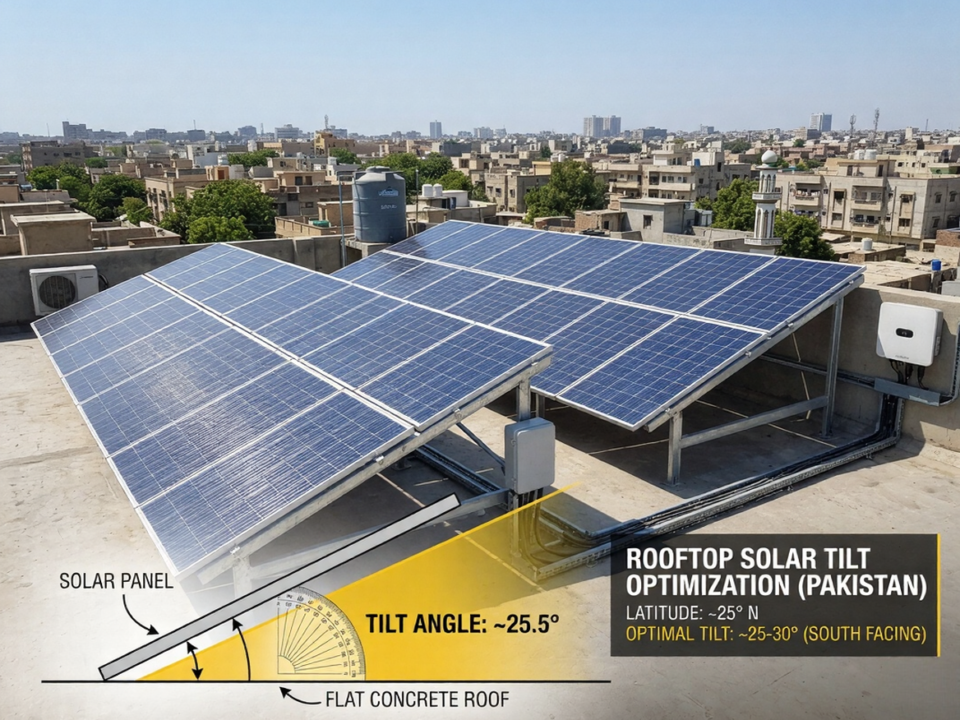
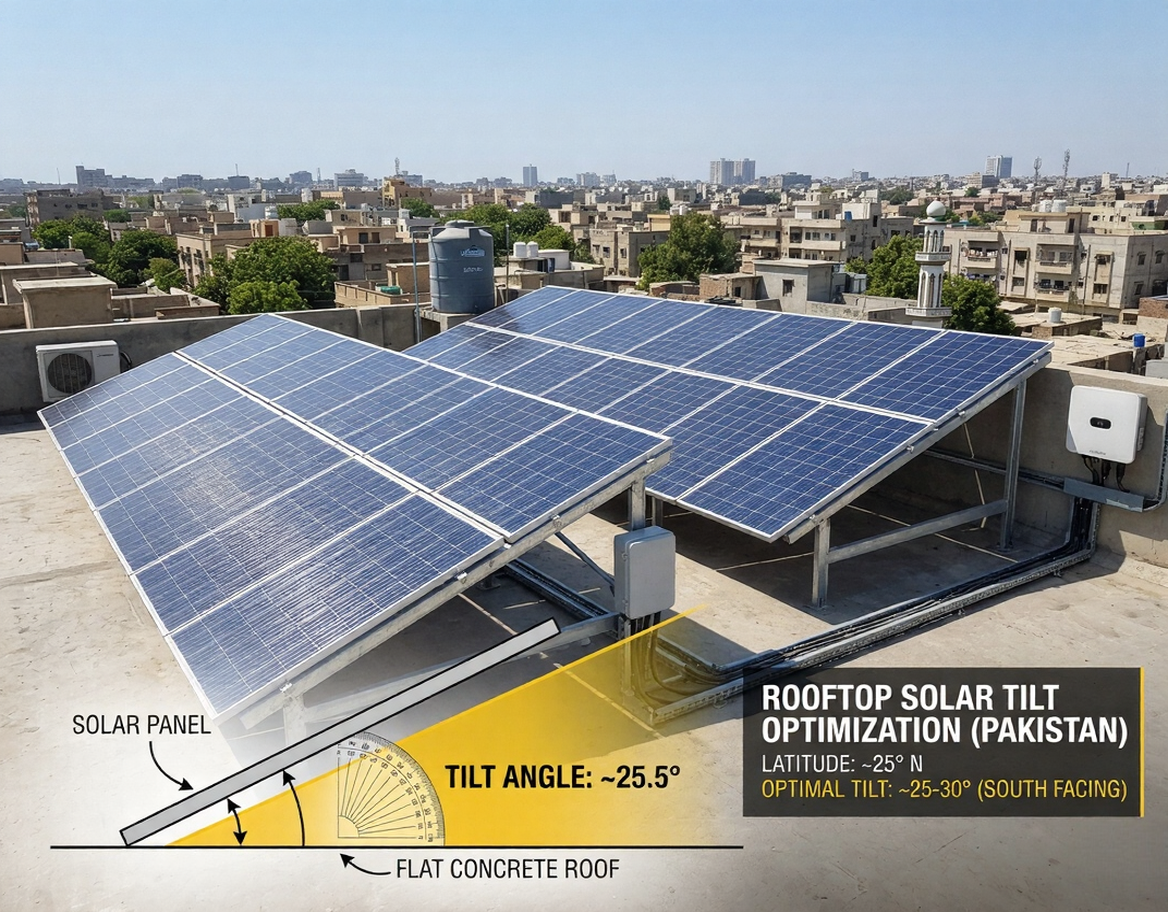
Tilt angle has a direct effect on uplift. Low-tilt systems experience lower uplift. High-tilt systems catch more wind.
Orientation also matters. Portrait and landscape layouts affect how air flows under panels. Poor spacing can trap wind and increase suction.
Terrain and Exposure Category
Open terrain allows wind to accelerate. Rooftops near empty plots or highways experience higher wind speeds. Dense housing provides shielding.
Ignoring terrain is a common design error. It often appears alongside other Rooftop Solar Installation Mistakes in Pakistan, especially in rushed projects.
Panel Position Within the Array
Panels at corners and edges experience the highest loads. Interior panels remain more protected. Assuming equal load on all panels leads to under-designed edge supports.
Basic Principles Behind Wind Load Calculation
Understanding Wind Pressure Conceptually
Wind pressure means the force applied over an area. Larger panels face larger forces. More importantly, wind force increases rapidly with speed. A small increase in wind speed causes a much larger increase in pressure.
This is why systems that survive moderate winds can fail during slightly stronger gusts.
Role of Shape and Aerodynamics
Flat surfaces behave differently from tilted ones. Gaps between panels influence airflow. Tight spacing can increase uplift by trapping air beneath panels.
Good aerodynamic design reduces pressure buildup and improves wind safety.
Safety Factors and Conservative Design
Engineers apply safety factors because wind is unpredictable. Conservative design accounts for uncertainties in terrain, installation quality, and material behavior.
These margins protect systems over decades, not just during the first year.
Common Standards Referenced for Solar Wind Load Calculations
Why Design Codes Are Used
Wind design standards exist to prevent structural failure. They provide tested methods to estimate forces based on wind speed, exposure, and geometry.
Ignoring standards increases liability and failure risk.
How Designers Adapt Codes for Solar Structures
Most standards focus on buildings. Engineers adapt them for solar arrays by adjusting pressure coefficients and exposure zones.
This adaptation separates professional design from guesswork. It also improves documentation and approval processes.
Typical Mistakes in Solar Structure Wind Load Assessment

Ignoring Uplift Forces
Many designs consider only downward weight. Uplift causes most structural failures in solar systems.
Assuming All Panels Experience the Same Load
Edge zones face higher forces. Uniform load assumptions reduce wind safety and lead to early fatigue.
Overlooking Roof Condition and Anchoring Limits
Old concrete, thin slabs, or weak beams limit anchor capacity. This matters more than panel weight.
Treating Wind Safety as an Afterthought
Wind safety must be addressed during design. Fixing issues later costs more. It also affects system economics, similar to factors discussed when estimating how to calculate the payback period for your home solar system in Pakistan.
Practical Wind Safety Considerations for Solar Installations
How Wind Load Calculations Influence Structure Design
Wind load determines steel thickness, bolt size, spacing, and anchoring depth. Thicker members and proper galvanization improve durability.
Ground-mounted systems require additional attention. They face direct wind exposure and need stronger foundations. This becomes critical for ground-mounted solar panels, especially in open terrain.
When a Detailed Wind Analysis Is Especially Important
High-rise rooftops need careful assessment. Industrial sheds with long spans face uplift risks. Agricultural installations, including solar-powered tube wells in Punjab, often sit in open fields where wind speeds remain high year-round.
How to Know If Wind Safety Has Been Properly Addressed
Questions Designers and Installers Should Answer
Ask about the design wind speed. Ask how edge zones were reinforced. Clear answers indicate proper planning.
Signs of a Well-Designed Solar Structure
Good designs include calculations and drawings. They account for climate and maintenance. They also consider long-term durability, similar to guidance found in maintenance tips for solar systems in Pakistan’s climate.
Wind-safe structures protect performance. They reduce vibration and fatigue. They support reliable operation, just like proper equipment selection discussed in how to Choose Quality Solar Equipment in Pakistan.
Final Thoughts
Solar structure wind load calculation protects investments quietly. It prevents failures that appear years later. Wind safety is not about extreme storms alone. It is about daily stress applied over time.
Many failures in Pakistan happen because wind forces were underestimated. Proper calculation brings confidence. It ensures structures remain stable during storms, monsoon gusts, and seasonal pressure changes.
Independent Power: Connect with Enon Traders Today!
Start your off-grid journey with Pakistan’s most reliable solar partner.
| Connect With Us | Action Link |
| Chat Instantly on WhatsApp | Get an off-grid system quote: Click to Chat Now! |
| Visit Our Website | View our off-grid inverters: Official Website |
| Call Our Experts | Design your custom micro-grid: Contact Page |