Solar Price Forecast in Pakistan (2026): Future Prices, Market Trends, and What to Expect
April 17, 2026
Inverter Monitoring System in Pakistan: Catch Losses, and Take Control of Your Power
April 22, 2026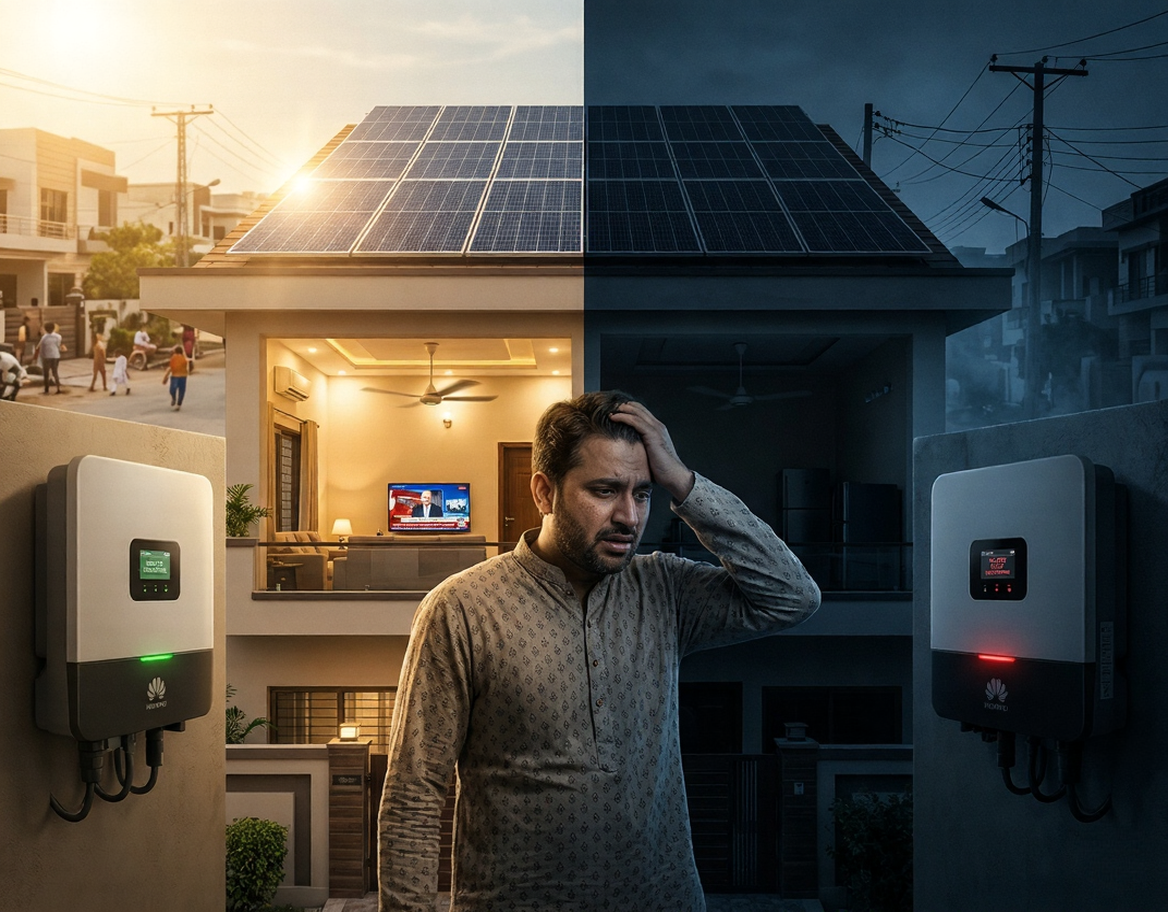
The adoption of solar power in Pakistan has grown exponentially over the past few years. Every homeowner, shop owner, and business owner wants to save money on their electricity bills. And when asked what the cheapest way to do this is, the answer is always the same: go grid-tied. Don’t buy batteries, don’t buy anything complicated.
But here’s the thing that most solar installers don’t tell you:
The limitations of grid-tied inverters in Pakistan are not just theoretical. They are real issues that impact your savings every single day. The cheapest solution might be the one that ends up making you the most disappointed every day.
Your panels may be producing power while your house sits in darkness. Your inverter may trip off during a voltage spike, even when the grid is technically on. And the export earnings you planned your ROI around may now be worth half of what you calculated.
This article explains every major limitation honestly, so you can decide with clear eyes.
What Is a Grid-Tied Inverter?
The grid-tied inverter changes your DC electricity from your solar panels into AC electricity that your house can use. It does this by copying the voltage and/or frequency of the electricity in your grid.
The extra electricity produced by your solar panels is used directly on your grid. You get credit for that extra electricity from your DISCO with net metering. At night, or during periods of low production of your solar panels, you can use the electricity from your grid in your normal manner.
There are no batteries in a grid-tied system. Your grid is your battery. That is why it is so inexpensive. That is why it has all of the following limitations:
Major Grid-Tied Inverter Limitations in Pakistan
No Backup During Load Shedding
This is the biggest and most painful limitation for Pakistani users.
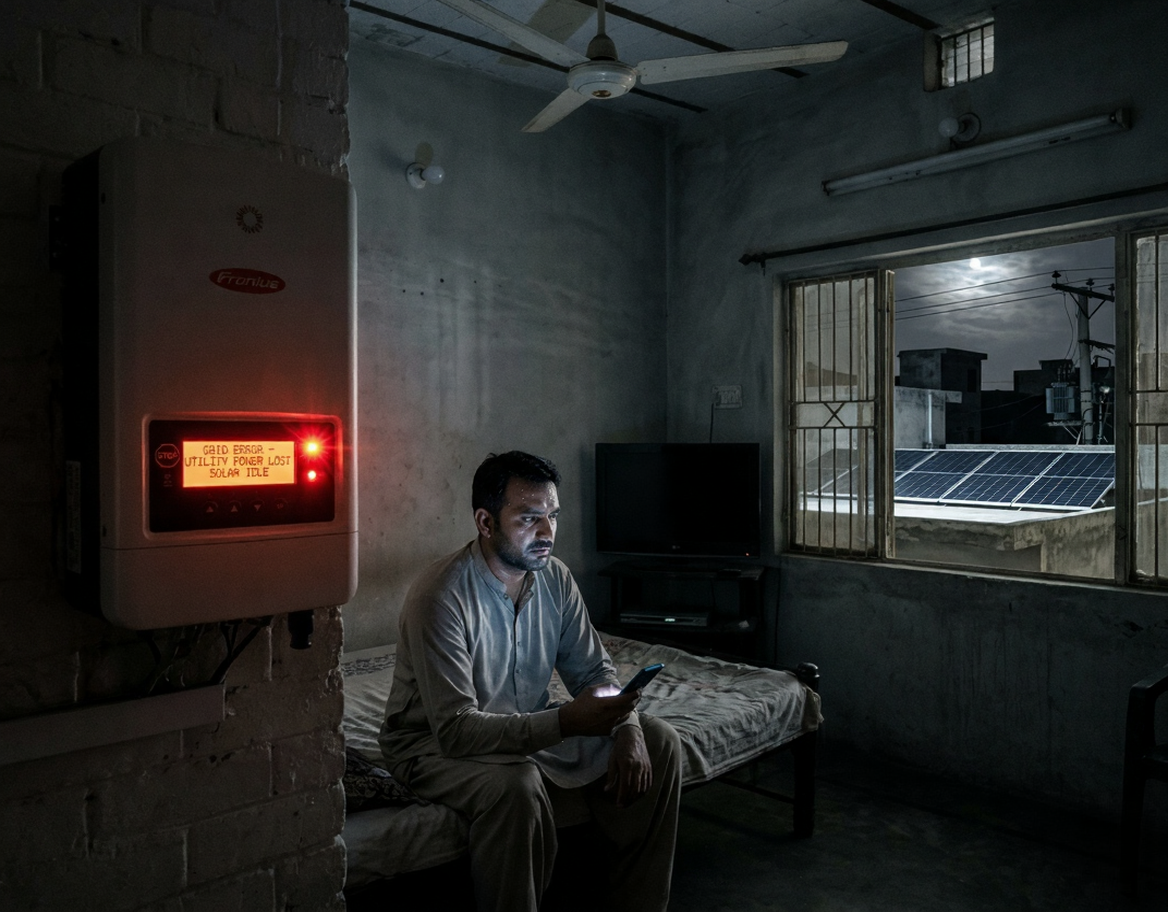
When your DISCO cuts power, your grid-tied inverter shuts down immediately. It does not matter if your panels are producing at full capacity. Even at noon on a clear July day in Multan, the moment grid power disappears, your inverter goes silent.
Your panels are producing power, but your house is still dark.
This happens because of a safety feature called anti-islanding protection. When linemen work on power lines, they assume no electricity is flowing. If your inverter continued feeding power into the grid, it could be dangerous. So every grid-tied inverter shuts off when the grid signal disappears.
What this means in real life:
- Your inverter shuts down instantly during load shedding
- Solar panels stop supplying power to your home
- No backup for fans, lights, or essential appliances
- Peak solar generation hours are completely wasted
In Pakistan, where load shedding can run 8 to 12 hours daily in summer, this is not an occasional issue. It becomes part of your daily system performance.
Voltage Fluctuation and Tripping
Most people assume the inverter only shuts off during a full blackout. That is not accurate.
Grid-tied inverters constantly monitor the grid’s voltage and frequency. When either goes outside the acceptable range, the inverter trips offline automatically to protect itself and your appliances.
Pakistan’s grid voltage fluctuates regularly, especially in older residential areas, industrial zones, and neighbourhoods with heavy solar adoption on the same transformer. When too many grid-tied systems push power simultaneously, local voltage can spike beyond the inverter’s tolerance.
When the voltage rises, your inverter shuts off.
This can happen multiple times a day without a single full blackout. Your monitoring app logs it as a grid fault, but most homeowners never investigate. They simply lose a generation silently.
Check the inverter efficiency ratings of any model you shortlist. Voltage tolerance ranges vary significantly between brands.
Net Metering Dependency
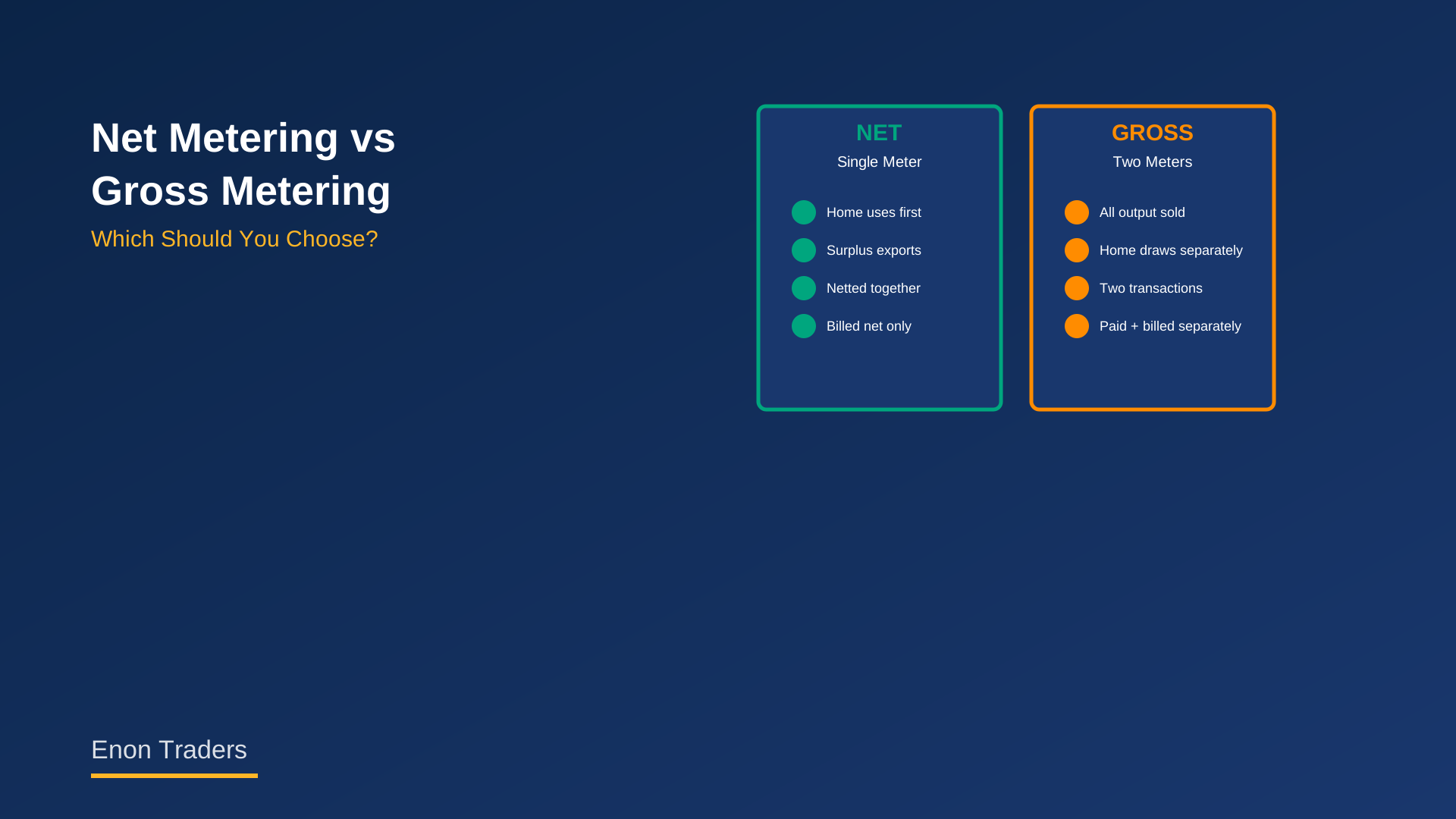
A grid-tied system’s ROI depends almost entirely on net metering working in your favour. That assumption is now outdated.
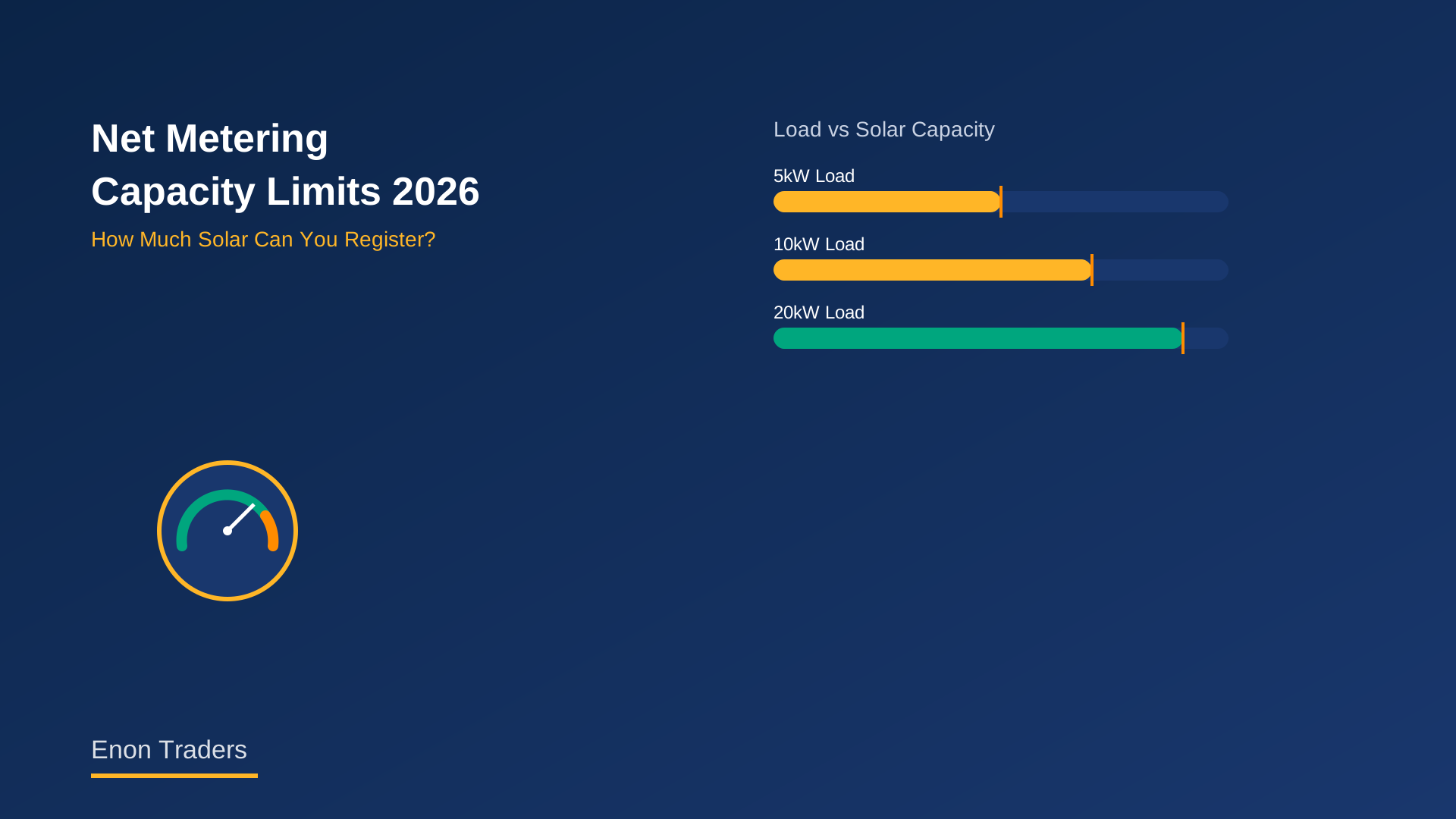
NEPRA has replaced the old net metering regime with net billing. The export rate has dropped from Rs. 27 per unit to around Rs. 10 to 13 per unit. You still buy from the grid at Rs. 65 to Rs. 70 per unit. The gap is enormous.
The shift from net metering to net billing in Pakistan also reduced maximum system size limits and shortened contract durations.
The impact of changing buyback and export rates for solar means your financial projections need a complete recalculation before you sign any contract.
No Energy Storage
A grid-tied system stores nothing. Every unit your panels produce either gets used instantly or gets exported to the grid.
At night, you go back to full grid dependency. If you run high-consumption appliances after sunset, your electricity bill reflects that completely. There is no battery buffer, no stored solar energy from the afternoon, and no protection against evening peak tariffs.
For homes with heavy nighttime usage, this creates a situation where solar panels cover your daytime bill while your evening consumption remains as expensive as before.
Limited Expansion Flexibility
Many buyers assume they can grow their grid-tied system later. In practice, expansion is heavily restricted.
Your inverter’s MPPT inputs cap how many solar strings you can connect. DC/AC ratio rules limit how much panel capacity you can add above the inverter’s rated output. And most importantly, pure grid-tied inverters do not support batteries.
Adding batteries to a pure grid-tied system means replacing the entire inverter, not just adding a battery. You will rewire portions of the installation and buy new equipment. You will spend more than if you had chosen a hybrid from the start.
If backup power matters to you even occasionally, read about battery storage for home solar before locking in your inverter choice.
Why These Limitations Hit Harder in Pakistan
These limitations exist in every country where grid-tied systems are installed. But Pakistan’s specific conditions make each one significantly worse.
Load shedding is not occasional here. In cities like Faisalabad, Hyderabad, and Multan, it runs for the majority of peak solar hours in summer. The anti-islanding shutdown stops being a rare inconvenience and becomes a daily production loss.
Grid infrastructure in many areas is aging and underfunded. Voltage instability is common, not exceptional. Transformers in older neighbourhoods already run near capacity.
Policy uncertainty adds another layer. The net metering application process can take months. DISCOs in some zones have paused new approvals entirely because local transformer solar capacity has hit its ceiling.
The Pakistan solar policy changes in 2026 have fundamentally changed the financial return on grid export. What made grid-tied attractive three years ago looks very different today.
The grid that a grid-tied system completely depends on is unreliable, financially less rewarding, and increasingly congested with other solar users.
Grid-Tied vs Hybrid: Is Hybrid the Better Option?
For most Pakistani households, a hybrid system addresses the core limitations directly.
|
Feature |
Grid-Tied Inverter |
Hybrid Inverter |
|
Backup during load shedding |
No |
Yes |
|
Works without a grid |
No |
Yes |
|
Battery support |
Not supported |
Fully supported |
|
Energy storage |
None |
Stores excess solar energy |
|
Night-time solar usage |
Not possible |
Possible |
|
Response to voltage fluctuation |
Trips frequently |
More stable (with battery support) |
A hybrid inverter keeps working when the grid fails. It stores surplus solar energy in batteries and uses that stored power during load shedding or at night.
The upfront cost is higher. But when you factor in the generation hours you lose with a grid-tied system during Pakistan’s summers, the solar ROI calculator often shows a hybrid system recovering its cost gap within two to three years.
If you decide to go hybrid, understanding how to integrate battery backup with your solar system from day one saves you significant money and avoids a full reinstallation later.
When a Grid-Tied System Still Makes Sense
Grid-tied is not the wrong choice for everyone. There are situations where it remains a sensible option.
Commercial and industrial users who operate during daylight hours consume most of their solar generation on-site. They rarely export much, and load shedding during business hours may be less severe in their area. For them, grid-tied works efficiently.
Homeowners in areas with genuinely stable grids and minimal outages will face fewer of the limitations described above.
And for buyers with strict budget constraints who understand the limitations clearly, a grid-tied system still reduces daytime bills meaningfully. Just go in with accurate expectations, not optimistic ones.
Conclusion
However, grid-tied inverter limitations in Pakistan are not trivial. There are underlying issues in Pakistan, like an unstable grid, ever-changing policies, and load shedding that robs you of your solar production every single day.
While it is true that a grid-tied system will save you money on your electricity bill, it will not save you from load shedding, it will not save you for nighttime usage, and it will not save you for the export earnings that the old ROI system promised.
Before making your decision, don’t make the top mistakes people make in installing rooftop solar in Pakistan and make sure you calculate your real payback period with new numbers by reading our full solar ROI guide. The system that is right for you is not necessarily the system that is cheapest in terms of quotes.
Independent Power: Connect with Enon Traders Today!
Start your off-grid journey with Pakistan’s most reliable solar partner.
| Connect With Us | Action Link |
| Chat Instantly on WhatsApp | Get an off-grid system quote: Click to Chat Now! |
| Visit Our Website | View our off-grid inverters: Official Website |
| Call Our Experts | Design your custom micro-grid: Contact Page |