Why Solar Demand Growth in Pakistan Is Accelerating Across Homes and Businesses
May 10, 2026
Net Metering for Commercial Properties in Pakistan: How Businesses Cut Electricity Bills Using the Grid
May 12, 2026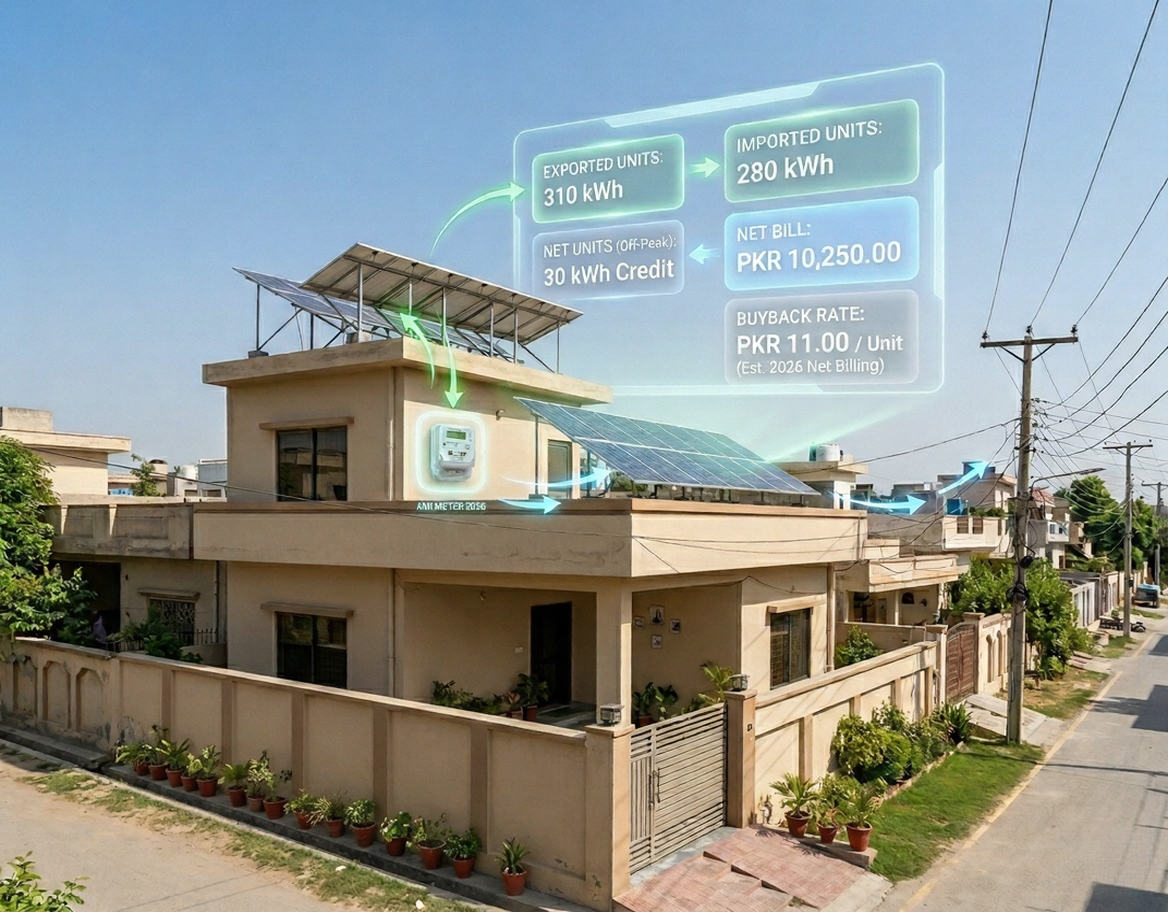
Electricity bills in Pakistan are becoming harder to manage, which is why more homeowners are shifting toward solar energy in 2026. But installing panels alone does not guarantee massive savings. The actual financial benefit depends on how your home uses electricity during the day.
A few years ago, many solar users earned strong returns by exporting extra electricity to the grid. Today, net metering works differently. Modern solar savings now depend more on direct daytime solar usage instead of relying heavily on exports.
If you are still planning your system, it is important to first understand how to size your home solar system in Pakistan properly before applying for net metering.
What Is Net Metering?
Net metering allows your solar system to exchange electricity with the national grid through a bidirectional meter.
During the daytime:
- Solar panels power household appliances,
- Extra electricity is exported to the grid.
At night:
- Electricity is imported back from the grid when solar production stops.
The meter separately records:
- imported units,
- exported units.
To understand current export compensation and billing structures, read the detailed guide on the net metering price per unit in Pakistan.
How Residential Solar Systems Actually Save Money
Most homeowners assume exported electricity creates the biggest savings. In reality, the majority of savings usually come from using solar electricity directly during daytime hours.
1. Direct Daytime Solar Usage
During sunlight hours, solar panels operate directly:
- fans,
- refrigerators,
- air conditioners,
- lights,
- water pumps.
Homes with heavy daytime electricity usage usually recover their solar investment faster because they consume more solar power directly instead of buying expensive grid electricity.
2. Exporting Extra Electricity
When solar production exceeds household usage, additional electricity is exported automatically to the grid.
Under older policies, oversized systems generated strong export profits. In 2026, export benefits are lower compared to previous years, which is why properly sized systems now perform better financially.
You should also understand the impact of changing solar buy-back export rates in Pakistan before oversizing a system.
3. Importing Electricity at Night
At night, homes start importing electricity from the grid because solar production stops.
This is why most homeowners still receive electricity bills even after installing solar systems.
Net metering reduces electricity costs, but homeowners still pay:
- taxes,
- fixed charges,
- nighttime import costs,
- seasonal adjustments.
For a full breakdown, read how the net metering billing system in Pakistan actually works.
Real Residential Bill Example
Here is a simplified example of a typical 5kW residential solar system.
|
System Detail |
Monthly Units |
|
Total Home Consumption |
520 Units |
|
Direct Solar Usage |
420 Units |
|
Electricity Imported From Grid |
100 Units |
|
Solar Exported To Grid |
130 Units |
In this example:
- Most daytime appliances run directly on solar,
- Only a small portion is imported from the grid,
- Exported units provide additional credits.
Homes occupied during daytime hours usually achieve much better savings than homes that remain empty throughout the day.
Major Net Metering Changes in Pakistan (2025–2026)
Pakistan’s solar market has changed significantly over the past two years.
Recent policy updates now focus more on:
- realistic system sizing,
- sanctioned load matching,
- stricter approval procedures,
- controlled export structures.
Many homeowners who installed oversized systems during earlier high-buyback periods are now seeing slower returns compared to previous expectations.
You can also read about the latest Pakistan solar policy changes in 2026 and how they may affect future residential solar savings.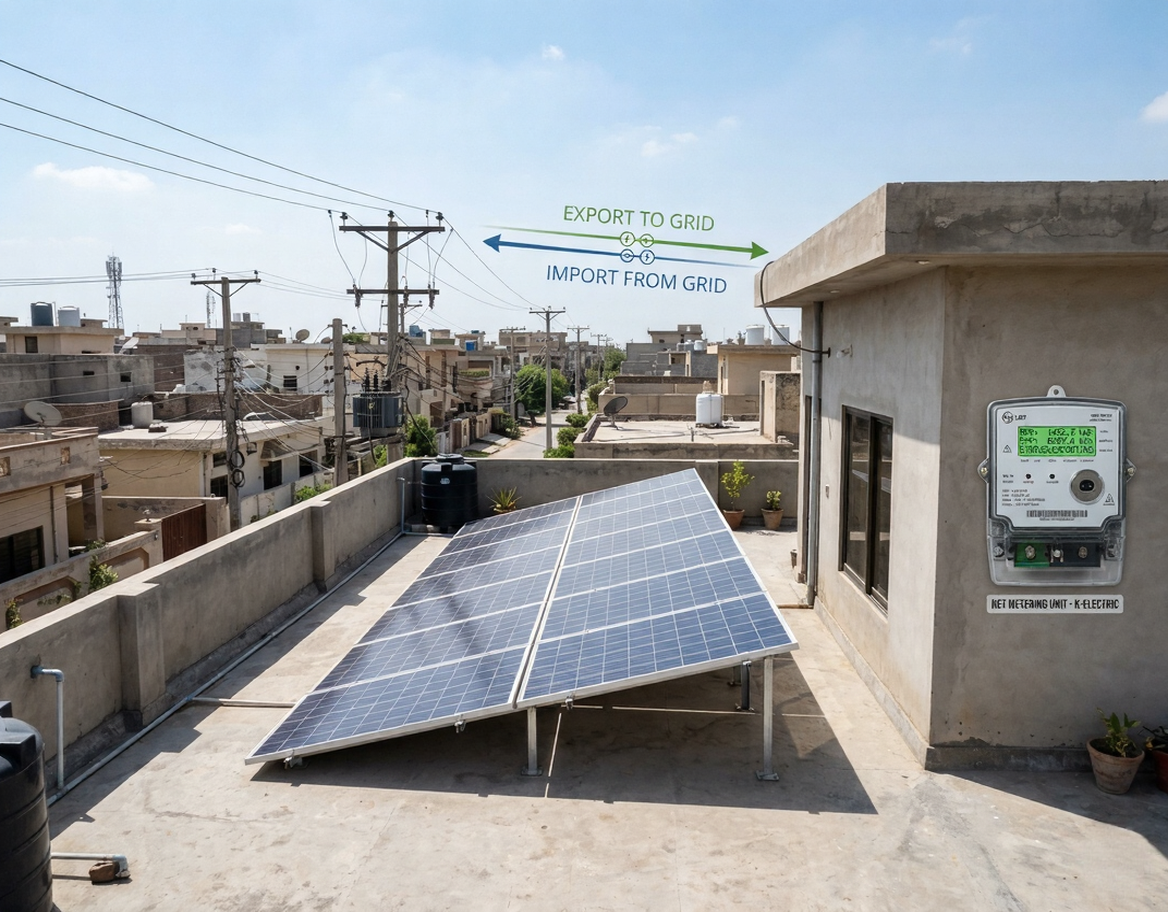
Common Mistakes Homeowners Make
Installing Oversized Systems
Many homeowners install larger systems, hoping to earn export income. Under current policies, oversized systems often provide weaker financial returns.
Choosing Low-Quality Equipment
Cheap or incompatible inverters can create approval problems and reduce long-term system performance.
Before buying equipment, read this guide on <a href=”https://enontraders.com/how-to-choose-quality-solar-equipment-in-pakistan-avoiding-sub-standard-imports/”>how to choose quality solar equipment in Pakistan</a>.
Expecting a Zero Electricity Bill
Net metering does not completely remove electricity bills. Most homeowners still pay:
- taxes,
- fixed charges,
- nighttime imports.
Net Metering vs Battery Backup
|
Factor |
Net Metering |
Battery Storage |
|
Initial Cost |
Lower |
Higher |
|
Backup During Load Shedding |
No |
Yes |
|
Best For |
Stable Grid Areas |
Frequent Outage Areas |
In cities with heavy load shedding, many homeowners now combine:
- solar panels,
- batteries,
- and net metering together.
If you are considering storage solutions, read whether battery backup for home solar is worth it in Pakistan.
How Much Can Homeowners Save?
Savings depend on:
- daytime electricity usage,
- AC usage,
- home size,
- city temperature,
- Solar system capacity.
|
Home Type |
Recommended Solar Size |
Estimated Bill Reduction |
|
5 Marla Home |
5kW |
50% – 65% |
|
10 Marla Home |
8kW |
60% – 75% |
|
1 Kanal Home |
10–12kW |
65% – 80% |
For proper financial planning, you can calculate the estimated recovery time using this solar payback period guide for Pakistan.
Is Net Metering Still Worth It in Pakistan?
Yes, but the strategy has changed.
The homeowners getting the best results in 2026 are usually the ones who:
- Install properly sized systems,
- consume more electricity during daytime hours,
- Focus on long-term bill reduction instead of export profits.
Net metering still works well for residential solar systems, but modern savings now come more from self-consumption than aggressive electricity exports.
Conclusion
Net metering in Pakistan is still financially beneficial for homeowners, but the economics have changed significantly in 2026.
Today, the best-performing systems are:
- properly sized,
- designed around real household consumption,
- optimized for daytime solar usage.
For most homeowners, smart planning now matters far more than simply installing the largest solar setup possible.
Independent Power: Connect with Enon Traders Today!
Start your off-grid journey with Pakistan’s most reliable solar partner.
| Connect With Us | Action Link |
| Chat Instantly on WhatsApp | Get an off-grid system quote: Click to Chat Now! |
| Visit Our Website | View our off-grid inverters: Official Website |
| Call Our Experts | Design your custom micro-grid: Contact Page |